.avif)
.avif)

.png)

Content
16 Best Beaches in Madeira, Portugal (The Ultimate Guide)

Let’s be honest about something most travel guides won’t tell you: Madeira is not a beach island. Of its roughly 150 km of coastline, the vast majority is sheer volcanic cliff, jagged lava rock, and dark pebble coves. The main island has just two naturally sandy beaches: Seixal and Prainha, and two more with imported sand: Calheta and Machico. Everything else is pebbles, volcanic platforms, or lava pools. Now that that’s settled, here’s why Madeira’s swimming spots are still worth building a trip around.
The water is often clearer than in many Mediterranean hotspots, crowds are a fraction of the Algarve’s, and the settings look unlike most of Europe. Madeira enjoys a mild, sunny climate, especially on the southwest coast, and sea temperatures range from around 18-19°C in winter to about 23-24°C in late summer.
The Garajau Marine Reserve offers some of the island’s best snorkeling, with frequently excellent visibility. Porto Moniz’s volcanic lava pools are as dramatic as they get in Europe. Seixal’s black-sand beach, ringed by emerald cliffs and seasonal waterfalls, is one of the most photogenic coastal spots in the archipelago. And Porto Santo, a roughly 2-hour 15-minute ferry ride away, has an extensive sweep of golden sand that puts most Mediterranean resorts to shame. So, below are the 16 best beaches in Madeira.
16 Best Beaches in Madeira
1. Praia de Calheta
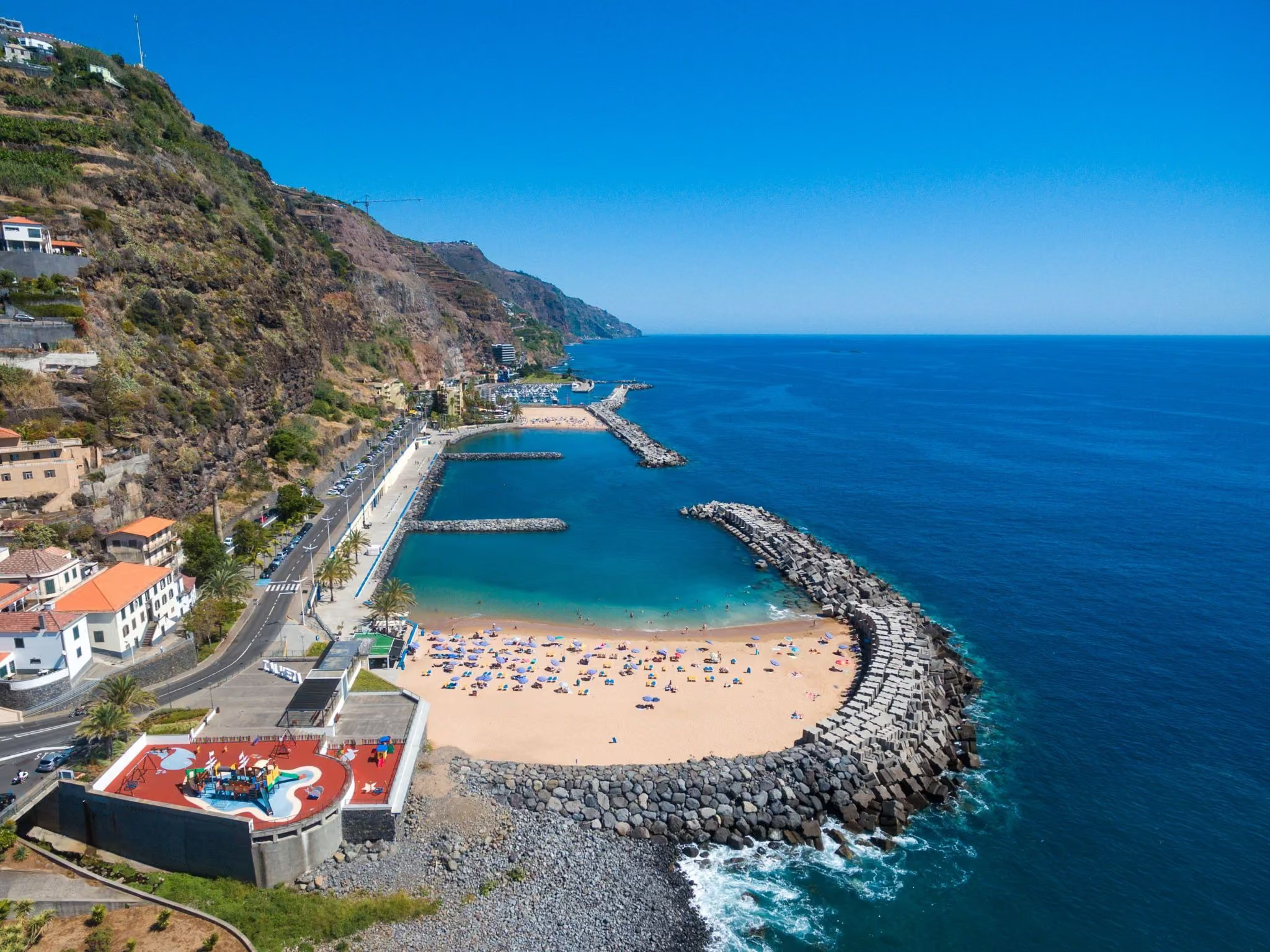
If you want sand, calm water, and a proper beach day, Calheta is your answer. Sitting on the southwest coast in the municipality of Calheta, it’s approximately 30-35 km from Funchal, about 30-40 minutes by car via the VR1 expressway, and worth every minute of the drive.
It’s one of only two artificial sandy beaches on Madeira. The sand was originally imported from Morocco/North Africa when the beach was created in 2004, and later replenished with sand from mainland Portugal to counter erosion. Two breakwaters shelter the bay, keeping the water exceptionally calm and making it ideal for young children and nervous swimmers. Being west-facing, the sun drops directly into the sea from here; few spots on the island do sunsets quite like Calheta, and that alone makes it worth staying until evening.
Beyond the beach itself, the adjacent marina keeps things lively. Whale watching tours typically start at around €45 per person, jet ski hire runs about €60 for 30 minutes, stand-up paddleboards are €15 per hour, and kayaks are €12 per hour. Back on the sand, sunbed and parasol hire costs approximately €10-15 per day. Entry is free, with full facilities including toilets, showers, changing rooms, and seasonal lifeguards.
Getting here is straightforward by car: 30-40 minutes via VR1 with free parking close to the beach, though it often fills by late morning in peak summer, so an early start pays off. By bus, SIGA (Horários do Funchal) services from Funchal’s Avenida do Mar cost roughly €2-4 one-way and take around 60-90 minutes, with fewer services than in the capital, so check the timetable beforehand. Taxis and Bolt typically run approximately €35-45 from Funchal, depending on time and demand.
One thing most first-timers never hear: the West Coast gets significantly more sunshine than Funchal. When cloud cover drifts over the city, which happens regularly, Calheta is often completely clear. If the morning looks grey, don’t cancel the beach plan. Just drive west.
2. Praia de Machico
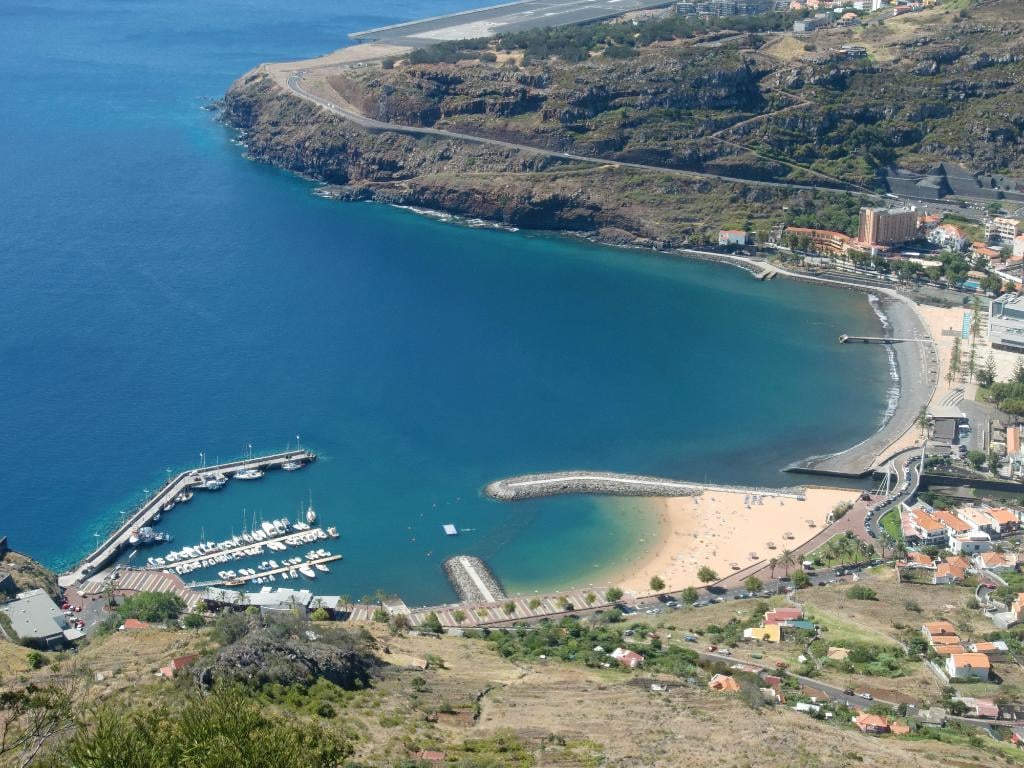
Machico carries more history than any other beach on this list. This is where Portuguese navigators João Gonçalves Zarco and Tristão Vaz Teixeira first set foot on Madeira in July 1419, and today, that same bay draws visitors for an entirely different reason: it's one of the island's most accessible and well-known sandy beaches.
Located on the east coast, just 20- 25 km from Funchal, it's roughly 20-30 minutes by car via the VR1 expressway past the airport, making it one of the closest sandy beaches to the capital. The sand itself is imported from Morocco, protected by two artificial breakwaters, though the bay is slightly more open than Calheta, meaning gentle waves are present on most days. That makes it better suited to older children and teens than toddlers, but perfectly comfortable for most swimmers.
What makes Machico genuinely memorable is the flight path. Madeira International Airport sits just to the west, and planes on final approach pass dramatically low over the bay, a spectacle that's equal parts startling and thrilling, and one you won't experience at any other beach on the island. Combined with the surrounding green hills and the old town behind the beach, the setting feels alive in a way that purely resort beaches rarely do.
Facilities are solid: toilets, showers, a volleyball court, restaurants, and snack bars are all on site. Entry is free, though parking nearby fills quickly in summer, so arriving before 9:00-10:00 is wise. By bus, SAM and Horários do Funchal services run frequently from Funchal for approximately €2-4 one-way, with a journey time of around 30-60 minutes, to one of the better-connected beaches on the island by public transport.
If you have time to spare, Machico rewards exploration beyond the sand. The small fort to the east is free and worth 20 minutes, and the Ponta de São Lourenço peninsula hike, one of Madeira's most spectacular coastal trails, starts just a short drive away. The eastern end of the bay also has a quieter, rockier section near the jetty that's good for exploring and often less crowded than the main beach. For better snorkeling, consider nearby sites like the Garajau marine reserve.
3. Seixal Beach
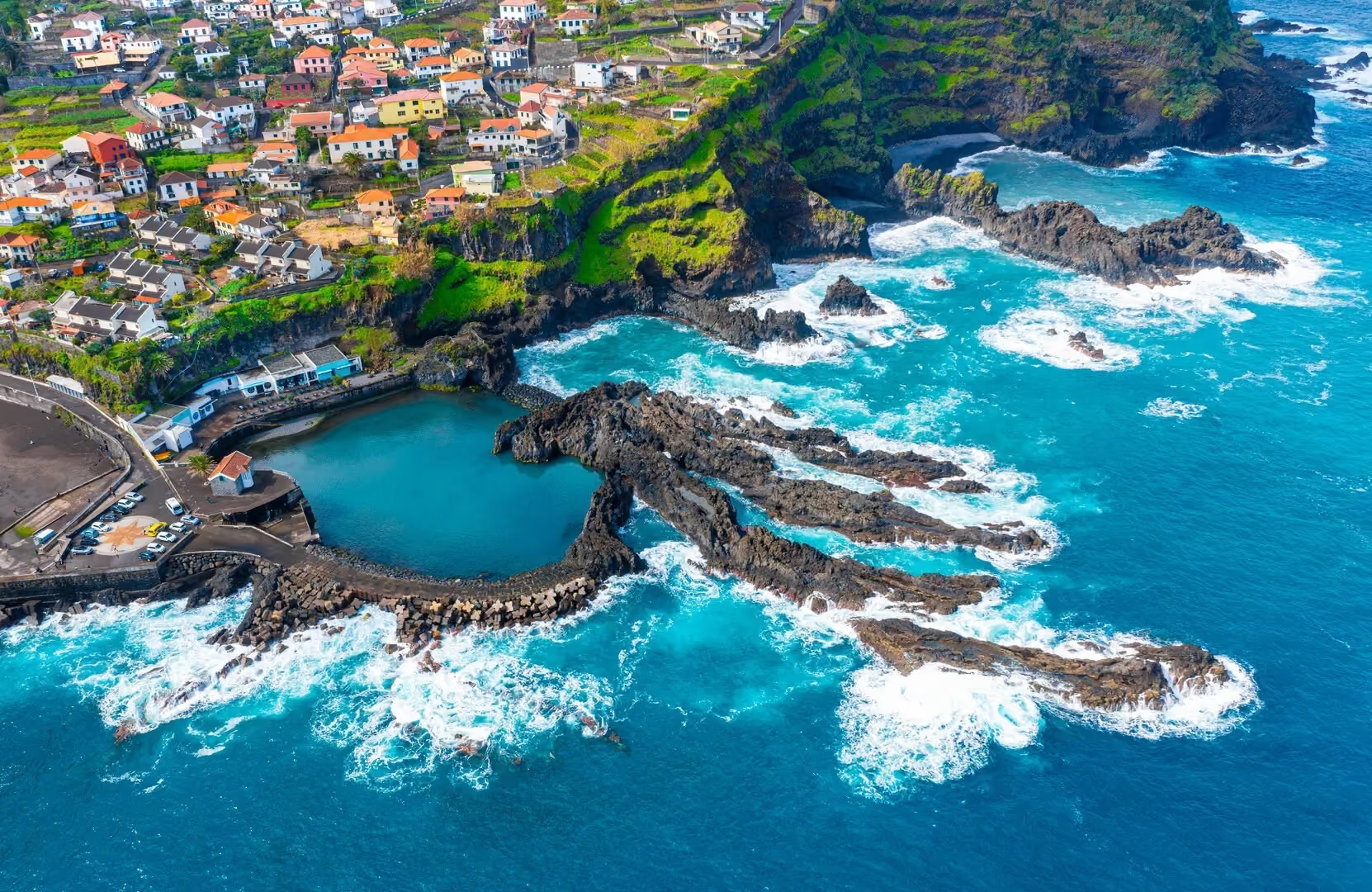
Some beaches are beautiful. Seixal is something else entirely. Sitting on the north coast in the municipality of São Vicente, approximately 40-42 km from Funchal, around 35-45 minutes by car, it consistently stops first-time visitors in their tracks, and for good reason.
The black volcanic sand here is completely natural, formed over centuries of volcanic erosion rather than imported like Calheta or Machico. Three sides of the beach are flanked by sheer emerald cliffs, with waterfalls trailing down their faces in wetter months. The water is a vivid turquoise that contrasts sharply against the dark sand, a combination that explains why images from this beach are instantly recognizable across travel media worldwide.
Beyond the scenery, the beach is genuinely swimmable. A natural rock pool adjacent to the shore provides sheltered swimming when the open sea is choppy, and on calmer days, the beach itself is excellent for bodyboarding. A small restaurant and toilet facilities sit right beside the beach, keeping things comfortable without feeling overdeveloped.
Getting here without a car is possible but challenging; SIGA Rodoeste buses run from Funchal multiple times daily, with journey times of roughly 2 hours 50 minutes to 3 hours each way. However, the last return bus departs in the early afternoon (around 14:20-14:25), making same-day visits tight unless carefully planned. A rental car is strongly recommended, and the north coast drive itself, carved into cliffs with waterfalls crossing overhead, is one of the most spectacular roads in Europe.
Parking is extremely limited, with space for only a few dozen cars, and it often fills by 9:00-10:00 in summer. If the main car park is full, additional roadside parking or small overflow lots can be found nearby, including options heading west toward Porto Moniz.
4. Porto Moniz Natural Lava Pools
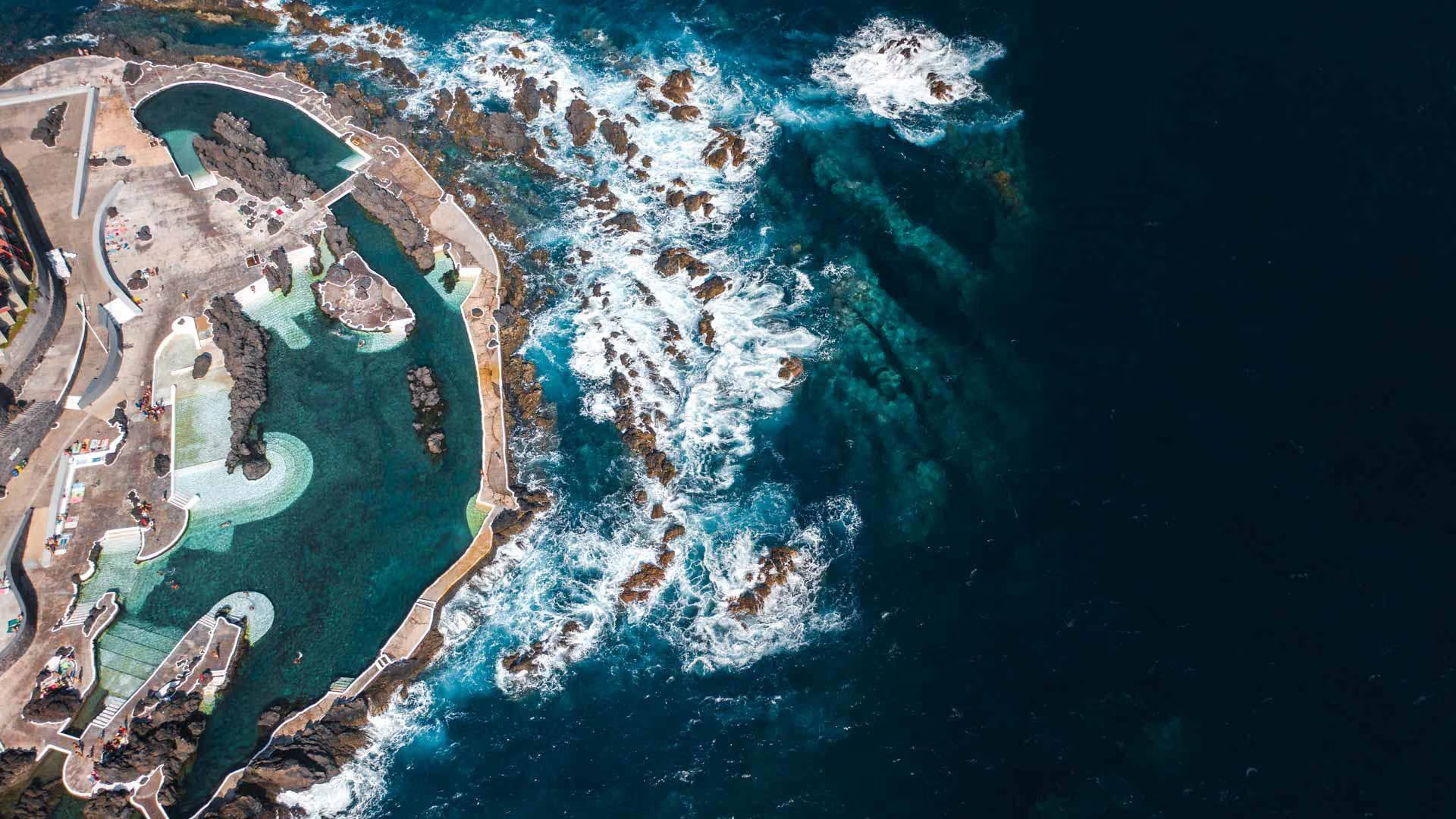
There is nothing else in Europe quite like Porto Moniz. Located on the island’s northwest tip, approximately 50 km from Funchal, around 50 minutes to 1 hour by car, these natural pools carved into volcanic lava rock by centuries of wave action are one of Madeira’s most extraordinary experiences.
This isn’t a beach in any traditional sense. It’s a series of pools formed directly in the lava, constantly refreshed by Atlantic seawater washing over the rock edges. The result is an open-air swimming environment framed by dramatic black volcanic formations, crashing surf, and views of the open Atlantic that feel genuinely wild even when the pools are busy.
Supervised complexes operate here, charging around €3 per adult entry (with discounts in some cases for students, seniors, and young children). Both include changing rooms, toilets, cafés, and sunbed hire. Just east of the managed areas, older “wild” pools next to waterfront restaurants are completely free, rawer in feel, with no changing rooms, and almost always quieter than the paid areas. Opening hours vary by season, roughly 9:00-19:00 in summer, and 10:00-17:30 in winter.
Porto Moniz appears on virtually every organized day tour itinerary, which means the pools become extremely crowded between late morning and mid-afternoon when tour buses arrive. Going early or late makes a significant difference to the experience.
By bus, the SIGA Rodoeste #80 service from Funchal typically departs around 10:00 and takes roughly 2.5-3 hours to reach Porto Moniz, with return services mainly in the afternoon (often around 16:00) and sometimes later depending on the season; a car gives far more flexibility. After swimming, the village itself is worth an hour; grilled limpets, espada fish, and a glass of poncha at one of the waterfront restaurants is the perfect way to finish the day.
5. Garajau Beach & Marine Reserve

Garajau isn’t Madeira’s most dramatic beach to look at, but go beneath the surface, and it’s a different story entirely. Located roughly 10-15 km east of Funchal in Caniço de Baixo, it sits within Portugal’s oldest marine protected area, established in 1986, and the underwater world here reflects decades of careful conservation.
The beach itself is a modest gray pebble cove, but the water clarity is exceptional. Resident populations of parrotfish, moray eels, and sea bream are visible in conditions where visibility is often excellent, especially on calm days. For snorkeling and diving, very few places in Europe come close. A diving centre at beach level offers gear rental (approximately €8-12/day), guided snorkeling tours from €35, and scuba dives from €45-60 per dive.
Getting down to the beach is half the experience. The Garajau Cable Car descends from the clifftop, where a striking Christ the King statue overlooks the sea, to beach level, costing approximately €5 round trip. It operates from 10:00 to 20:00 in summer and 10:00 to 18:00 in winter. A steep path also descends from the top for those who prefer to walk down, though the return climb is tiring.
By bus, EACL company services run from Funchal to Caniço de Baixo for approximately €2-3 one-way, taking around 15-25 minutes. From there, the cable car or path takes you the rest of the way down.
For the best experience, visit in the morning. The sea is calmer earlier in the day, and the light conditions underwater are significantly better before midday, a small detail that makes a real difference when snorkeling.
6. Lido Funchal

For travelers based in Funchal who want to swim without renting a car or catching a bus, the Lido is the obvious answer. Located in the tourist zone of Funchal and walkable from most seafront hotels, it’s the island’s most accessible and best-equipped swimming complex, and a genuinely enjoyable way to spend a half day.
This isn’t a beach in the traditional sense. It’s a managed complex of seawater and freshwater pools with direct Atlantic access, sunbeds, a restaurant, bar, changing rooms, and showers. Access to the pools and sea area is typically free, with lifeguards on duty throughout opening hours. Sun lounger and parasol hire runs approximately €6-10 per day. The setup is relaxed and well-maintained, making it particularly good for families who want a controlled, safe environment.
What elevates it beyond a standard pool complex is the sea access platform. More experienced swimmers can bypass the pools entirely and dive directly into open Atlantic water from a platform cut into the rock, a completely different and wilder experience than the calmer pool areas. The contrast between the two options in one location is part of what makes the Lido work so well for mixed groups.
It’s open year-round, roughly 09:00-18:30/19:00, with extended summer hours. In summer, sunbeds sell out early; arriving before 10:00 is worth it. The Lido also sits at the start of a scenic 2-3 km coastal promenade heading west toward the Doca do Cavacas pools, so combining a morning swim with an afternoon coastal walk makes for a full and easy day without ever needing transport.
7. Praia Formosa
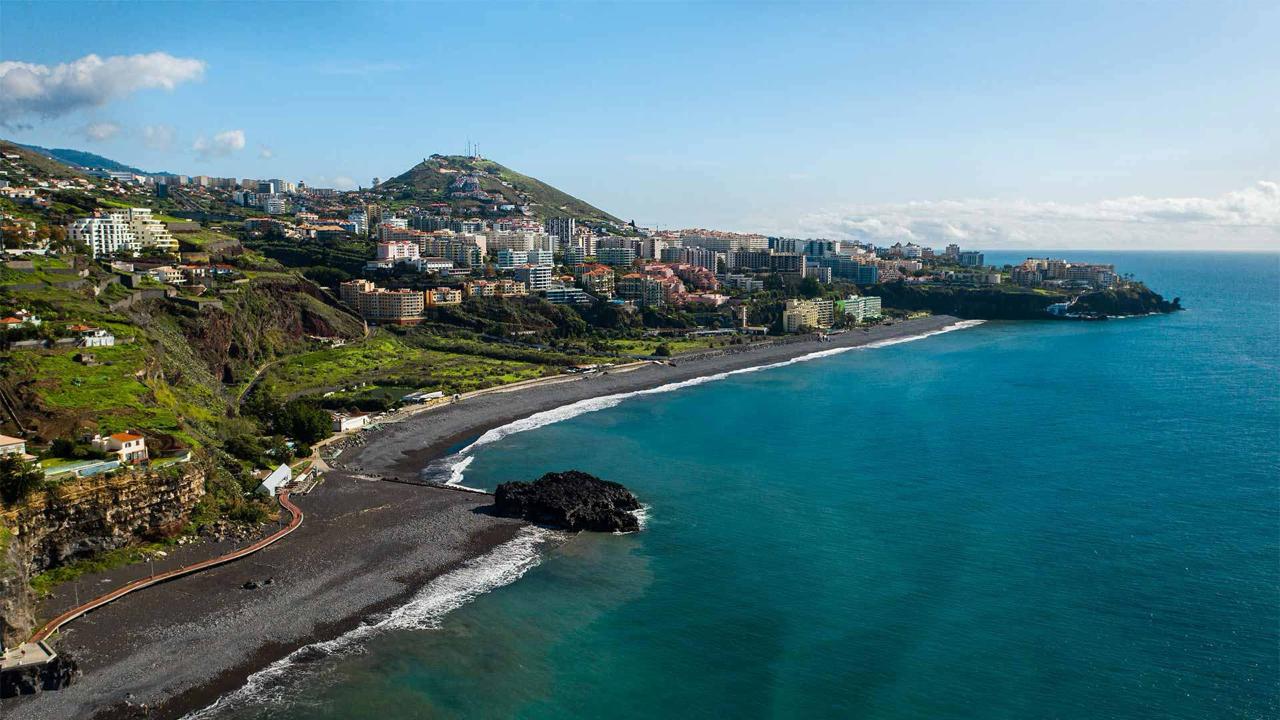
If the Lido feels too managed and polished, Praia Formosa is the antidote. About 4-5 km west/northwest of Funchal’s old town, it’s the longest beach accessible from the capital, a sweeping stretch of dark pebbles and black volcanic sand divided into four sections, backed by dramatic cliffs, and completely free to access.
The atmosphere here is noticeably different from Madeira’s more tourist-facing beaches. Local Funchalenses swim here alongside visitors, fishing boats sit at the water’s edge, and there’s none of the resort polish that comes with paid complexes. It feels like the real Madeira rather than a curated version of it, which is precisely why it’s worth including in any beach itinerary.
The sea here can carry stronger waves than more sheltered spots, so it’s worth checking the flag system before swimming; green, yellow, and red flags operate at the managed sections. Lifeguards are present in season, and kiosk snack bars operate along the beach in summer. Parking is available but limited, and fills up on sunny weekends.
Getting here couldn’t be simpler. Horários do Funchal city buses (lines 1 and 24) from Funchal center take around 15-25 minutes and cost roughly €2. It’s also reachable on foot along the seafront promenade and main avenue in around 40-60 minutes, a pleasant walk in its own right, passing the Lido and the coastal restaurant strip along the way.
For the quietest experience, walk west from the main access point. The eastern end, closest to the city, sees the most footfall, while the western sections thin out considerably. Late afternoon is particularly rewarding; the cliffs catch the sun and glow orange, making it one of the better spots near Funchal for end-of-day photography.
8. Doca do Cavacas
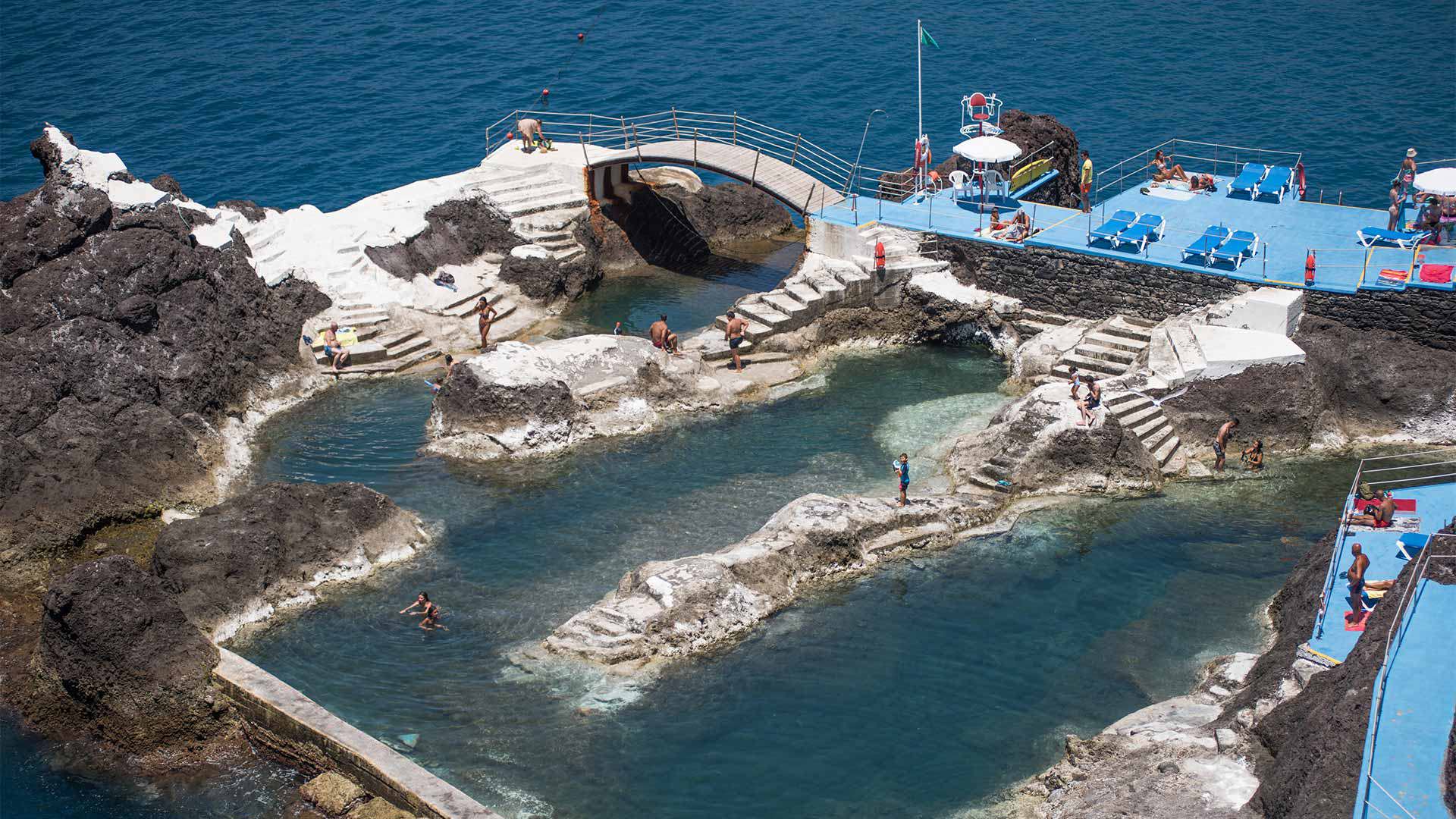
Doca do Cavacas doesn't appear on most tourist itineraries, and that's exactly what makes it worth seeking out. Located on the coastal road west of Funchal's hotel zone, about 4-5 km from the old town, it's a carved lava rock swimming platform managed by a small café and restaurant, and one of the most quietly enjoyable spots on the island's south coast.
Book your next hotel for up to 30% less
This isn't a beach. It's a series of natural volcanic rock terraces with direct Atlantic access via steps cut into the rock, plus a small seawater pool area. The setup is informal and unpretentious, no sunbed rows, no beach bars playing music, no organized watersports. Just rock, sea, and the sound of Atlantic waves. A small entry fee (typically a few euros) applies for the pool area, though the restaurant terrace is accessible without using the pools. The bathing complex is generally open daily in season (roughly 10:00-19:00/20:00); the restaurant is closed on Mondays.
The Cavacas Restaurant sitting directly above the water is reason enough to visit, even if you don't swim. It's known locally for excellent grilled fish; limpets run approximately €8-12 and espada fish around €12-18, and the setting, perched over the Atlantic on volcanic rock, is hard to beat for a long lunch.
Getting here is easy from Funchal. The HF city bus (lines 1 and 2) heading west takes around 15-25 minutes and costs roughly €2; a taxi runs €5-8 from the center, or it's a 30-40 minute walk along the coastal road from the Lido, a walk worth doing in its own right.
The real reason to time your visit carefully is the sunset. Facing west with nothing between the terraces and the horizon, Doca do Cavacas offers one of the most unobstructed sunset views on the south coast. A late swim followed by dinner at the restaurant as the sun drops into the Atlantic is one of Madeira's most memorable evenings.
9. Ribeira Brava Beach
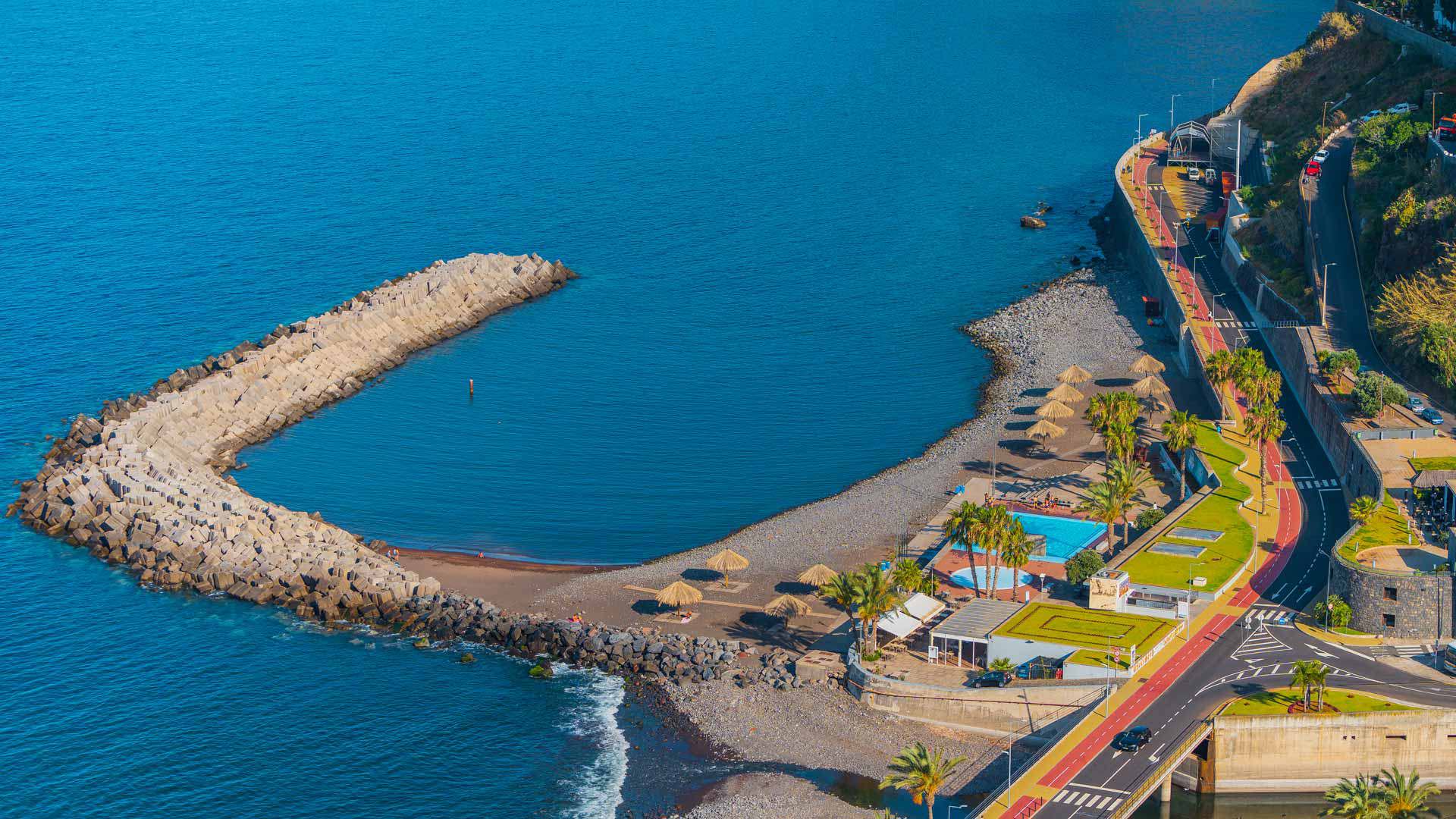
Ribeira Brava doesn’t try to compete with Calheta’s sand or Seixal’s drama. What it offers instead is something equally valuable: a genuine, unhurried south coast town where the beach is part of everyday life rather than the main tourist attraction, and that authenticity is refreshing.
Located about 14-20 km west of Funchal on the south coast, it’s around 15-25 minutes by car. The beach itself is a wide, well-maintained pebble shore at the mouth of the Ribeira Brava valley, with calm water on most days thanks to its southward orientation. Entry is free, lifeguards are present in season, and the promenade behind the beach is lined with cafés and restaurants serving straightforward, good-value food.
What elevates Ribeira Brava beyond a simple pebble beach is its surroundings. The towering Cabo Girão cliffs, among Europe’s highest sea cliffs at around 580 metres, rise to the east, and the Cabo Girão Skywalk is roughly 10-15 minutes away by car. Combining a beach morning with a skywalk visit in the afternoon makes for one of the south coast’s best half-day combinations.
By bus, Rodoeste runs frequent services from Funchal (including an express along the Via Rápida), taking around 30-45 minutes and costing roughly €2-3 one-way, making Ribeira Brava one of the better-connected beach towns on the island for travelers without a car. The town itself rewards time spent away from the beach, too. A 16th-century church, a local municipal market, and some of the south coast’s most reliable restaurants are all within easy walking distance.
If you visit on a Saturday, the municipal market is especially lively, with local produce, Madeira embroidery, and traditional food; combining it with a beach visit makes for a complete and thoroughly enjoyable morning.
10. Ponta do Sol Beach
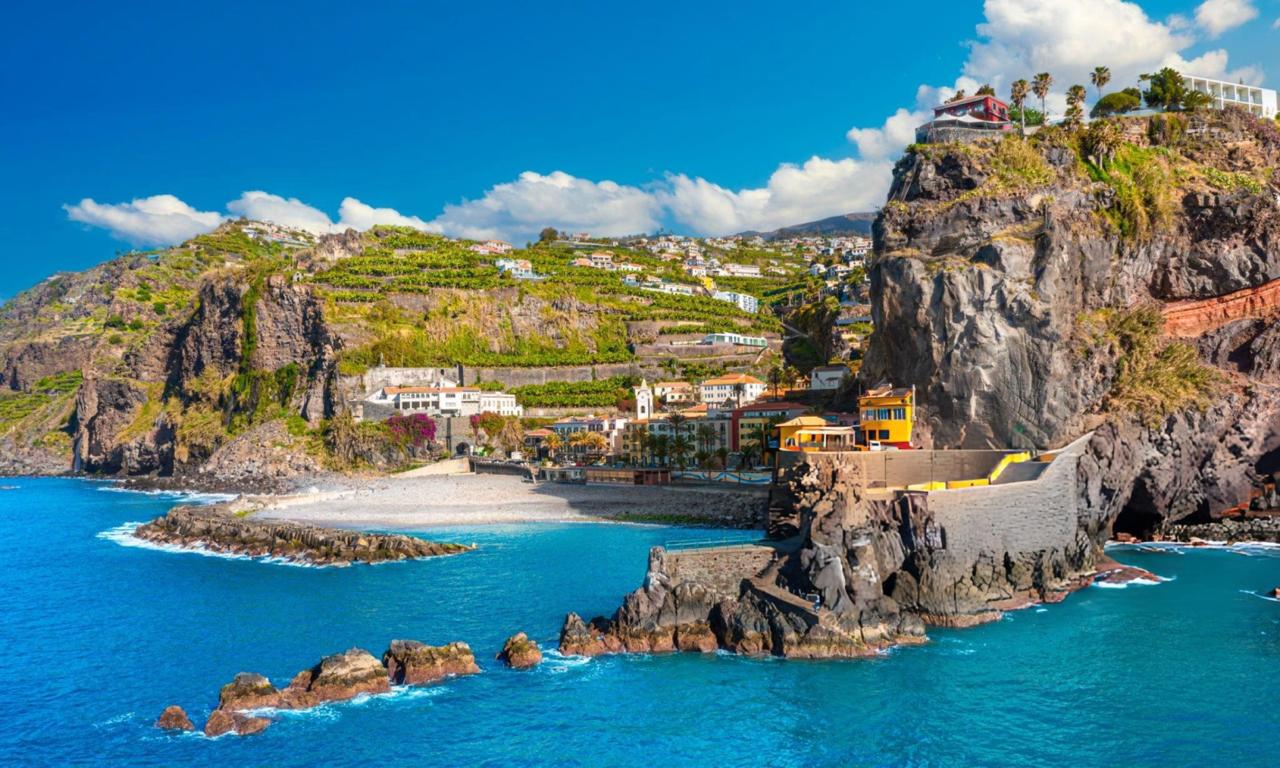
The name says it all. Ponta do Sol, “Point of Sun,” is widely regarded as Madeira’s sunniest town, with significantly more annual sunshine hours than Funchal, thanks to its sheltered position on the southwest coast. That alone makes it worth the 25-35 minute drive from the capital, but the beach itself earns the visit independently.
Located about 20-25 km west of Funchal, the beach is a compact pebble shore framed by cliffs at both ends, giving it an intimate, enclosed feel that larger beaches lack. The water is exceptionally clear, the pebble base keeps sediment minimal, and a rock platform with diving steps at one end makes it a local favorite for cliff jumps, though that’s strictly for confident swimmers. Entry is free, with a promenade, restaurants, and a bar all within easy reach.
What makes the setting particularly striking is the valley rising steeply behind the town. Terraced banana plantations climb the hillsides directly above the beach, creating a backdrop that feels distinctly Madeiran: lush, dramatic, and completely unlike anything you’d find on a typical European beach.
By bus, Rodoeste runs services from Funchal (lines 80/81 and others), taking around 40-50 minutes and costing roughly €2.50-3 one-way, with reasonable frequency. By car, it’s a straightforward 25-35 minute drive via the VR1.
For a cultural detour, Ponta do Sol has an unexpected connection to American literary history. The town has a small cultural center dedicated to John Dos Passos, the influential American novelist whose paternal grandfather emigrated from Ponta do Sol, worth a 20-minute visit alongside the beach. It’s the kind of detail that turns a simple beach stop into something more memorable.
11. Câmara de Lobos Beach
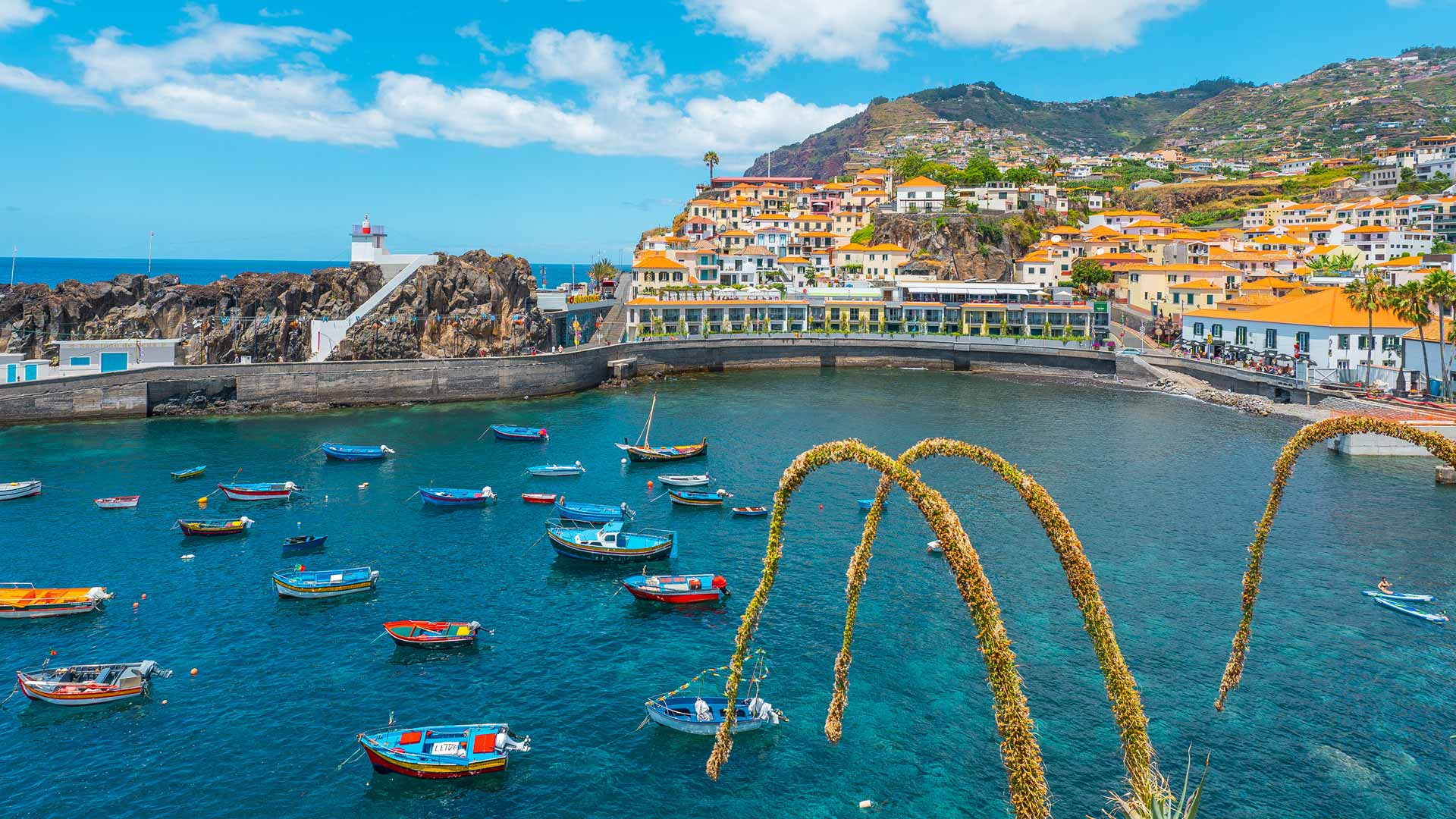
Câmara de Lobos is one of Madeira’s most photographed towns, and for good reason. Just 7-10 km west of Funchal, around 15-20 minutes by car, its harbor is filled with colorful traditional fishing boats that have barely changed in character since Winston Churchill set up his easel here in 1950 and painted the scene. The beach that extends west of the harbor sits beneath dramatic basalt cliffs and carries that same unhurried, working-town atmosphere.
This is not a polished resort beach. It’s a pebble shore adjacent to a genuinely active fishing harbor, where you’ll see nets being mended, catch being processed, and boats launching at odd hours. Facilities are basic, with some benches, restaurants nearby, and there’s no managed entry or sunbed hire. What it lacks in infrastructure it more than makes up for in character, and that authenticity is increasingly rare on the island’s more developed south coast.
Getting here is one of the easiest of any beach on this list. The hop-on hop-off tourist bus from Funchal stops directly in the town, regular Horários do Funchal buses run frequently for approximately €2-2.50, and a taxi costs around €10-15. For travelers without a car, it’s one of the most straightforward beach excursions available.
The town itself deserves at least an hour beyond the beach. The clifftop viewpoint above Câmara de Lobos, where Churchill famously painted, offers one of the south coast’s best panoramas. The local restaurants serve excellent poncha, Madeira’s traditional sugarcane rum drink, at around €2 a glass, alongside espetada, the island’s beloved beef skewer dish cooked over laurel wood.
Cabo Girão Skywalk is only about 6-7 km further west, making a combined half-day trip from Funchal by bus or car entirely feasible and one of the better-value excursions on the island.
12. Prainha Beach

Prainha is one of the few beaches on this list that genuinely rewards the effort to reach it. Tucked into the far east coast near Caniçal in the municipality of Machico, about 35-40 km from Funchal, roughly 35-45 minutes by car, it’s one of only two beaches on the island with naturally occurring sand, and the only one where that sand has a distinctly coppery, dark brown tone.
The sand here isn’t imported. It’s formed from centuries of eroded volcanic basalt, giving the cove a color and texture entirely its own. The beach is small and sheltered, bordered on both sides by basalt cliffs that drop straight into the sea, and the water clarity is excellent. The rocky edges of the cove make it particularly good for snorkeling. Facilities are minimal: a small seasonal snack bar, no lifeguard, and limited clifftop parking above the beach that fills quickly in summer. Entry is free.
The path down to the beach is steep and requires reasonable fitness, and the climb back up should be factored into the plan, particularly in summer heat. Arriving in the morning is wise both for parking and for avoiding the afternoon sun on the return climb.
By bus, SAM company services run from Funchal to Machico or Caniçal for approximately €2.50-3, taking around 40-50 minutes, from where a taxi or a walk completes the journey. A rental car makes the trip considerably easier.
The real reason Prainha punches above its weight is its neighbor. The Ponta de São Lourenço peninsula, Madeira’s most dramatic coastal hike, roughly a 7 km round trip with views that rank among the best in Europe, starts nearby. Hike in the morning, swim at Prainha in the afternoon. It’s one of the island’s most rewarding full days.
13. Jardim do Mar
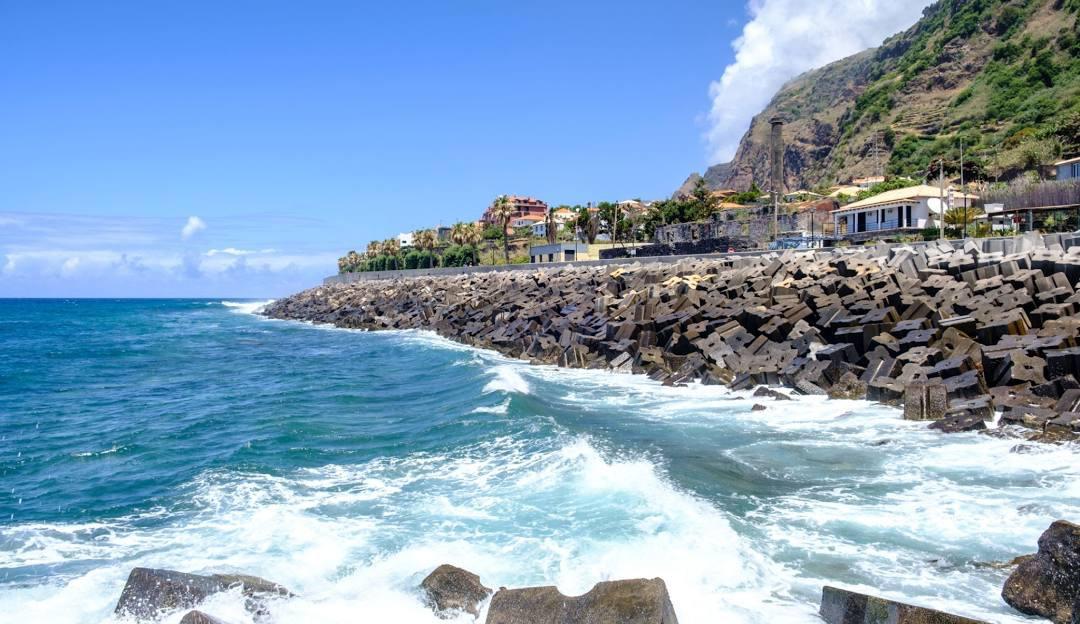
Jardim do Mar is not for everyone, and it doesn’t try to be. Perched on the southwest coast in the municipality of Calheta, about 36 km from Funchal and roughly 35 minutes by car, this clifftop village above a volcanic rock shoreline is built around one thing: waves. And the waves here can be serious.
The Jardim do Mar break is one of Madeira’s most respected surf spots, and in the right conditions it ranks among Europe’s best. Winter swells can be very large, and the rock platform that serves as the launch point is not a place for casual swimmers on a big day. This is a destination for experienced surfers and for anyone who wants to watch them, not a conventional beach day out.
That said, the village itself is one of Madeira’s most charming. Narrow cobblestone streets, bougainvillea-draped walls, and a handful of excellent restaurants make it worth visiting even if you never go near the water. The local espada, black scabbard fish, is particularly good here, and there is a scenic coastal hiking route toward Paul do Mar that takes around 1 to 1.5 hours, depending on how much of it you walk. It’s one of Madeira’s less famous coastal walks and is genuinely beautiful.
Paul do Mar nearby is the more accessible surf option, with easier entry points and local surf schools, though conditions can still be powerful. For surfers, it’s a better bet than Jardim do Mar if you’re not chasing the biggest swells.
Getting here is easiest by car. Bus access from Funchal is possible, but services are slow and infrequent, so an overnight stay in the village makes more sense than a rushed day trip.
14. Porto Santo Beach
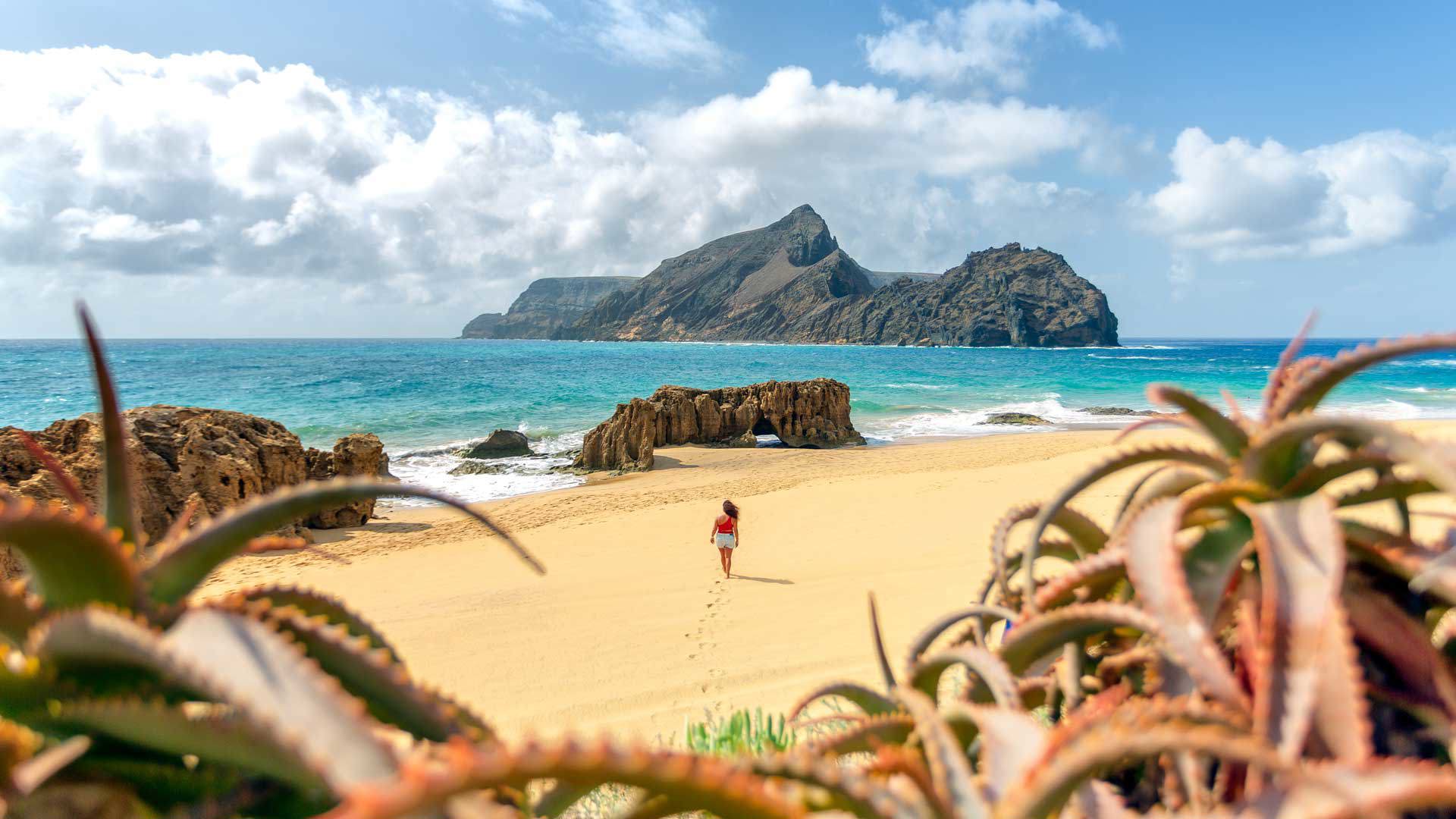
Porto Santo is Madeira’s best-kept secret, and it’s hiding in plain sight. The second inhabited island in the Madeira archipelago sits a ferry ride from Funchal, and it offers something the main island simply cannot: 9 uninterrupted kilometres of golden sand and shallow, calm water stretching along the southern coast.
The beach is wide, relaxed, and usually feels far less crowded than Madeira’s main-island shores. Its shallow water warms quickly, making it especially comfortable for swimming in the shoulder months. The sand is widely promoted for its therapeutic qualities, and Porto Santo’s spa culture reflects that reputation, but the beach stands out even without the wellness angle.
Getting there is straightforward, though the crossing is not short. The Porto Santo ferry from Funchal takes about 2 hours and 30 minutes, and fares vary by season and ticket type, so it’s best to check current prices before booking. A flight is the faster option, which is only 20 minutes, but the total travel time is longer once airport check-in is included. A day trip by ferry is possible, but an overnight stay, ideally two nights, gives the island far more justice.
Beyond the beach, Porto Santo offers plenty to fill a slower pace: an 18-hole golf course, kayaking, diving, and hilltop viewpoints that give a great aerial perspective of the full sand arc. The island is also known for its quiet roads, easy walks, and broad Atlantic views.
One final note: book ferry tickets early in summer, when demand is highest. And keep your eyes on the water during the crossing, dolphin sightings are often reported.
15. Poças das Lesmas

Poças das Lesmas is a natural volcanic-pool area near Seixal on Madeira’s north coast, and it feels quieter and more low-key than the island’s better-known bathing spots. Set beside the Atlantic with dark lava rock and clear water, it has a raw, elemental look that makes it especially appealing on a calm day.
This is no longer an undeveloped secret spot, though. The site is supervised and has basic facilities, including toilets, showers, a bar, and lifeguard cover, with an entry fee of about €2.50. It still feels far less polished than Porto Moniz, but it is not completely untouched.
The pools are best visited when the sea is calm, because waves can surge in suddenly and make the area dangerous. In rough conditions, it should be treated with real caution rather than as a casual swim stop. On a good day, the setting is beautiful, and the clear water around the rock formations makes it an appealing place to linger.
Poças das Lesmas works best as part of a Seixal visit rather than a standalone destination. It sits close to the main beach area, so a car makes access easiest, but the real value is in combining it with the surrounding north-coast scenery. If conditions are safe, it’s a rewarding place to spend a little time before moving on.
16. Ribeira do Natal
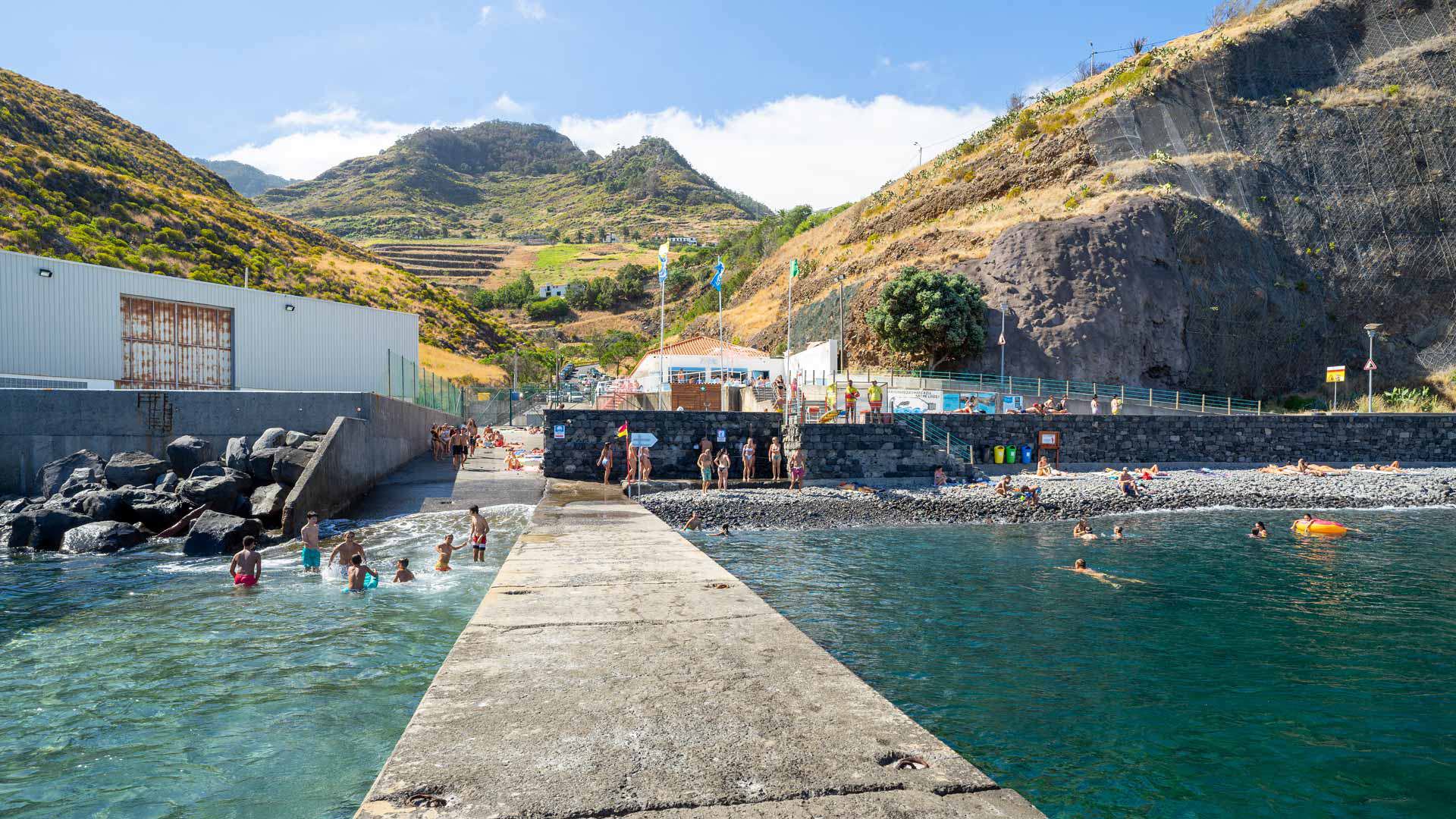
Ribeira do Natal is a quiet coastal bathing area in Caniçal, in the municipality of Machico, on Madeira’s east coast. It’s less famous than the island’s headline beaches, but its clear water, green mountain backdrop, and promenade setting make it a rewarding place to swim.
This is a coastal bathing area rather than a hidden freshwater pool, and it feels calm rather than dramatic. It has support facilities, including sun loungers, parasols, supervision in season, a bar, and parking, while the water quality is excellent. That makes it an easy, low-key place to spend an hour or two if you’re already exploring the east side of the island.
The setting is part of the appeal. The beach sits beside the Caniçal promenade, with a peaceful stretch of coast and a distinctly local feel. On calm days, the water is especially inviting, and the whole area works well as a relaxed swim stop rather than a destination that demands a full day.
Ribeira do Natal is best treated as part of an east-coast itinerary, especially if you’re already visiting Caniçal or the Ponta de São Lourenço area. It’s not a hidden jungle ravine, but it is one of those quieter Madeiran spots that reward a slower pace and a short stop away from the island’s busier beaches.
Book Your Madeira Trip for Less with CoinBooking
Planning your beach days in Madeira is one thing, but where you stay and how you get there can shape the entire experience. That’s exactly where CoinBooking comes in.
At CoinBooking, you can book both your flights and accommodation in one place, making it easier to plan your trip without jumping between multiple platforms. Whether you’re looking for a hotel in Funchal, a quiet stay in Ponta do Sol, or something close to Calheta’s sandy beach, you’ll find options that fit different travel styles and budgets.
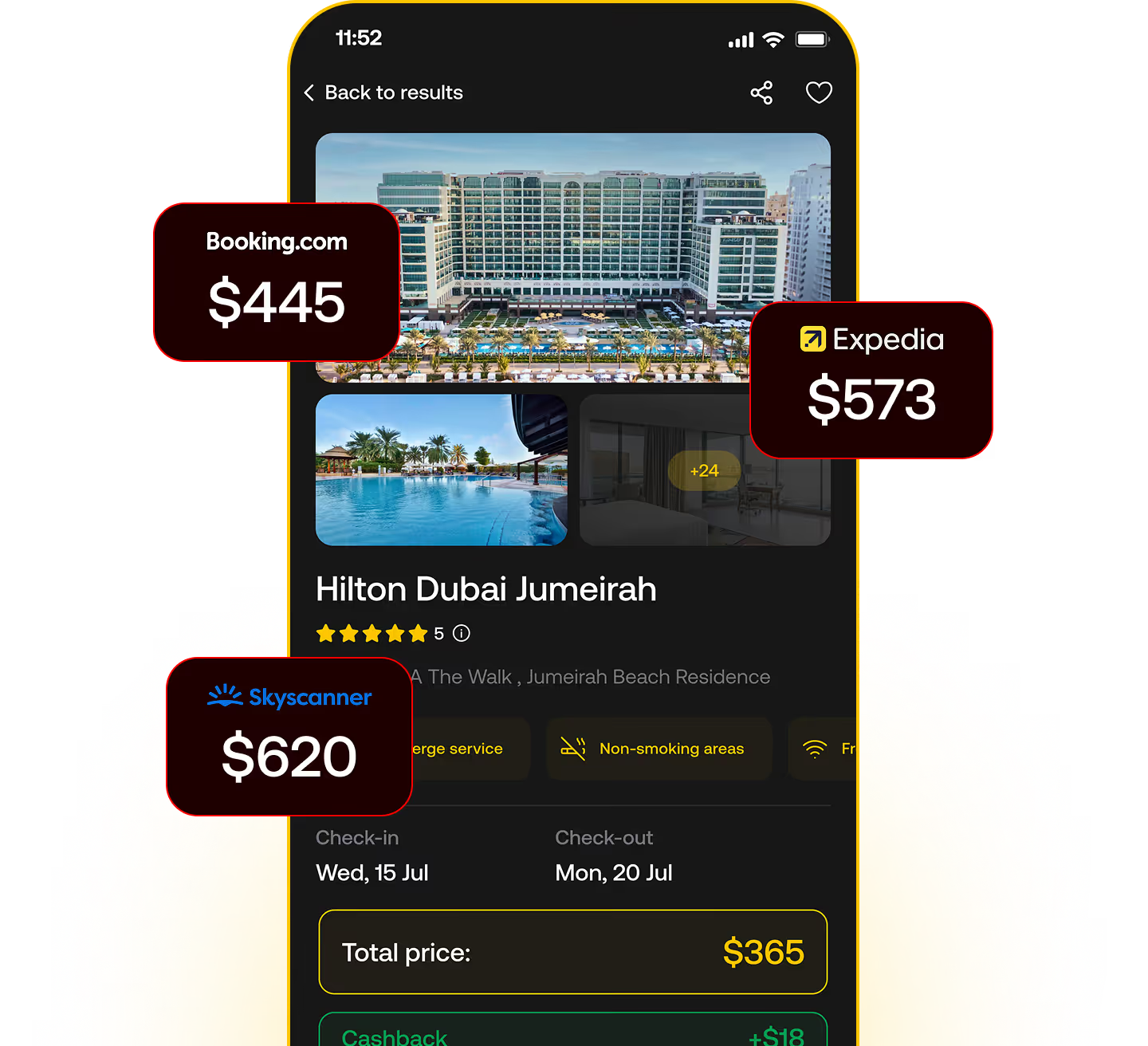
One of the biggest advantages is pricing. Our listings are up to 30% cheaper than booking.com, which means you can spend less on logistics and more on experiences, whether that’s a whale-watching tour, a coastal hike, or simply an extra night by the ocean.
We also offer the flexibility to pay with cryptocurrency, alongside standard payment methods. If you prefer using crypto for travel, this gives you a straightforward way to book your entire Madeira trip without converting back and forth.
If you’re booking for the first time, there’s a bonus: new users get $25 off their first trip, so sign up early and lock in extra savings before you finalize your Madeira plans.
Frequently Asked Questions
1. Does Madeira have sandy beaches?
Yes, but not many on the main island. Madeira is better known for pebble beaches, lava rock pools, and bathing complexes, while true sand beaches are mainly found at Calheta and Machico. Porto Santo is the standout if you want a long natural sandy beach.
2. What are the best beaches in Madeira?
That depends on what you want. Porto Santo is best for long golden sand, Calheta is the easiest man-made sandy beach, Seixal is popular for its dramatic black-sand setting, and Porto Moniz is famous for natural volcanic pools.
3. Can you swim at Madeira’s beaches year-round?
Yes, swimming is possible year-round in Madeira, though conditions vary by season. Summer usually brings the warmest water and calmer beach days, while winter can be rougher on the north coast.
4. Are Madeira’s beaches good for families?
Yes, especially beaches with calmer water and more facilities, such as Calheta, Machico, and Praia Formosa. Porto Moniz’s pools and some organized bathing areas are also family-friendly when sea conditions are calm.
5. Do you need a car to visit Madeira’s beaches?
A car makes beach-hopping much easier, especially for north-coast spots like Seixal and Porto Moniz. Some beaches are reachable by bus, but self-driving gives you more flexibility and saves time.
6. What should I bring to Madeira beaches?
Water shoes are helpful for pebble beaches and lava-rock pools, and sunscreen is essential because the Atlantic sun can be strong. If you plan to swim at natural pools or rocky beaches, it’s also smart to check sea conditions before getting in.

Saira Parveen is a Dubai-based SEO content writer with a background in digital marketing and search visibility. She covers cryptocurrency adoption, travel booking with digital assets, and the practical side of spending crypto in everyday life.
Her work at CoinBooking focuses on helping readers navigate the intersection of crypto and travel, from finding the best rates on hotels and flights to understanding how to pay for travel with digital assets.
Found a hotel you like? Book it for up to 30% less

Found a hotel you like? Book it for up to 30% less