.avif)
.avif)

.png)

Content
DENT Coin: Top 5 Ways to Spend it in 2026

DENT is the native token of DENT Wireless, a blockchain-based digital mobile operator built to open up global mobile data access and remove the friction of international roaming fees. Issued on Ethereum as an ERC-20 asset, DENT powers a decentralised data-sharing economy that spans more than 140 countries, and can be used inside the project's own applications or acquired through open markets.
Founded by Tero Katajainen in Finland in 2014, the project has since undergone a major structural shift. Following DT One's acquisition of DENT Telecom, the consumer ecosystem is transitioning under the Tunz brand, positioning itself as a unified fintech layer for global eSIM connectivity.
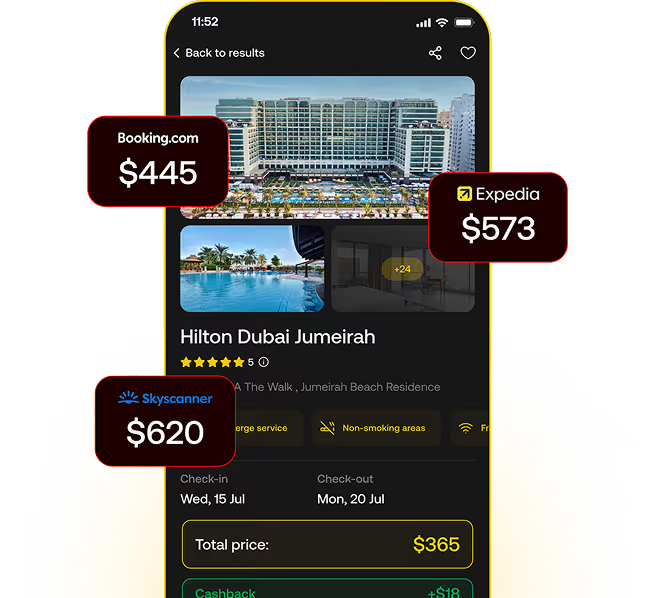
But what can DENT holders actually do with the token today beyond holding or trading it? One of the most practical options is travel. DENT holders can book hotels and flights on CoinBooking at prices of up to 30% below Booking.com, while new users can also claim $25 off their first booking.
See how much you
could save with $DENT
Answer 2 questions to get your personalized
savings estimate.
Question 1 of 2
Where do you want to go?
Question 2 of 2
How many nights?
Your result
Get similar deals when we go live.
Get $25 off your first trip.
Below, we break down five practical ways to spend or use DENT in 2026.
1. Book Discounted Hotels and Flights With DENT on CoinBooking
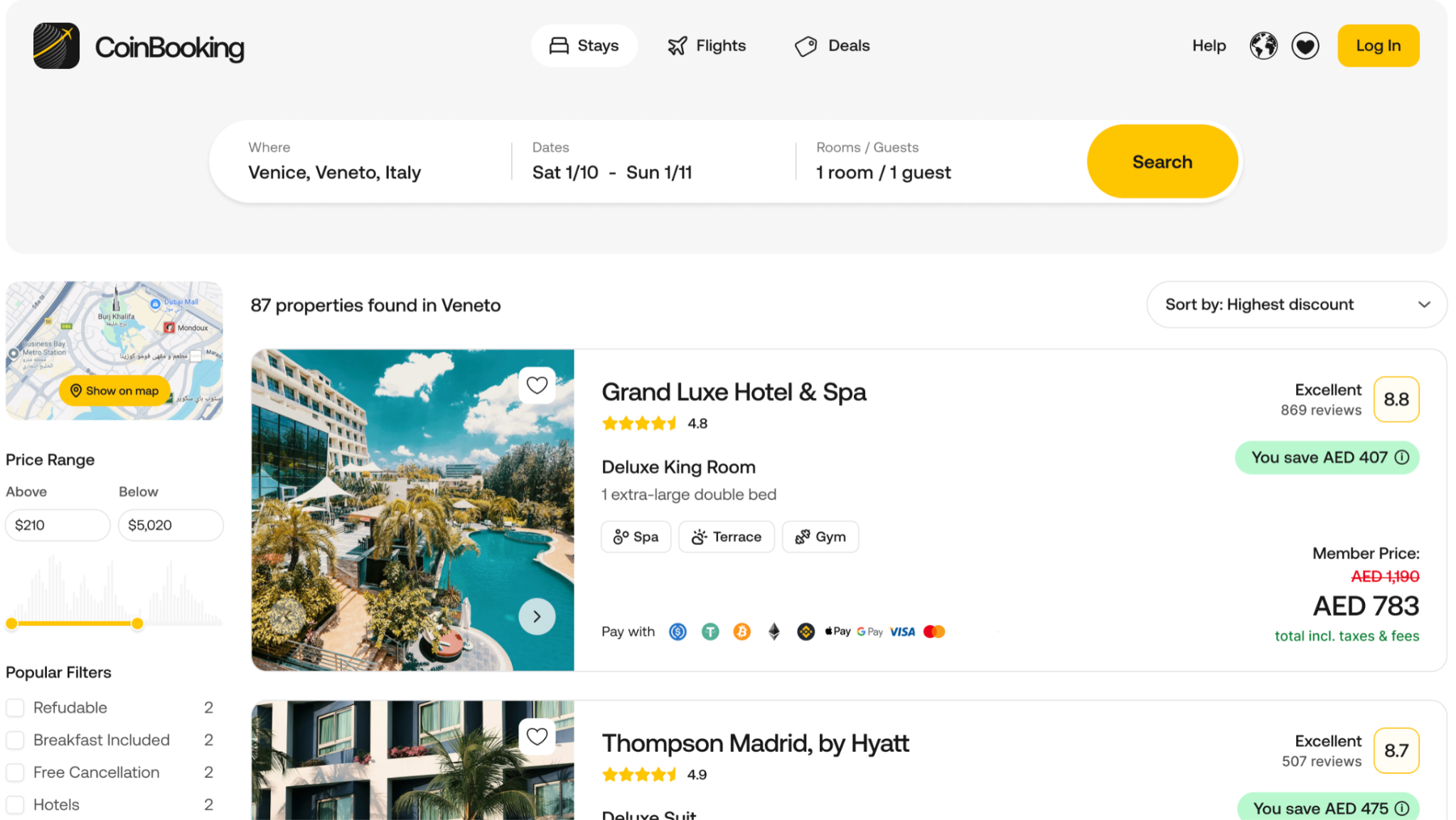
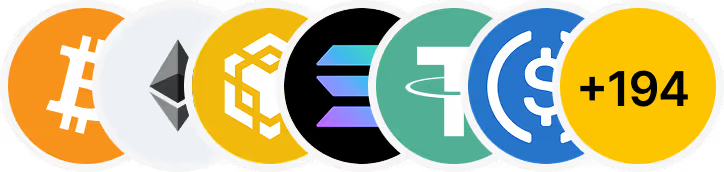
The most practical way to spend DENT in 2026 is on travel. CoinBooking is a crypto-native travel booking platform that supports 200+ cryptocurrencies, including DENT, allowing users to book hotels and flights directly with crypto. It offers access to more than 2 million hotels across 190+ countries, with prices up to 30% lower than Booking.com.
Book your next hotel for up to 30% less
For DENT holders, this means you can use your tokens directly for travel without converting them to fiat first. CoinBooking also accepts Visa, Mastercard, Apple Pay and Google Pay, giving you flexibility in how you pay. New users can also claim $25 off their first booking.
2. Buy eSIM Data and Global Connectivity Through the Tunz App
DENT's strongest native spending use case sits inside the Tunz application, formerly known as the DENT app. The mobile and web apps let holders purchase eSIM data packages, voice minute top-ups and international calling credit for use across the project's global network, without swapping physical SIM cards.
This matters because DENT was designed as an ecosystem currency for a decentralised mobile data economy rather than as a purely speculative asset. Users spending DENT tokens inside the app also receive incentives at checkout, including up to 20% extra free eSIM data on eligible purchases.
For a DENT holder, the process is straightforward: download the Tunz app, select a destination country and data package, and pay in DENT at checkout. The app also supports fiat payment rails such as Apple Pay, PayPal and major credit cards, alongside crypto options including ETH, giving holders flexibility when topping up.
Availability of packages depends on regional coverage, which currently spans more than 140 countries. As the Tunz rollout continues under the DT One structure, the app remains the most direct way to spend DENT on real connectivity today.
3. Trade Unused Mobile Data Peer-to-Peer on the DENT Exchange
Beyond top-ups inside the app, DENT holders have a second native use case through the DENT Exchange, a peer-to-peer marketplace where users can buy, sell and donate mobile data allowances directly to one another.
The exchange functions as a horizontal marketplace, letting participants list unused data packages globally and settle transactions in DENT. For holders, this creates a genuine circular economy: data purchased in one region can be resold or transferred, and DENT acts as the medium of exchange throughout.
The flow for a holder is simple. Connect a compatible wallet, browse or list data packages on the exchange, and complete the transaction in DENT. Because settlement happens directly between users, the exchange offers a use case that goes beyond conventional pre-paid mobile top-ups.
As the Tunz rollout progresses and the underlying infrastructure integrates further with the DT One network, the DENT Exchange remains one of the clearest ways to put DENT to work without leaving the ecosystem.
4. Buy Physical Collectibles With DENT Through Polkastarter
If you want to turn your DENT into something tangible outside the Tunz ecosystem, you can use Polkastarter to buy physical collectibles after converting DENT into a supported cryptocurrency.
Polkastarter's crypto marketplace lets users purchase real physical collectibles, including Pokémon cards, graded cards, sealed products and other trading-card items. Its checkout supports cryptocurrency across multiple Layer 1 and Layer 2 networks.
DENT is not currently listed among the supported payment assets, so you would need to convert your DENT into a compatible cryptocurrency first. Following localised delistings on some centralised exchanges, much of DENT's liquidity has moved toward alternative venues and decentralised swaps, so conversion into a widely accepted asset such as ETH or USDT is still achievable for holders with a self-custody wallet.
You can then connect a supported self-custody wallet to Polkastarter, select a physical collectible and complete the crypto payment. Items shipped are real physical products rather than NFTs.
Explore Polkastarter's physical collectibles marketplace to see what's available.
5. Buy Gift Cards and Digital Products After Converting DENT
Another practical route is to convert DENT into a cryptocurrency accepted by a crypto-commerce platform such as Bitrefill.
Bitrefill allows users to purchase digital gift cards, eSIMs, mobile top-ups and other everyday products using cryptocurrency. Its supported payment options include Bitcoin, Ethereum, USDC, USDT, Litecoin, Dogecoin, Solana and other cryptocurrencies.
DENT is not currently listed as a direct Bitrefill payment option, so DENT holders would first need to swap their tokens for an accepted cryptocurrency.
Once converted, the resulting crypto can be used to purchase products such as retail gift cards, gaming credit, streaming subscriptions, eSIMs and mobile top-ups. Depending on the user's country, available products can include brands and services such as Amazon, Apple, Netflix, Airbnb, Uber, eBay, Spotify and Roblox.
The process is therefore: DENT → supported cryptocurrency → gift card, eSIM or mobile top-up.
It is not a direct DENT payment, but it gives holders another route to turn their tokens into everyday purchasing power, particularly for users who want alternatives to the Tunz app's own eSIM catalogue.
Explore Other CoinBooking Supported Tokens:
- Top 5 Ways to Spend Ready Cards (READY) Crypto Coin in 2026
- Top 5 Ways to Spend VINE Crypto Coin in 2026
Frequently Asked Questions
1. What is DENT crypto?
DENT is the native token of DENT Wireless, a blockchain-based digital mobile operator founded by Tero Katajainen in Finland in 2014. It is issued on Ethereum as an ERC-20 asset and powers a decentralised mobile data economy spanning more than 140 countries.
2. Can I spend DENT on hotels and flights?
You can use CoinBooking to book hotels and flights with 200+ cryptocurrencies. CoinBooking provides access to more than 2 million discounted hotels and flights across 190+ countries. New users can also claim $25 off their first booking.
3. What can I buy with DENT inside the Tunz app?
The Tunz app, formerly the DENT app, lets holders spend DENT on eSIM data packages, voice minute top-ups and international calling credit across 140+ countries. Users paying in DENT can also receive incentives such as up to 20% extra free eSIM data on eligible purchases.
4. Can I buy gift cards with DENT?
Not directly through Bitrefill at present. DENT holders can convert DENT into a cryptocurrency supported by Bitrefill and then use that asset to purchase eligible gift cards, eSIMs, mobile top-ups and other digital products.
5. Who runs DENT Wireless?
DENT Wireless was founded by Tero Katajainen, with Mikko Linnamäki joining as co-founder in 2017. Following DT One's acquisition of DENT Telecom, the consumer-facing ecosystem is transitioning under the Tunz brand as a unified fintech layer for global eSIM connectivity.

Saira Parveen is a Dubai-based SEO content writer with a background in digital marketing and search visibility. She covers cryptocurrency adoption, travel booking with digital assets, and the practical side of spending crypto in everyday life.
Her work at CoinBooking focuses on helping readers navigate the intersection of crypto and travel, from finding the best rates on hotels and flights to understanding how to pay for travel with digital assets.
Found a hotel you like? Book it for up to 30% less

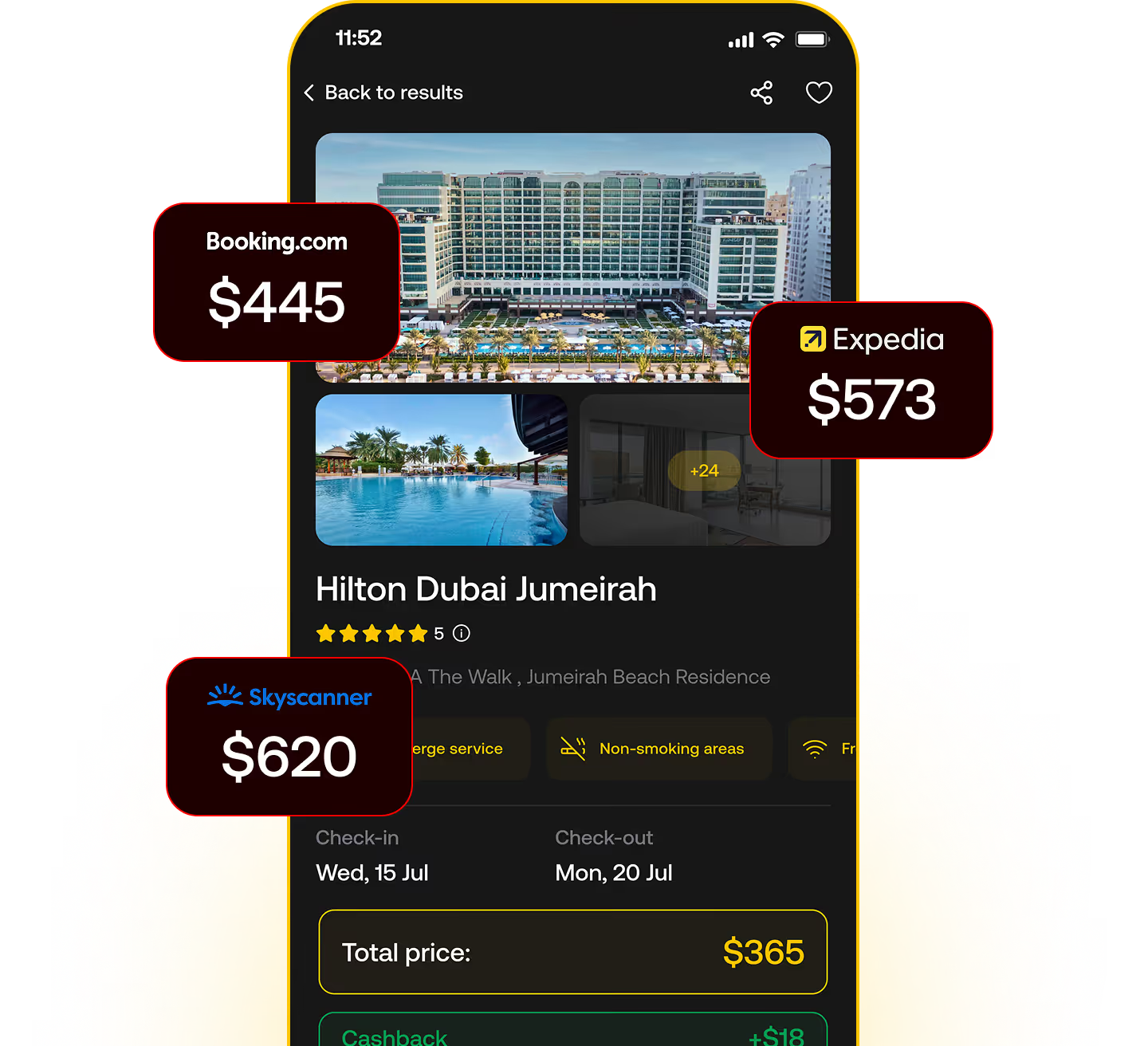
Found a hotel you like? Book it for up to 30% less