.avif)
.avif)

.png)

Content
Peercoin (PPC): Top 5 Ways to Spend It in 2026

Peercoin (PPC) is a legacy cryptocurrency launched in 2012 that introduced the first working Proof-of-Stake consensus mechanism. Created by Sunny King and Scott Nadal, it runs on a hybrid PoW/PoS model and has evolved into a community-driven, open-source project focused on energy-efficient network security and long-term value preservation.
See how much you
could save with $PPC
Answer 2 questions to get your personalized
savings estimate.
Question 1 of 2
Where do you want to go?
Question 2 of 2
How many nights?
Your result
Get similar deals when we go live.
Get $25 off your first trip.
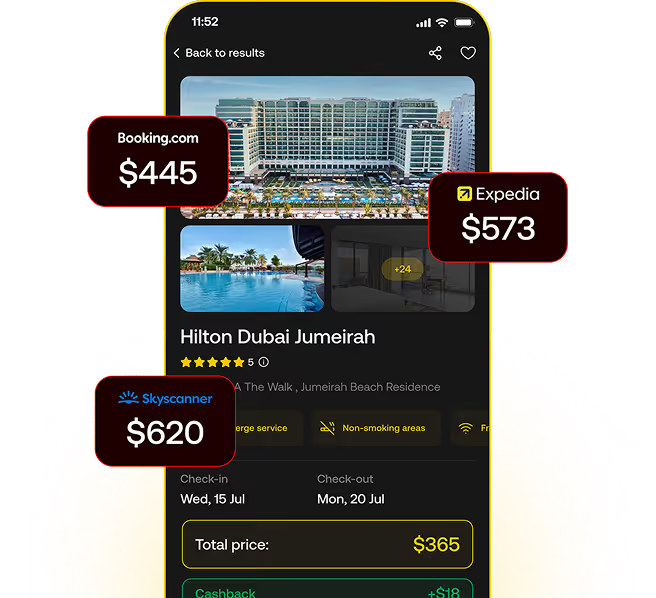
So what can you actually do with PPC in practice? Travel is the shortest route to a real purchase. Holders can reserve hotels and flights through CoinBooking at rates up to 30% below Booking.com, and first-time users can get $25 off their first booking. Below are five practical ways to put PPC to work in 2026.
1. Book Discounted Hotels and Flights with PPC on CoinBooking
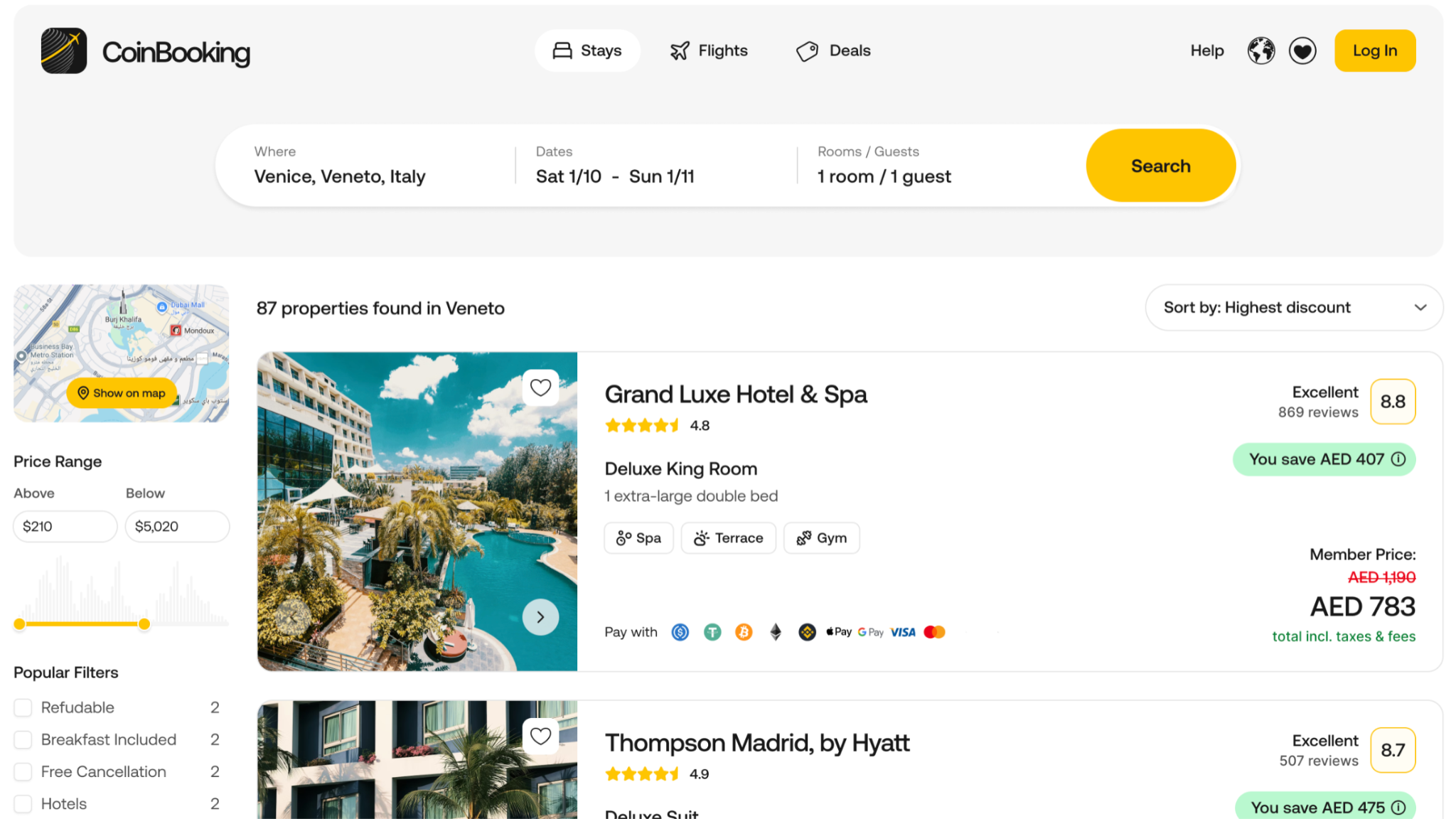
For everyday utility, travel remains the easiest place to spend PPC in 2026. CoinBooking is a crypto-first booking platform with support for 200+ cryptocurrencies (PPC included) and a catalogue covering more than 2 million hotels in over 190 countries.
Book your next hotel for up to 30% less
You can book flights and hotel prices up to 30% cheaper than on Booking.com or Expedia, and payment is flexible: Visa, Mastercard, Apple Pay, Google Pay, or any of the supported coins. There's also a $25 discount waiting on your first booking.
2. Earn Minting Rewards by Staking PPC on the Peercoin Network
Peercoin's on-chain economy is the coin's original purpose. PPC handles two jobs at the protocol level: it covers the small fees that keep transactions moving and discourage spam, and it produces minting rewards for holders who keep a stake active. For anyone already holding the coin, these are the uses the network was built around.
Underneath sits the hybrid Proof-of-Work and Proof-of-Stake design Peercoin introduced back in 2012. Instead of leaning entirely on electricity-heavy mining, PoS minting works off coin age, which measures how long a stake has sat undisturbed in a wallet. The idea was novel at the time, and much of what modern PoS chains do now trace back to that first implementation.
Getting set up is straightforward. Install a Peercoin-compatible wallet, either the official client or a BIP39-compatible third-party option, and load it with PPC. Leaving those coins in place lets them accumulate coin age, and the wallet then mints fresh PPC in proportion to the size of the stake and how long it has been held. Fees paid during transactions are burned rather than recycled back to validators, which pairs with the network's steadily declining inflation curve.
Two practical points matter here. First, Peercoin's issuance schedule tapers over time, so the coin leans closer to a long-term store of value than a high-yield staking product. Second, Ledger removed native PPC account support from its official app, meaning holders now manage keys through compatible third-party wallets instead. Neither point rules out staking, but both are worth knowing before starting.
The caveat is that Peercoin is best understood as a stable, volunteer-run base layer rather than a fast-moving ecosystem. What PPC buys at the protocol level is direct participation in the network itself, not access to a marketplace of new products. For a coin explicitly positioned as digital sound money, that focus is the design goal, not a limitation.
3. Buy Physical Collectibles With PPC Through Polkastarter
For a tangible purchase, Polkastarter's marketplace handles crypto payments for real, shippable goods. The strongest inventory is in trading cards: Pokémon singles, graded slabs, sealed booster products, and comparable hobby items. Everything listed is physical stock held for dispatch, not a tokenised or digital version of the item.
Payments run through several Layer 1 and Layer 2 networks, which spreads out gas costs and lets buyers pick whichever chain suits them best. PPC isn't among the directly accepted coins, so the workaround involves a single conversion step first.
Here's the sequence: exchange PPC for a Polkastarter-supported coin on a centralised venue such as MEXC, transfer that coin into a self-custody wallet the marketplace recognises, browse the listings, drop a collectible into the cart, and pay out. Once the transaction settles on-chain, the item is queued for shipping.
The route runs through a conversion rather than paying in PPC directly, but for a holder who wants something physical out of a long-standing stake, it's a workable way to turn Peercoin into a display piece.
Check Polkastarter's Marketplace physical collectibles listings for the current stock.
4. Buy Gift Cards, eSIMs and Mobile Top-Ups After Converting PPC
Bitrefill fills the crypto-to-consumer gap. Its inventory covers digital gift cards, eSIMs, mobile refills, and a range of similar prepaid products, with delivery arriving by email or redemption code within minutes of confirmation. The list of accepted coins includes Bitcoin, Ethereum, USDC, USDT, Litecoin, Dogecoin, Solana, and several others.
PPC isn't on that list yet, so the first move is a swap into something Bitrefill will take. Routing through USDT tends to be the cleanest option, with the conversion handled on a centralised exchange where PPC has a spot pair, such as MEXC.
The catalogue itself is wide. Retail gift cards, gaming credit, streaming subscriptions, eSIMs, and mobile top-ups all sit under the same roof, with availability varying by country. Common brands include Amazon, Apple, Netflix, Airbnb, Uber, eBay, Spotify, and Roblox. The eSIM section is worth noting for travellers, since a data pack for the next trip can be arranged in the same window as a CoinBooking hotel reservation.
Put simply: PPC gets swapped into a supported coin, and the supported coin buys the gift card, eSIM, or refill.
The extra swap adds a step, but the end result is identical: a coin balance becomes a usable product, and the delivery window is measured in minutes.
5. Convert PPC to Fiat or Stablecoins for Everyday Spending
The broadest option is also the least complicated: turn PPC into an asset that merchants already recognise, then spend that. Peercoin has spot markets on centralised exchanges including MEXC, where PPC/USDT is the main pair, along with smaller venues such as FreiExchange for holders looking outside the CEX route.
From there, PPC converts into USDT, USDC, or a supported fiat currency. That balance can then move to a crypto payment card issued by an exchange, a card from an independent provider, or straight into a bank account for standard transfers and card use. Every one of those rails is already accepted at ordinary merchants, so the question stops being "does this shop take PPC" and becomes "does this shop take Visa," which is a much lower bar.
The catch is that this path adds a conversion step and, on a centralised exchange, requires KYC. For a one-off small purchase, that isn't much friction. For anything regular or larger in size, planning out which stablecoin and which card offers the best fees ahead of time turns it into a reliable habit rather than a scramble at checkout.
Whenever a merchant won't accept PPC on its own, this is the fastest and most predictable way to close the purchase.
Explore Other CoinBooking Supported Tokens:
- Top 5 Ways to Spend Ika (IKA) Crypto Coin in 2026
- Top 5 Ways to Spend Balancer (BAL) Crypto Coin in 2026
Frequently Asked Questions
1. What is Peercoin (PPC)?
Peercoin (PPC) is a legacy cryptocurrency launched in 2012 by Sunny King and Scott Nadal. It introduced the first working Proof-of-Stake consensus and now runs on a hybrid PoW/PoS model maintained by an open-source community.
2. Can I book travel with Peercoin?
Yes. CoinBooking accepts 200+ cryptocurrencies, including PPC, giving access to more than 2 million hotels across 190+ countries at rates up to 30% below Booking.com. New users also get $25 off their first booking.
3. Can I buy gift cards with Peercoin?
PPC holders can convert into a supported cryptocurrency first, then use that coin for eligible gift cards, eSIMs, mobile top-ups, and similar digital products.
4. Can I earn rewards by holding Peercoin?
Yes. PPC uses a Proof-of-Stake minting model based on coin age, so holders who keep PPC in a compatible wallet and stake it earn protocol-level minting rewards over time.
5. Who created Peercoin?
Peercoin was launched in 2012 by pseudonymous developer Sunny King, also known for creating Primecoin, alongside co-developer Scott Nadal. It has since evolved into a decentralised, community-driven project.

Saira Parveen is a Dubai-based SEO content writer with a background in digital marketing and search visibility. She covers cryptocurrency adoption, travel booking with digital assets, and the practical side of spending crypto in everyday life.
Her work at CoinBooking focuses on helping readers navigate the intersection of crypto and travel, from finding the best rates on hotels and flights to understanding how to pay for travel with digital assets.
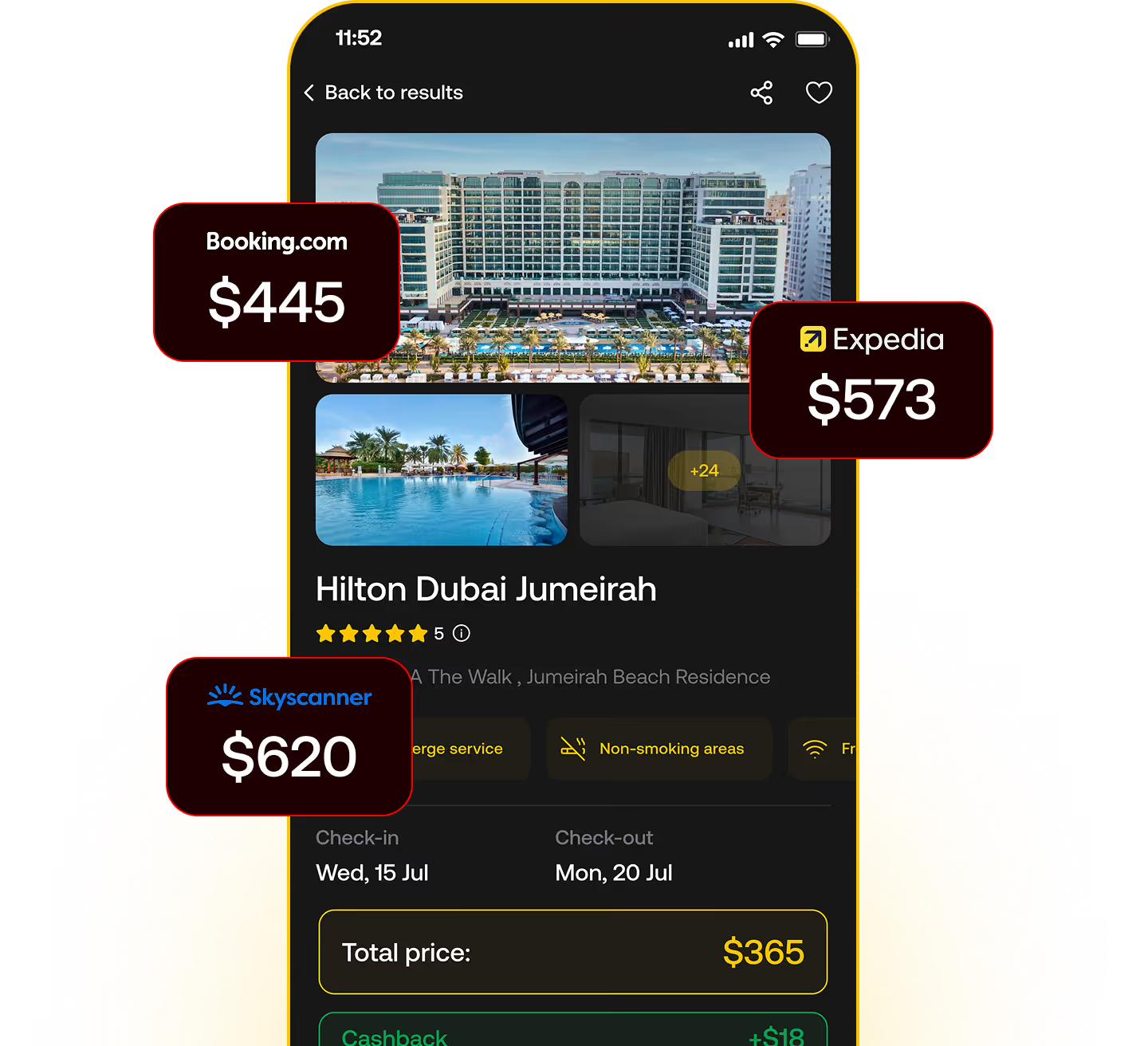
Found a hotel you like? Book it for up to 30% less

Found a hotel you like? Book it for up to 30% less