.avif)
.avif)

.png)

Content
12 Best Things to Do in Cyprus, Beyond the Beaches (2026 Guide)

With over 320 sunny days a year and a history dating back more than 10,000 years, Cyprus is a perfect Mediterranean getaway. The island welcomed a record 4.5 million international visitors in 2025 and offers a unique mix of ancient history, clear waters, and mountain landscapes.
Known as the birthplace of Aphrodite, the Greek goddess of love, Cyprus is famous for its incredible contrasts; you can ski in the snowy Troodos Mountains in the morning and swim in the Mediterranean Sea by afternoon. It is also home to Commandaria, one of the world’s oldest named wines. From UNESCO-listed ruins to beautiful Blue Flag beaches, Cyprus offers an unforgettable experience between Europe and Asia.
Short on time? The video below covers all 12 things to do in Cyprus in under three minutes, from Nissi Beach, the Troodos Mountains, Varosha's ghost streets, the Zenobia wreck, Nicosia's divided capital, and the Blue Lagoon at Akamas. It's the fastest way to see what the island actually looks like past the resort gates. Read on if you want the prices and logistics in full.
At CoinBooking, you can book hotels and flights at up to 30% less than Booking.com and pay by Visa, Mastercard, Apple Pay, Google Pay, or 200+ cryptocurrencies. Sign up for early access and get $25 off your first booking.
What Is Cyprus Actually Famous For?
Cyprus sits at the eastern tip of the Mediterranean, closer to Lebanon and Syria than to Athens. That geography matters. The island has been ruled by Mycenaeans, Phoenicians, Egyptians, Persians, Romans, Byzantines, Crusaders, Venetians, Ottomans, and the British in that order, and every one of them left something behind.
The official census tallies more than 650 kilometres of coastline, over 40 Blue Flag beaches (the highest concentration per kilometre of any country in the world, per the Foundation for Environmental Education), and a mountain range that still runs a ski resort in winter. The island also holds a unique political circumstance: the southern two-thirds are the internationally recognised Republic of Cyprus, a European Union member state, while the northern third is administered by Turkish Cyprus. A UN-patrolled buffer zone runs between them, cutting through the centre of the capital, Nicosia. Crossing from south to north takes about thirty seconds on foot. Understanding that this crossing exists transforms your itinerary.
1. Nissi Beach and the Ayia Napa Coastline

Start here, because this is where most people start, and it earns its reputation. Nissi Beach is a 500-metre stretch of pale sand on the northeast coast with shallow, luminously clear water and a small tidal islet you can wade to at low tide. The beach clubs behind it run from sunrise well into the evening. It is busy, it is photogenic, and it is exactly what the photos suggest.
What those photos do not show is Cape Greco, ten minutes east along the coastal road. The national park here covers a headland of white limestone cliffs, sea caves carved at water level, and snorkelling water so clear you can see the rock formations eight metres down without a mask. There is a narrow window in the cliff face, visible only if you know where to look, that frames a perfect square of the Mediterranean. It has become one of the most photographed spots on the island, for good reason.
The sea caves at Cape Greco are free to access. Park at the signed car park off the B6 road and walk ten minutes to the cliff edge. Go early in the morning by 10 am in summer; the light goes flat, and the paths fill up.
2. The Troodos Mountains and Omodos Village
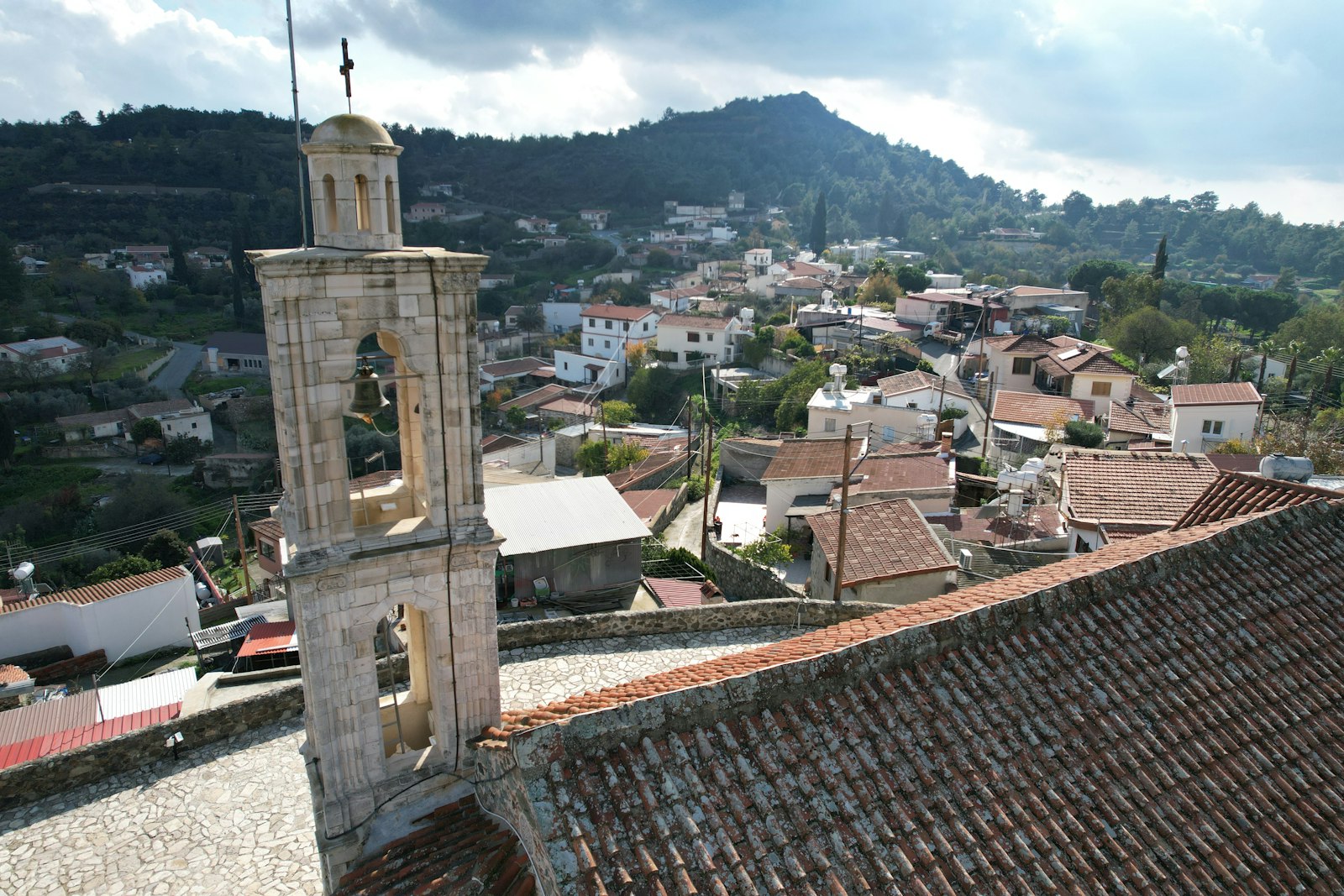
If Nissi Beach is Cyprus's Instagram face, the Troodos Mountains are its actual character.
The range covers the centre of the island from northwest to southeast, rising to Mount Olympus at 1,952 metres high enough that there is a ski resort operating from January through March on its upper slopes. The villages in the foothills are built in local stone, their main squares shaded by plane trees that have been there for centuries. Vineyards run up hillsides that have been planted continuously since antiquity.
Omodos is the one to anchor a mountain day around. The village is built on a slope above the Kryos River valley, its main square surrounded by working wineries and a 10th-century monastery, the Timios Stavros, that houses what it claims are relics from the True Cross. Whether you find that credible or not, the monastery courtyard is one of the quieter, more genuinely old places you will sit in the eastern Mediterranean.
The drive-up is half the point. The B8 road from Limassol winds through the wine region known as Krasochoria, the 'wine villages', past old whitewashed walls and roadside fruit stalls selling the season's produce. Take it slow. This is not a road that rewards rushing.
3. Kato Paphos Archaeological Park
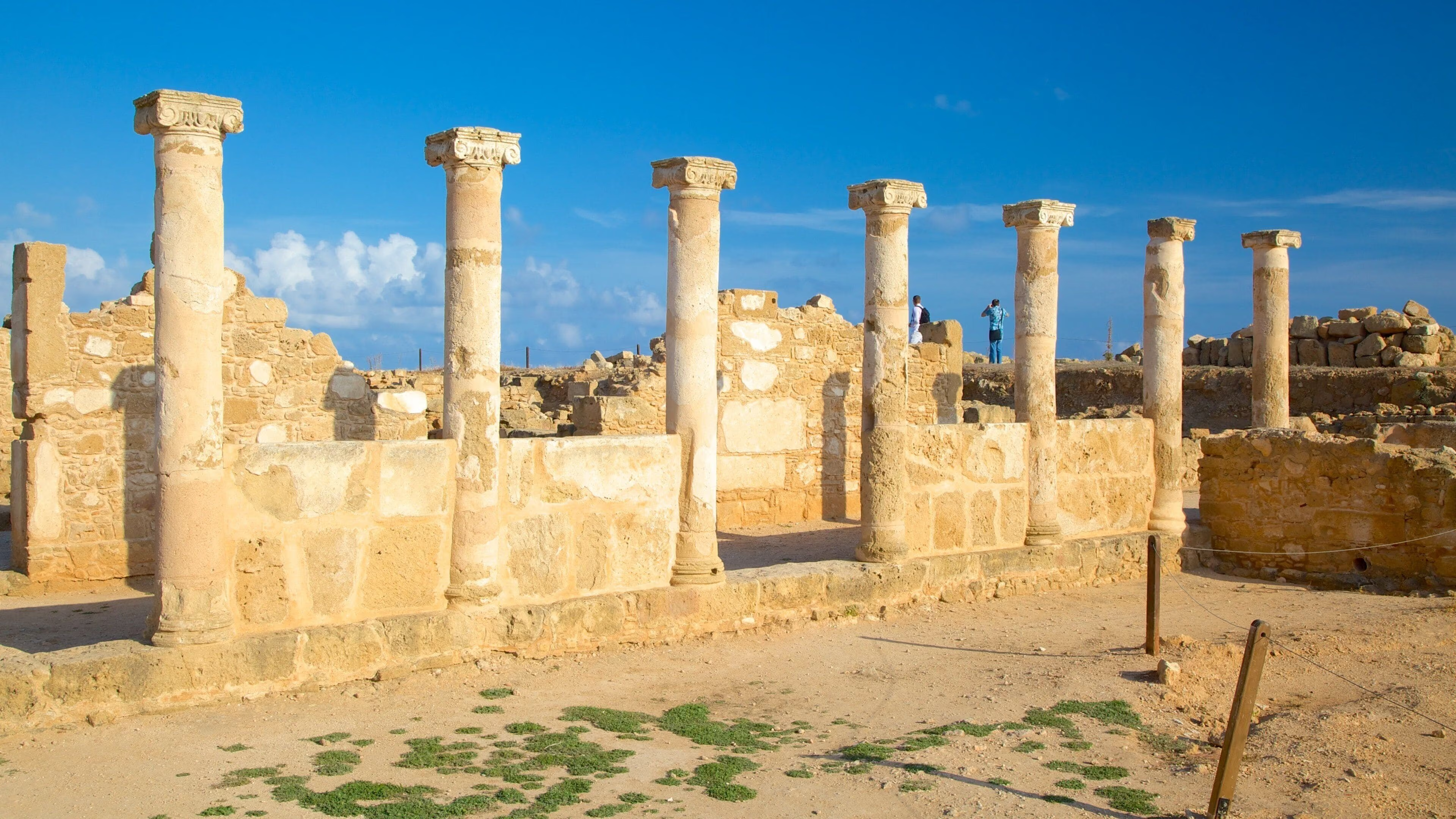
Paphos is a UNESCO World Heritage Site, and for once that designation doesn't feel like an overreach.
They were discovered in 1962 when a farmer ploughed up the corner of the House of Dionysus, a villa whose entire floor is a series of mythological scenes rendered in coloured stone at a level of detail and artistry that makes you stand there longer than you planned.
The park also contains the ruins of a 2nd-century Odeon theatre, an early Christian basilica, and the lighthouse. It is an active excavation site; archaeologists are still working on sections of it, which means that periodically new things appear. At least two hours, ideally three. Go in the morning before tour coaches arrive.
4. The Tombs of the Kings, Paphos
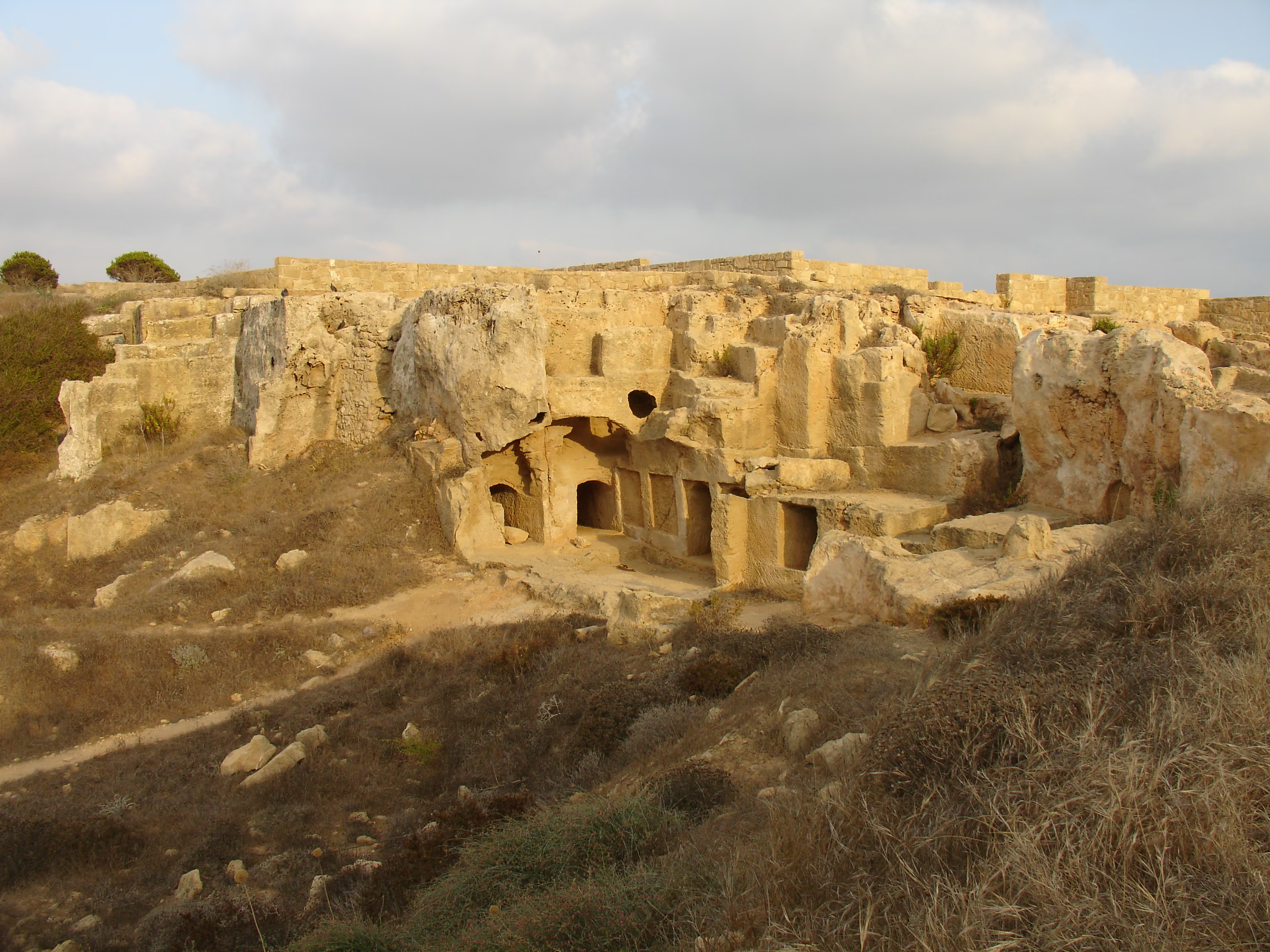
Three kilometres north of Kato Paphos, carved into the coastal rock around 300 BC, is one of the most atmospheric ancient sites in Cyprus.
Despite the name, no actual kings were buried here. The tombs were built for the city's senior officials, merchants, and priests, people of sufficient standing to require an underground vault cut from living stone, with Doric columns and painted plaster ceilings. Eight separate tombs have been excavated, some descending through multiple levels into chambers where you can still see traces of the original frescoes.
The site sits on a low cliff above the sea. In the late afternoon, with the sun off the main walls, the light falls into the entrances in a way that is worth seeing. Entry is approximately €2.50, and the combined ticket with Kato Paphos saves money if you are doing both in one day, which you should.
5. Crossing to Northern Cyprus: Varosha and Famagusta

This is the experience that most travel guides underexplain, and it is one of the most genuinely interesting things you can do on the island.
The crossing from south to north is simple. Bring your passport. Drive or walk to one of the seven designated border checkpoints; the most straightforward for visitors based in Larnaca or Ayia Napa is the Agios Dometios crossing near Nicosia, or the Ledra Palace on foot. On the northern side, car insurance from the Republic of Cyprus is not recognised, so budget approximately €30 in cash for third-party cover at the checkpoint. This is not negotiable and cannot be paid by card. Keep cash.
Once across, head to Famagusta. The walled old city is Ottoman and Venetian architecture in an unlikely and beautiful combination: a Gothic cathedral converted into a mosque, Venetian walls thick enough to drive a car along the top of, and a medieval harbour that has barely changed in five hundred years.
Varosha is the main draw for most visitors. Once one of the Mediterranean's most glamorous resort towns, Elizabeth Taylor holidayed here, it was abandoned overnight during the 1974 Turkish invasion and remained sealed off for nearly five decades. Sections have been reopening since 2020, and the area now receives over 1.8 million visitors annually, with guided tours operating through the partially accessible streets. The eerie combination of crumbling 1970s hotel facades, nature reclaiming the interiors, and absolute silence is unlike anything else on the island. Book a guided tour; trying to navigate independently limits what you can see.
Important note for 2026: The reopening of Varosha remains a politically sensitive and evolving situation. Entry rules can change. Check current access conditions before you go and use a licensed Northern Cyprus tour operator.
6. Nicosia: Walking the Divided Capital
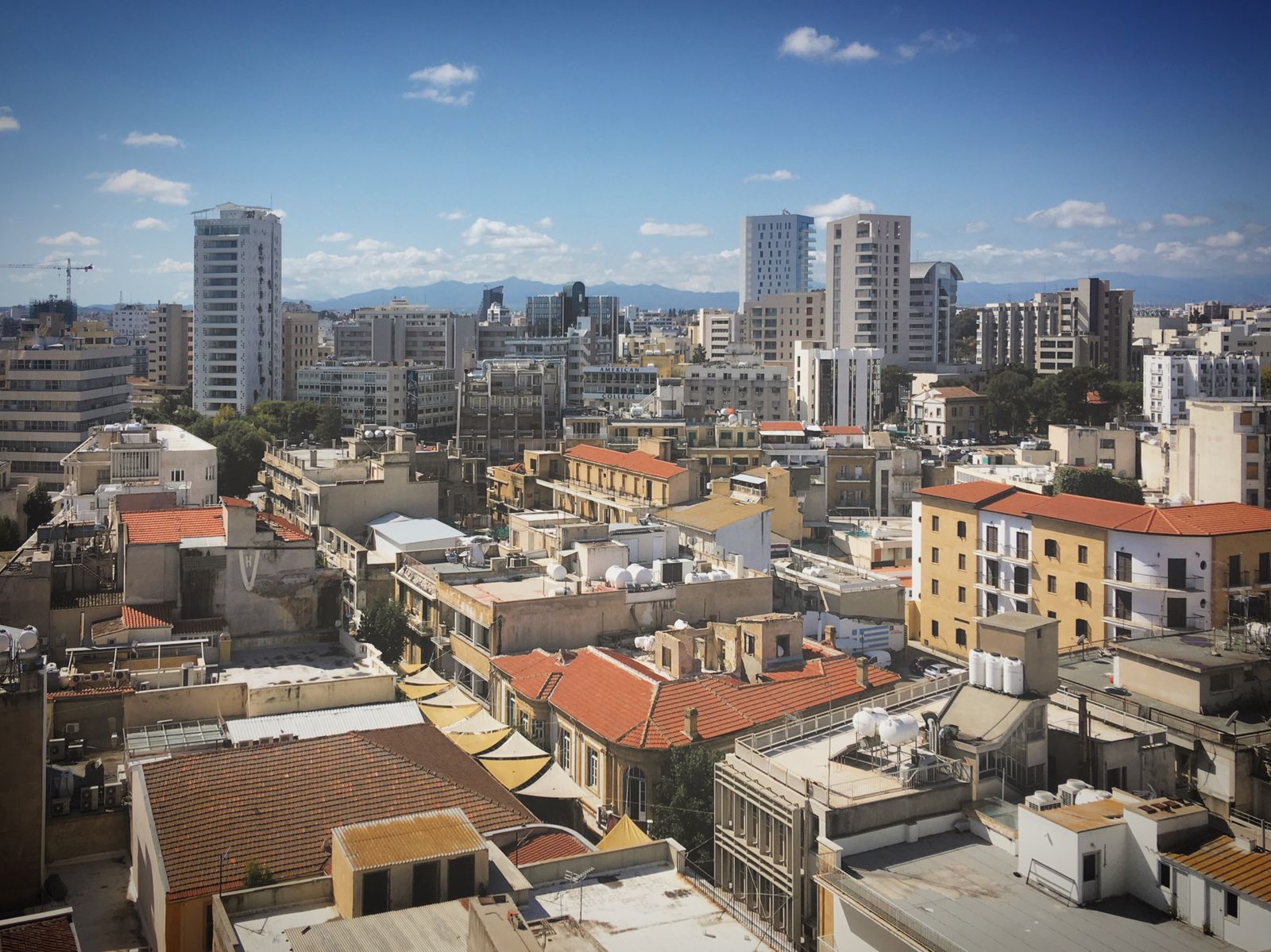
Nicosia is a city most visitors skip entirely, and that is a mistake. The old city sits inside a perfectly preserved set of Venetian walls, a 16th-century ring of stone bastions and moats commissioned as a last-ditch defence against Ottoman expansion. The walls failed in 1570, but they are still standing. From above, the plan looks like a star. At ground level, it feels like a medieval city that decided to keep going.
The Green Line, the UN buffer zone, runs through the centre of the old city. On Ledra Street, the main shopping boulevard, you can walk north until the road narrows, pass through a checkpoint staffed by a bored-looking UN soldier, and cross into Turkish-controlled Nicosia in about forty-five seconds. On the other side, the street continues with the same pavement, a different country, a different currency, and a different language on the shop signs. Walk through it at least once.
The Cyprus Museum, just outside the old city walls, holds the best single collection of antiquities on the island: Bronze Age figurines, Archaic sculpture, and Roman glassware in a colonial-era building that is genuinely worth two hours of your time.
7. Diving the Zenobia Wreck, Larnaca
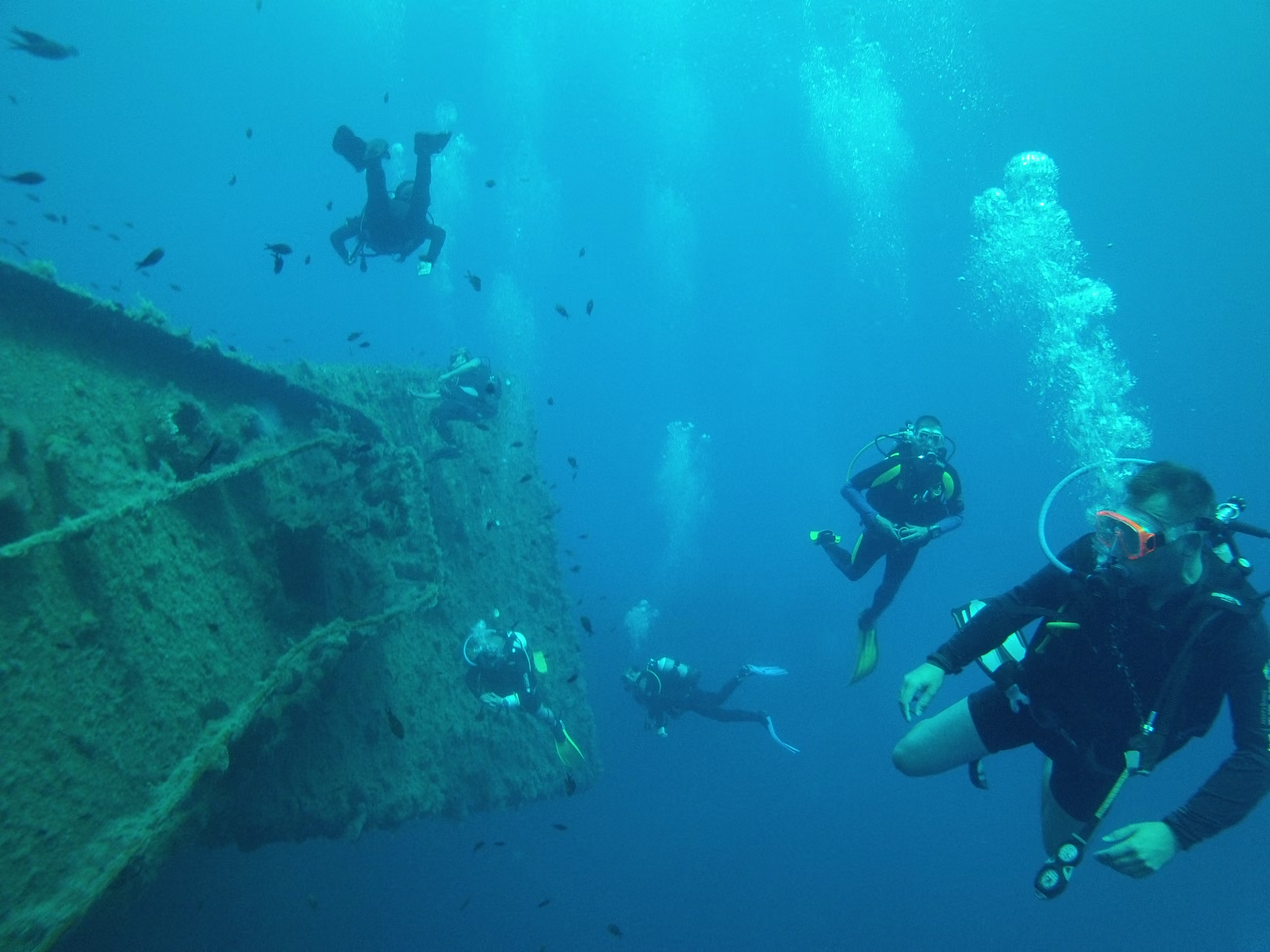
In 1980, a Swedish-built ferry called the Zenobia sailed from Cyprus on its maiden voyage and sank in Larnaca Bay under still-disputed circumstances. It sits upright on the seabed at 16 to 42 metres, cargo trucks still loaded in its hold, hull still largely intact. Forty-five years later, it is ranked among the top ten wreck dives in the world by multiple dive publications and regularly appears at or near the top of lists for the Mediterranean.
The Zenobia is accessible to divers from Open Water level for the shallower runs and Advanced Open Water for the deeper sections. Local dive operators in Larnaca run two-tank trips daily throughout the season, and the visibility in Larnaca Bay is typically 20 to 30 metres. The marine life that has colonised the wreck, including barracuda, giant grouper, and loggerhead turtles, is part of the draw.
Non-divers can see the site from above on a glass-bottomed boat tour operating out of Larnaca harbour.
8. The Blue Lagoon at Akamas Peninsula
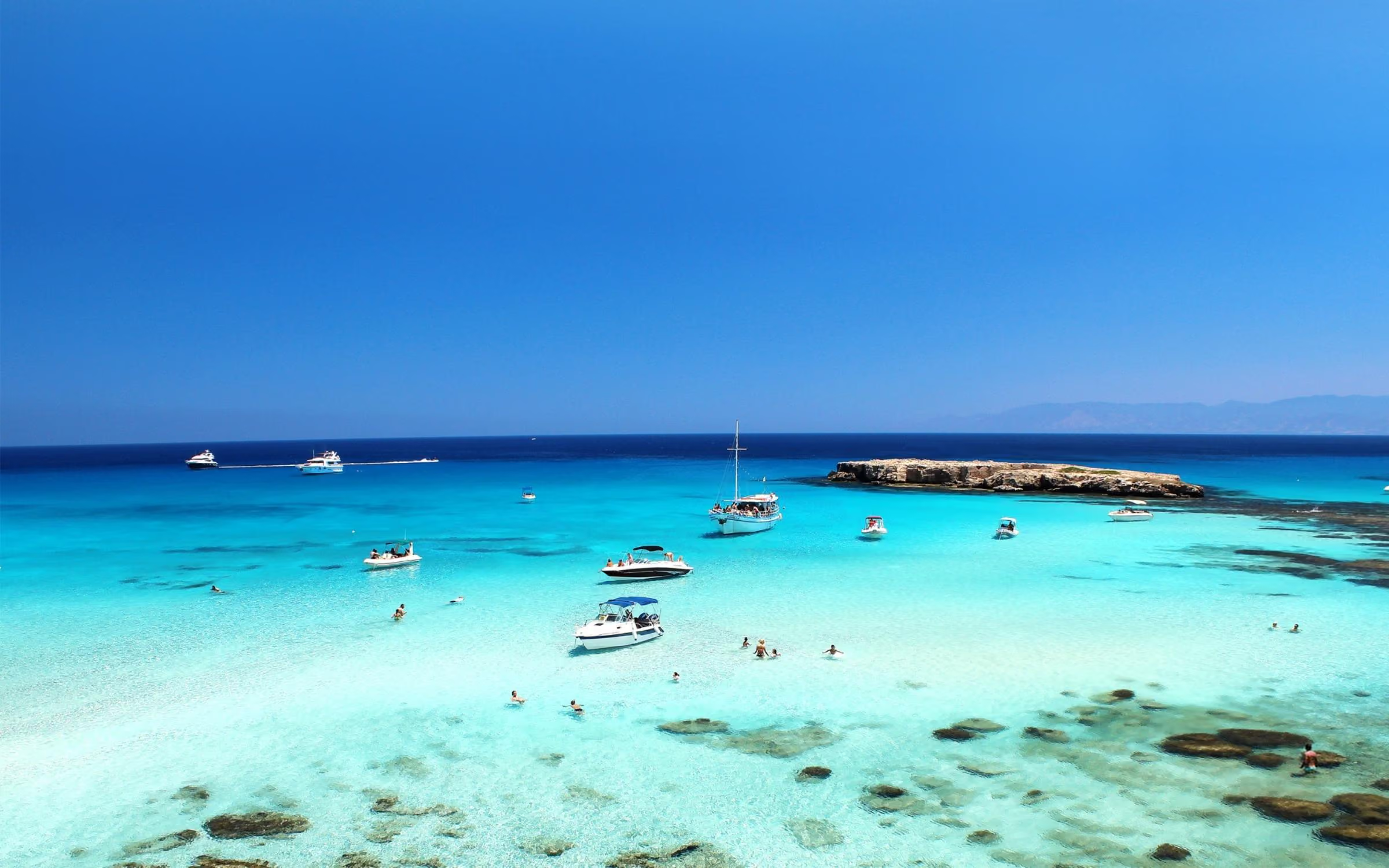
The Akamas Peninsula is the undeveloped northwest corner of Cyprus, a protected national park of limestone cliffs, juniper forest, and coves that have been left largely alone because no road goes all the way in.
The Blue Lagoon sits inside the peninsula, accessible by boat from Latchi harbour in about 30 minutes. The water there is the kind of colour that appears doctored in photographs and turns out to be accurate in person: a cold, dense turquoise fed by underwater springs, surrounded by limestone bluffs. You anchor, swim, snorkel, and stay as long as the boat operator allows. Most full-day cruises include a stop at the Baths of Aphrodite on the way back to a grotto with a freshwater pool where, according to mythology, Aphrodite used to bathe.
Day boat tours from Latchi run approximately €40–60 per person with snorkelling equipment and lunch included. Book ahead in July and August; the lagoon is popular and the boats fill up.
9. Aphrodite's Rock (Petra tou Romiou)
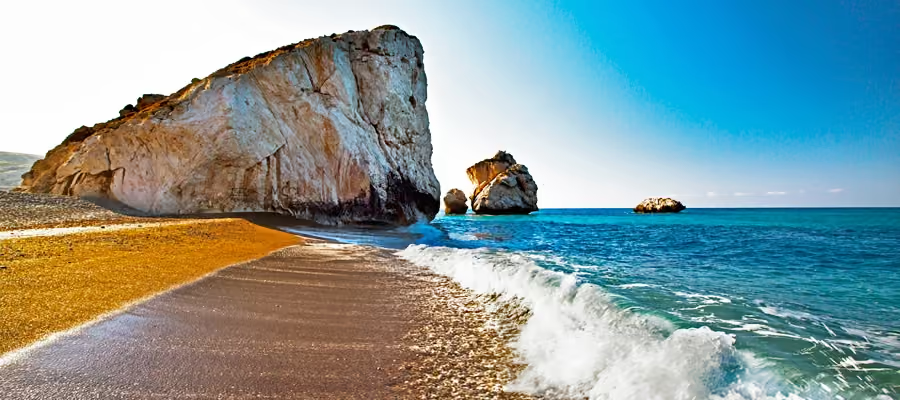
Forty minutes east of Paphos on the coastal highway, a large sea stack rises from the water about fifty metres offshore. This is Petra tou Romiou, the Rock of Aphrodite, the mythological birthplace of the goddess of love, according to ancient Greek tradition. The site is ancient. The story attached to it is older. And the setting, particularly in the late afternoon when the light comes low off the sea, is one of the genuinely beautiful stretches of coastline on the island.
There is a small car park and a tourist pavilion above the beach. From the road, a pedestrian underpass takes you down to the shore. The swimming here is decent, though the beach is pebbly, and the rocks just offshore are accessible by a short swim. It takes about an hour total. Add it as a stop on any drive between Limassol and Paphos rather than making a dedicated trip.
10. Larnaca Salt Lake and Hala Sultan Tekke
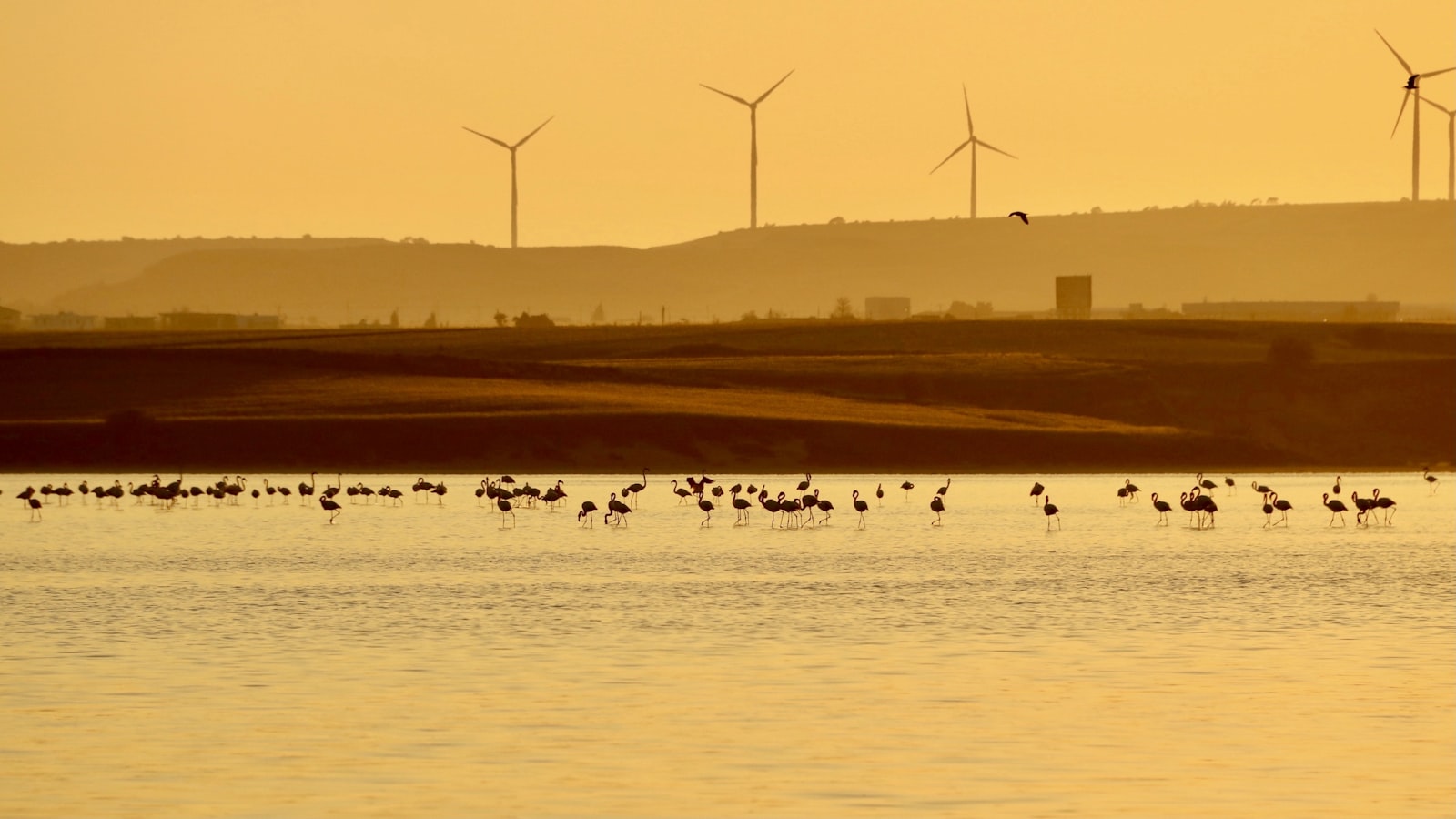
Between October and March, Larnaca's salt lake turns pink.
The colour comes from flamingos, thousands of them migrating from across the eastern Mediterranean to feed on the brine shrimp that breed in the lake's alkaline water. At peak season, which runs roughly November through February, the flock can reach 12,000 birds. The spectacle is free to watch from the road that runs alongside the lake and from the walking path on its eastern shore.
Book your next hotel for up to 30% less
The Hala Sultan Tekke mosque sits on the western bank of the lake, built in the 18th century around what Islam identifies as the tomb of Umm Haram bint Milhan, the maternal aunt of the Prophet Muhammad, making it one of the holiest sites in the Islamic world outside Mecca and Medina. The mosque is open to non-Muslim visitors outside of prayer times. The combination of the lake, the flamingos, and the mosque in a single fifteen-minute walk is the kind of thing that Cyprus does quietly and without making a fuss about it.
11. Commandaria Wine Tasting in the Troodos Foothills
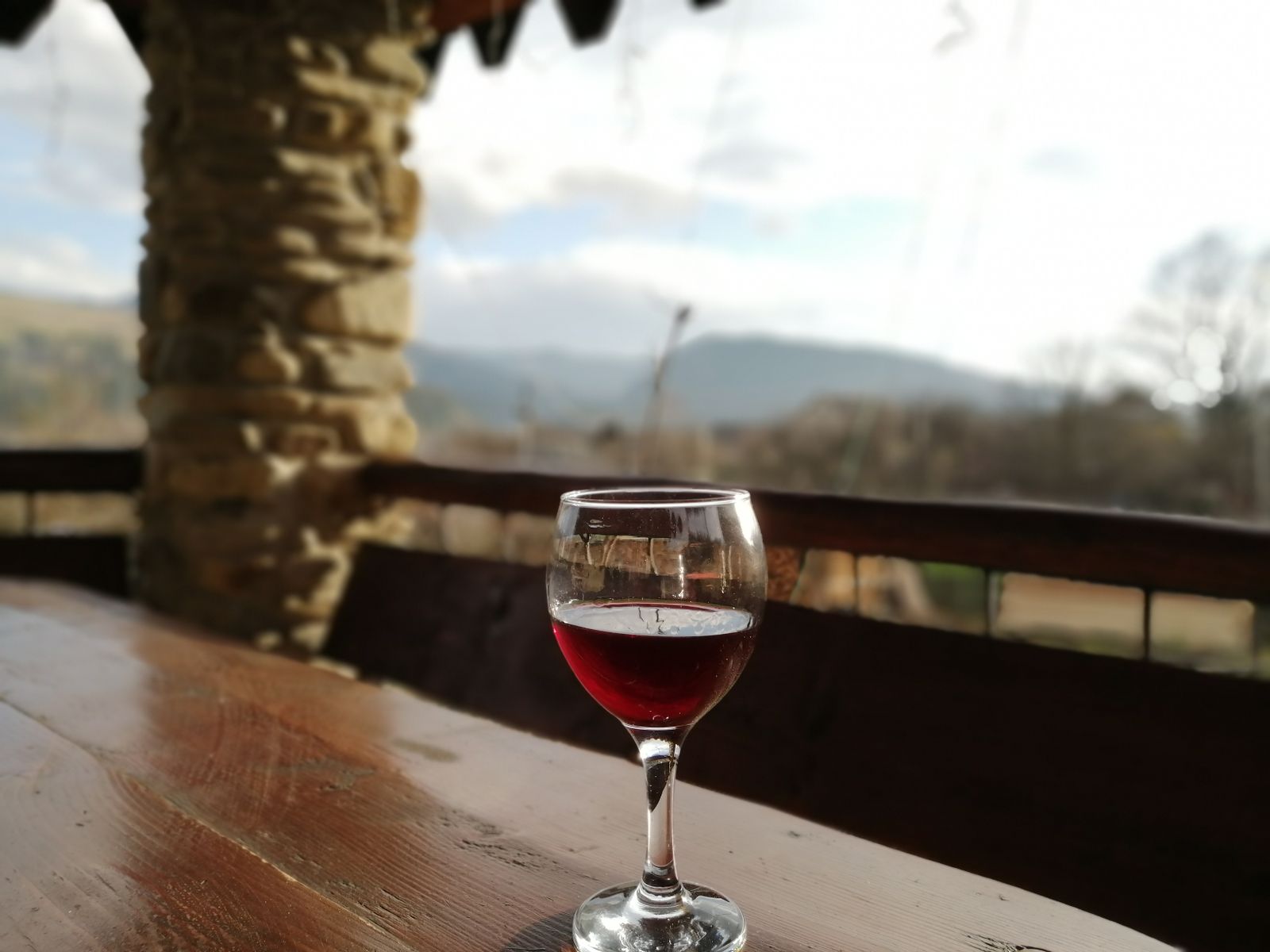
Commandaria is a sweet dessert wine made from sun-dried Xynisteri and Mavro grapes grown in 14 designated villages in the southern slopes of the Troodos range. The style has been in production on this island for at least 3,000 years; there are references to a wine matching its description in Hesiod's poetry written in the 8th century BC, making it a legitimate claim to being the oldest named wine in continuous production anywhere in the world.
The region is set up for visits. Several family-run wineries in Kalo Chorio, Lania, and the Krasochoria villages offer tastings, usually for free or for a nominal cost, and most include a glass of the aged reserve alongside the dry white and rosé expressions. A full-day wine tour including transport from Limassol or Paphos runs approximately €65–90 per person with lunch included, and typically takes in three wineries plus one traditional village stop.
12. Kolossi Castle and Ancient Kourion
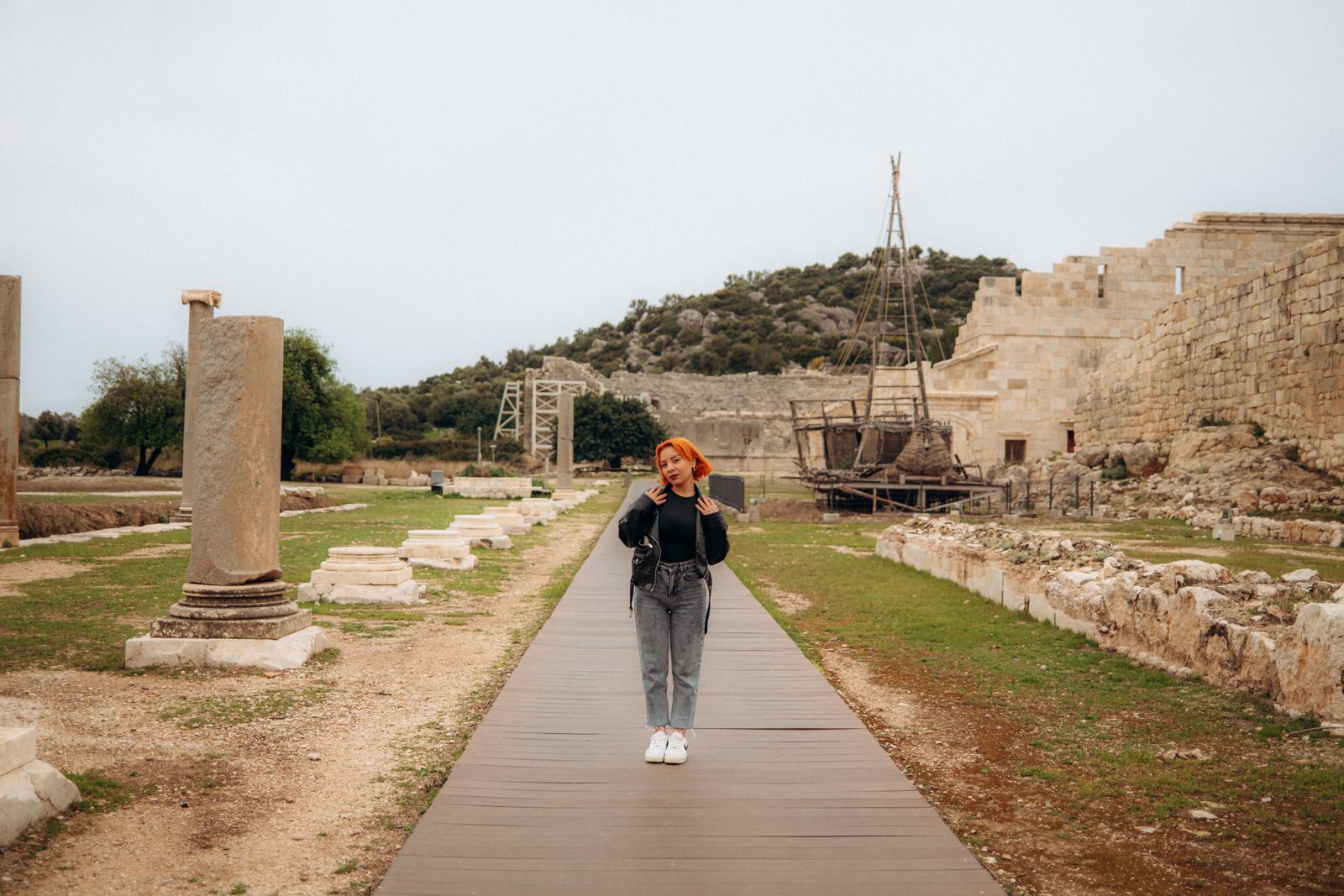
Two sites sit within fifteen minutes of each other on the coast west of Limassol, and most people visit one and miss the other.
Kolossi Castle is a 15th-century tower built by the Knights of Saint John, who controlled the Commandaria wine trade and this region with it. It is compact, well-preserved, and takes about 45 minutes to walk through properly. Entry is €2.50.
Ancient Kourion is the more significant site, a Greco-Roman city perched on a promontory above the sea, with a 3,500-seat theatre still used for performances in summer, floor mosaics in the House of Eustolios, and ruins spread across a headland with views over the Mediterranean that have not materially changed in two thousand years. Entry is €4.50, and the site requires at least two hours to see properly. The combination of the castle in the morning and Kourion in the afternoon makes one of the strongest full archaeological days on the island.
Is Cyprus Safe to Visit in 2026?
Yes, with the context that 2026 has been an unusual year. The Republic of Cyprus has no domestic security concerns and sits across open sea from any conflict zone. Earlier in the year, regional tension in the wider eadvisories dented bookings across the island. That situation has since eased. On 1 June 2026, the US restored Cyprus to Level 1, its lowest risk tier, and the UK withdrew its Middle East-related warnings. Neither government advises against travel to the Republic of Cyprus, including the holiday areas of Larnaca, Paphos, and Ayia Napa. The ceasefire underpinning the calm is holding but still described as fragile, so the one sensible step is to check your own government's current advisory before you book and make sure your travel insurance covers regional disruption. Beyond that, standard European travel precautions apply.
Uber does not operate in Cyprus. The recommended alternative is CabCy, a licensed taxi app covering the main cities. Intercity buses connect Larnaca, Limassol, Paphos, and Nicosia on regular schedules at fares between €1.50 and €5.
How Many Days Do You Actually Need in Cyprus?
Five days: Pick one region. A Paphos base covers the Blue Lagoon, Kato Paphos, the Troodos villages, and Aphrodite's Rock in a clean, unhurried five days.
Seven to ten days: The right amount for a first visit. Split between Larnaca or Ayia Napa for the east coast, and Paphos for the west, with a day in Nicosia and a day crossing to Northern Cyprus.
Fourteen days: Drive the island properly. East coast to west coast, Nicosia in the middle, three nights in the Troodos. One of the most genuinely varied two-week trips available in the Mediterranean at any budget level.
What Is the Best Time to Visit Cyprus?
2026 note: Hotel occupancy rates for summer 2026 are currently around 40–50%, compared with close to 75% in the same period of 2025 — when occupancy peaked at 95% in July according to the Cyprus Hotel Association. For travellers who are going regardless of what the rest of the market does, summer 2026 represents genuinely better-value travel on the island than the last three years have offered. Travelling in July specifically? Our guide to the best places to visit in July has more destination ideas for peak summer travel.
Book Your Cyprus Trip for Less
Cyprus hotels and flights are bookable on CoinBooking at up to 30% below what Booking.com and Expedia charge for the same hotels. The inventory covers the full island beach resort hotels in Ayia Napa and Protaras, boutique properties in Nicosia's old city, hillside guesthouses in the Troodos, and the full range of coastal options from Larnaca to Paphos.
Payment works across Visa, Mastercard, Apple Pay, and Google Pay. Rather plan it than piece it together yourself? Our concierge team can build your full Cyprus itinerary, including hotels, transfers, tours, and timing and book everything in one place. Just tell us where you want to go and how long you have.
New user? Sign up with your email, get $25 off →
Browse Cyprus hotels at coinbooking.com and start building the itinerary that goes past the resort gates.
Travel blogger or content creator? Join the CoinBooking affiliate program and earn 7% lifetime commission on every booking your audience makes, no follower minimum, takes two minutes to set up.
Frequently Asked Questions
Do I need a visa to visit Cyprus?
Citizens of EU member states, the United Kingdom, the United States, Canada, and Australia do not require a visa for the Republic of Cyprus for stays up to 90 days. Northern Cyprus entry rules are separate, and check current requirements through your government's travel advisory page before booking.
Can I cross from South Cyprus to North Cyprus?
Yes. Crossing from the Republic of Cyprus into the Turkish-administered north is straightforward at one of seven designated checkpoints. Bring your passport. If driving, carry approximately €30 in cash for the mandatory car insurance at the crossing cards are not accepted. Most visitors cross on foot at the Ledra Street checkpoint in central Nicosia.
What currency should I use in Cyprus?
The Euro is the currency of the Republic of Cyprus. The Turkish Lira is used in Northern Cyprus. ATMs are widely available in all main towns. Credit and debit cards are accepted at most hotels, restaurants, and tourist sites in the south; cash is more commonly required in smaller villages and in the north.
What food is Cyprus famous for?
Meze, a spread of ten to twenty small dishes covering grilled halloumi, hummus, tzatziki, loukaniko sausage, grilled meats, fresh bread, olives, and seasonal vegetables, is the way to eat on the island. A full meze for two costs €25–40 at most traditional tavernas and takes the better part of two hours. Order it once. Also: Commandaria wine, fresh loukoumades (honey doughnuts), and anything involving halloumi that hasn't been exported.
Is it worth visiting Cyprus in summer 2026?
Yes anyone can book on CoinBooking; no account type or membership required. Pay with Visa, Mastercard, Apple Pay, or Google Pay just like any other travel platform. The difference is the price: CoinBooking offers hotels and flights at up to 30% less than Booking.com. New users get $25 off their first booking automatically. Start browsing Cyprus hotels and flights at coinbooking.com →

Saira Parveen is a Dubai-based SEO content writer with a background in digital marketing and search visibility. She covers cryptocurrency adoption, travel booking with digital assets, and the practical side of spending crypto in everyday life.
Her work at CoinBooking focuses on helping readers navigate the intersection of crypto and travel, from finding the best rates on hotels and flights to understanding how to pay for travel with digital assets.
Found a hotel you like? Book it for up to 30% less

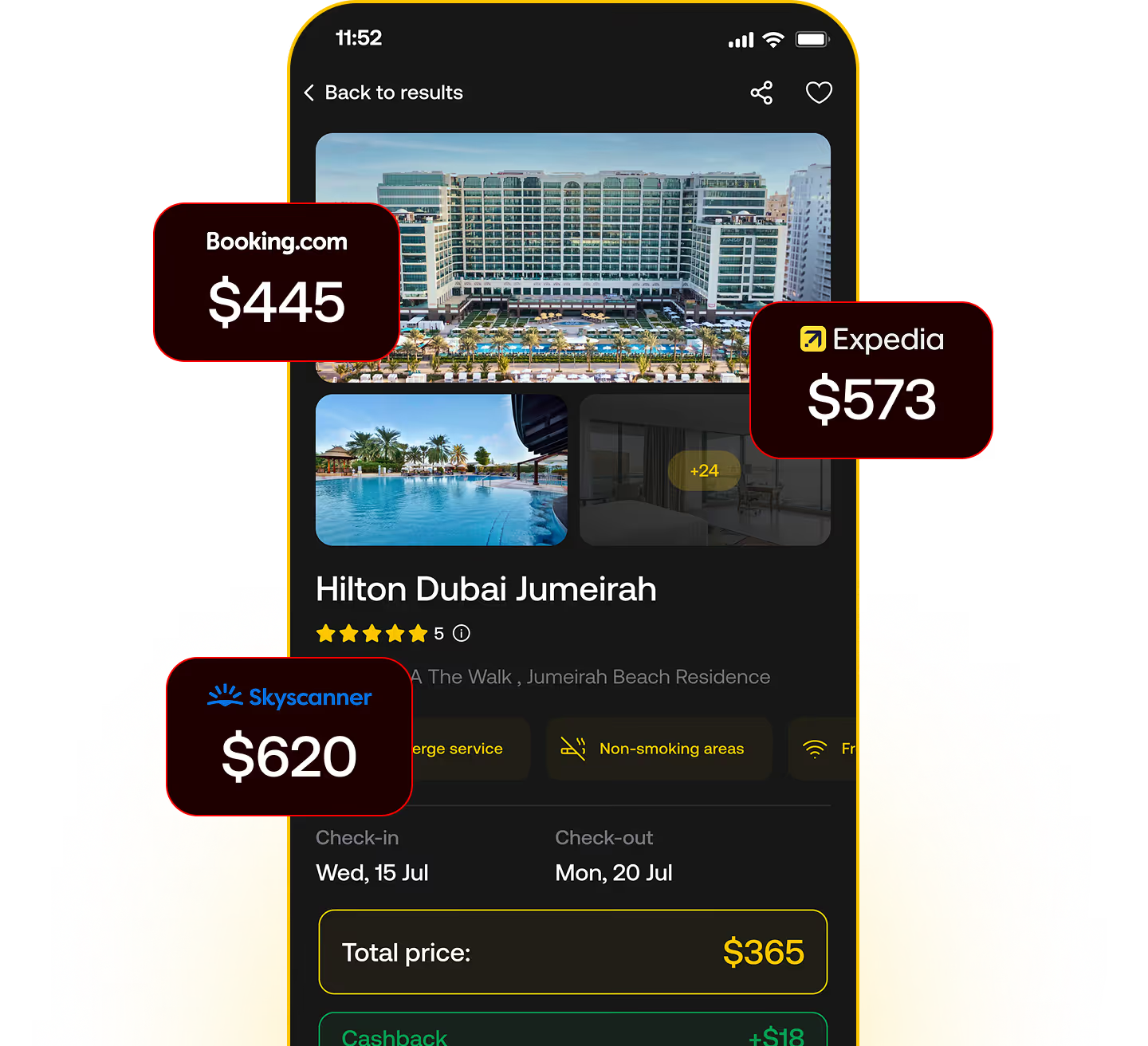
Found a hotel you like? Book it for up to 30% less