.png)
.png)

.png)

Content
Top 10 Ways to Book a Hotel Without a Credit Card in Philippines

The Philippines welcomed 6.2 million international visitors in 2024, with Boracay, Palawan, and Cebu leading the draw. Most of those visitors arrived into a country where GCash and Maya have fundamentally changed how people pay for things, and where the credit card has never really been the default. Credit card penetration sits at around 10%, and the vast majority of Filipinos book hotels by e-wallet, QR scan, or bank transfer without thinking twice about it.

GCash alone has 81 million active users as of early 2025 and is accepted at hotel front desks, OTAs, and restaurants across the country. Maya, the second major platform, covers another large slice of the market. Together they power a payment ecosystem that makes a credit card feel unnecessary for most domestic travelers.
The picture is different for international visitors. GCash and Maya both require a Philippine phone number and bank account, which means tourists arriving from abroad cannot access them. For those travelers, debit cards, prepaid cards, and cash are the practical routes, and for anyone who wants a confirmed booking locked in before they land, CoinBooking handles that without a card.
More islands, different rules. Find the card-free hotel booking guide for your next country.
Do Hotels in the Philippines Require a Credit Card?
The short answer is no, and in most cases the question barely comes up. GCash and Maya are so deeply embedded in how Filipinos pay for things that most hotels have simply built their payment infrastructure around them. International chains in Manila's BGC and Makati districts and in Cebu may ask for a card at check-in for incidentals, but independent properties across the country rarely do.
Island resorts are where things get more variable. Properties in Boracay's main tourist strip are generally well-equipped for card and e-wallet payments. Go further out to El Nido, Coron, or Siargao, and the picture changes. Smaller guesthouses and beachfront properties on remote islands often have no card terminal at all, and ATM availability can be limited or unreliable. Cash is not a fallback option in these areas, it is the primary one.
Always confirm payment options directly with the property before heading to any island. On smaller islands especially, connectivity can be unreliable and surprises at check-in are harder to fix when the nearest ATM is a boat ride away.
Top 10 Ways to Book a Hotel in the Philippines Without a Credit Card
1. Book Hotels with CoinBooking
The best islands in the Philippines are also the hardest places to pay for a hotel without a Philippine account.
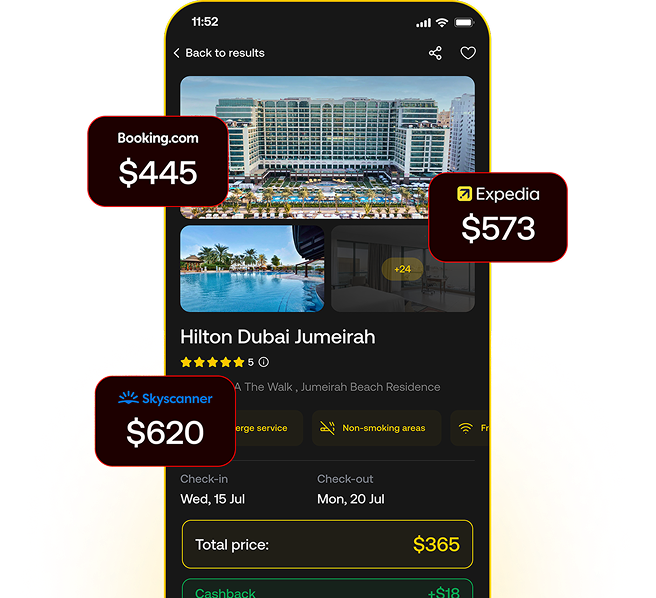
CoinBooking is a Dubai-licensed travel platform that covers the same hotels as Booking.com and Agoda at up to 30% less. The difference is that it accepts Apple Pay, Google Pay, and over 100 other payment options, and gets you a confirmed reservation without a card, a Philippine number, or a local bank account.

For Filipino travelers who already hold crypto, it is a direct route from digital assets to confirmed hotel bookings without converting to pesos first. For international visitors, it means arriving with a reservation already in place and no dependency on local infrastructure. Early users receive $25 off their first booking.
Tip: CoinBooking works just as well for remote island destinations like Palawan or Siargao as it does for Manila. So even if your accommodation is far from any major bank or ATM, your booking is confirmed before you even board the ferry.
The islands don't stop at the Philippine border. See how card-free booking works in Indonesia.
2. Pay via GCash
GCash is the dominant digital wallet in the Philippines with 81 million active users as of early 2025 and 2.5 million merchant partners across the country. At hotel front desks, it works via the QR Ph standard, which means a single QR code accepts GCash alongside Maya and any Philippine bank's mobile app. It is also accepted on Agoda and Booking.com for online booking.
GCash requires a Philippine mobile number and bank account to set up. For Filipino travelers and long-term residents, it is the most widely accepted and frictionless payment method in the country. International visitors without Philippine residency cannot access it and should use one of the other routes in this list.
3. Pay via Maya
Maya is the Philippines' second major digital wallet, formerly known as PayMaya. It operates on the same QR Ph infrastructure as GCash, which means it is accepted at the same hotel front desks, OTA platforms, and merchants. Maya also issues a physical Visa prepaid card, which gives it slightly broader utility than GCash for online purchases and international transactions.
Like GCash, Maya requires a Philippine account to set up and is not accessible to international visitors without local residency. For Filipinos, it is particularly useful for managing savings alongside payments, with Maya Bank offering competitive interest rates that have attracted users looking for an alternative to traditional savings accounts.
4. Use InstaPay Bank Transfer
InstaPay is the Bangko Sentral ng Pilipinas' real-time interbank transfer system, available 24 hours a day, 7 days a week across all Philippine banks and e-wallets. For direct hotel bookings, the property shares their bank account number and the guest transfers the exact amount before or on arrival. Confirmation is near-instant and the transfer receipt serves as proof of payment.
This is the standard method for most direct hotel bookings across the Philippines, particularly at properties that prefer to avoid OTA commissions. Keep the transfer confirmation accessible on your phone. For island properties with unreliable connectivity, taking a screenshot before departure ensures you can show it at check-in without needing signal.
5. Choose Pay-at-Hotel Options on Booking Platforms
Booking.com and Agoda both carry Philippine hotel inventory with pay-at-property options that confirm a reservation without upfront payment or card details. Payment is settled at check-in in cash, by GCash or Maya QR, or by card depending on what the property accepts.
Filter specifically for listings marked as 'no card needed to book' rather than just 'pay at property', since some still request a card number to guarantee the booking even when no charge is made until arrival. For Boracay peak season from December through April, and Palawan and Siargao from November through May, pay-at-property availability narrows fast. Book early and confirm payment terms directly with the property.
6. Use a Debit Card
Visa and Mastercard debit cards issued by Philippine banks work cleanly at hotel terminals across the country and on all major OTA platforms. International debit cards work at most mid-range and upscale properties in Manila, Cebu, and Boracay, though acceptance drops at smaller island guesthouses and beachfront properties in more remote locations.
For international visitors, a debit card is a solid option at chain hotels and well-equipped island resorts. Outside those, card terminals become inconsistent. Carrying PHP cash alongside a debit card is the practical approach for any trip that goes beyond Manila or the main tourist strip in Boracay.
7. Book Through Agoda or Traveloka
Agoda has particularly strong inventory in the Philippines and accepts GCash, Maya, and debit cards at checkout, making it one of the most locally integrated international OTAs for Filipino travelers. It covers island resorts in Palawan, Siargao, and Boracay alongside Manila and Cebu city hotels, with competitive pricing and frequent promotions.
Traveloka also covers the Philippines well and accepts similar payment methods. Both platforms are useful for booking island resorts with payment handled before arrival, which is particularly valuable when the property has limited connectivity. For domestic travelers without a credit card, either platform removes the card requirement at checkout entirely.
8. Book Directly Through the Hotel
Smaller guesthouses, surf camps in Siargao, and boutique beach properties in El Nido and Coron regularly accept direct bookings by email or WhatsApp, with payment via InstaPay transfer before arrival or cash on check-in. Booking directly skips the OTA commission, which occasionally results in a better rate, and gives the guest a clearer picture of exactly what payment methods the property accepts.
Contact the property directly, confirm dates and availability, and ask specifically how they prefer to receive payment. Most Filipino hotel owners and guesthouse managers respond quickly by WhatsApp and are very experienced at coordinating payment arrangements with both local and international guests. For remote island properties, confirming everything in writing before traveling is worth the extra step.
Vietnam is a natural next stop from the Philippines. See how card-free booking works there."
9. Use a Prepaid Travel Card (Wise, Revolut)
Wise and Revolut prepaid Visa and Mastercard cards convert at mid-market rates with low fees and work at hotel terminals and booking platforms across the Philippines. Both can be loaded before departure in home currency and spent in Philippine pesos at the point of payment.
For international visitors, these cards are a cleaner and cheaper option than using a standard foreign bank card, which typically charges foreign transaction fees of 1.5% to 3.5% per transaction. Outside Manila, Cebu, and Boracay's main tourist areas, card acceptance becomes patchier. Carrying PHP cash alongside a Wise or Revolut card covers the gaps at smaller island properties.
10. Pay Cash at the Hotel
PHP cash is the most reliable payment method across the Philippines, particularly outside Manila and the main tourist strips. Remote island destinations including parts of El Nido, Coron, and Siargao run primarily on cash, and ATM availability on smaller islands can be limited or nonexistent. Drawing enough PHP before leaving the mainland is a practical necessity, not a backup plan.
ATMs are reliable in Manila, Cebu, and Boracay, and most accept international Visa and Mastercard cards. Outside these areas, availability drops off quickly. BancNet and BDO ATMs are the most widely distributed. For island trips, withdraw enough to cover the full stay and then some, since connectivity issues can occasionally take ATMs offline at inconvenient moments.
What to Expect at Check-In Without a Credit Card
Check-in at Philippine hotels is generally relaxed. Foreign visitors present a passport; Filipino nationals present any government-issued ID. Security deposits vary considerably between properties. Larger hotels in Manila may request the equivalent of one night's stay in cash or via transfer. Smaller island guesthouses often skip the deposit entirely.
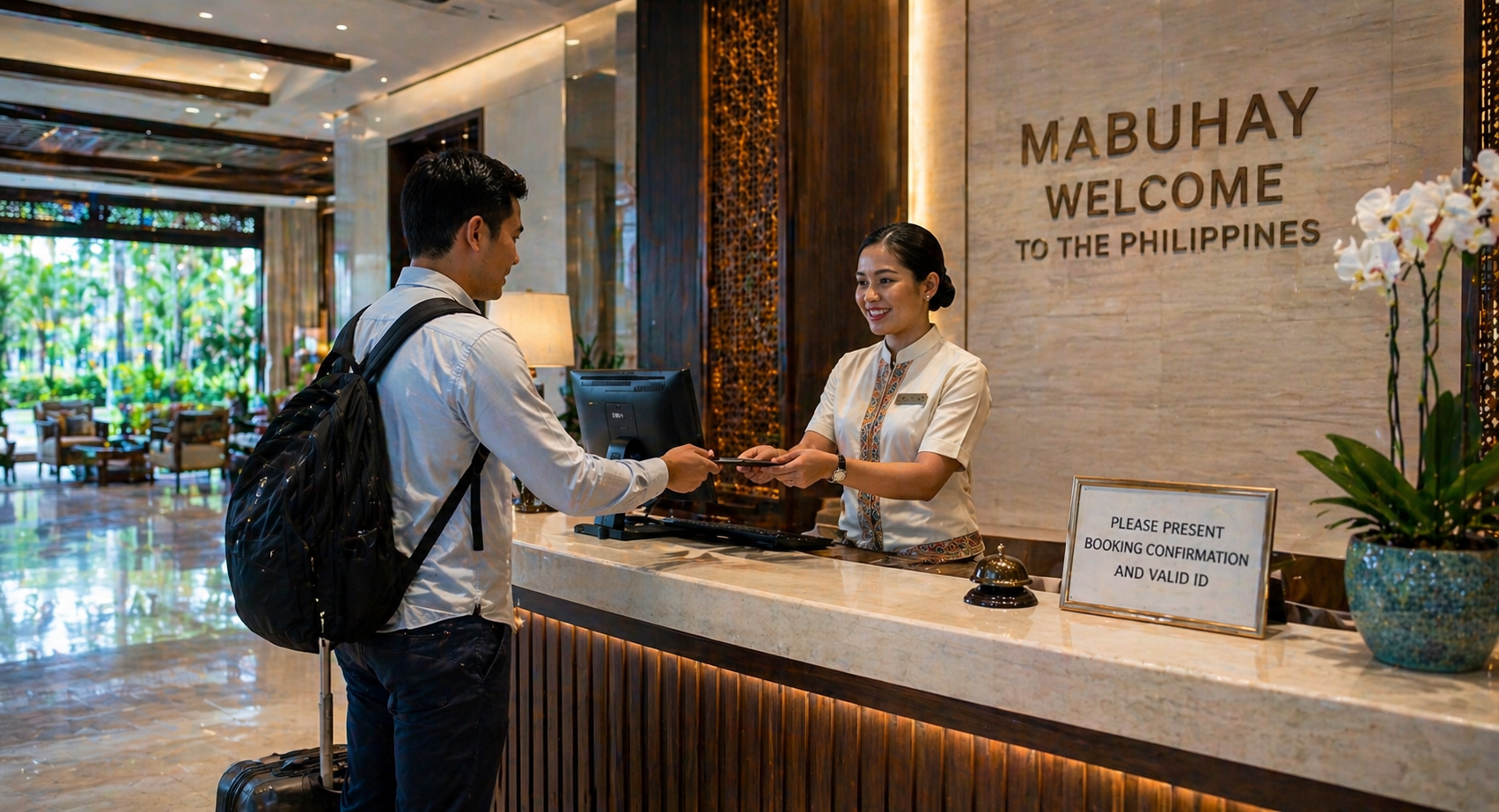
Many island resorts in Palawan and Siargao require full or partial payment before check-in, not just for the booking but for the stay itself. Confirm the payment method they accept for this advance payment separately from the booking confirmation, since some properties only accept cash on arrival regardless of how the reservation was made.
Tips for a Smoother Booking
1. GCash and Maya require a Philippine mobile number and bank account. International visitors cannot set them up without local residency, so do not plan around them for a short trip. Debit card, prepaid card, or CoinBooking are the more practical routes for travelers arriving from outside the Philippines.
2. Carry PHP cash for island trips. El Nido, Coron, and parts of Siargao have limited or unreliable ATM coverage. Withdraw enough in Manila, Cebu, or the nearest city before heading to any remote island destination, and budget extra to cover the possibility of an ATM being offline.
3. Boracay peak season runs December through April. Palawan and Siargao are busiest from November through May. Book island accommodation well in advance during these periods, particularly for smaller properties with limited rooms. Confirming your payment method at the time of booking also removes any friction at check-in.
4. For advance deposits to island resorts, GCash QR, InstaPay, or CoinBooking are the most frictionless options depending on your setup. Always confirm the resort accepts your preferred method before transferring anything.
Frequently Asked Questions
1. Do Philippine hotels accept GCash?
Most mid-range and budget hotels do, along with many island resorts and guesthouses across the country. GCash is accepted via the QR Ph standard, which means a single QR code at the front desk accepts GCash alongside Maya and any Philippine bank's mobile app. It is also accepted on Agoda and Booking.com for online booking. GCash requires a Philippine phone number and bank account, so international visitors without Philippine residency cannot use it.
2. Can I book a hotel in the Philippines without a credit card?
Yes. Most hotels across the Philippines do not require a credit card. Filipino travelers typically book via GCash, Maya, InstaPay bank transfer, or debit card. International visitors have fewer local options but can use a debit card at larger properties, book via Agoda or Traveloka with GCash or card, choose pay-at-property listings, or book via CoinBooking using crypto or Apple Pay with no card required.
3. How do I pay for a hotel in Boracay, Palawan, or Siargao without a credit card?
In Boracay's main tourist strip, GCash, Maya, debit cards, and cash all work well. In Palawan's El Nido and Coron, and in most of Siargao, cash is the most reliable method since card terminals are not guaranteed and ATM coverage is thin on smaller islands. For island trips, withdraw enough PHP in Manila or Cebu before traveling. International visitors who want a confirmed reservation before arrival can book via CoinBooking without needing a card or local account.
4. Which booking platforms work without a credit card in the Philippines?
Agoda accepts GCash, Maya, and debit cards and has a strong Philippines inventory. Traveloka covers the country well with similar payment options. Booking.com offers pay-at-property filters on Philippine hotels. For a fully card-free booking from start to finish, CoinBooking covers the same properties with no card required at any stage and lists them at up to 30% less.
5. Can I use crypto to book a hotel in the Philippines?
Yes. CoinBooking is a Dubai-licensed travel platform that accepts over 100 other payment options for hotel bookings across the Philippines and 190+ countries, with no credit card required. It is particularly useful for international visitors who cannot access GCash or Maya without a Philippine account. Early users receive $25 off their first booking.
6. Is cash necessary for island travel in the Philippines?
Yes, particularly for El Nido, Coron, and Siargao. These destinations have limited or unreliable ATM coverage, and smaller guesthouses and beachfront properties often operate on cash only. Withdraw enough PHP in Manila, Cebu, or the nearest city before traveling to any remote island destination. In Boracay's main tourist area, card terminals and e-wallet acceptance are more consistent, but carrying PHP cash remains good practice across any island trip.

Yaryna Dobrianska is a Dubai-based business and technology writer with a background in fintech and digital services. She covers cryptocurrency adoption, cross-border payments, and the practical realities of spending digital assets across emerging markets. Her work at CoinBooking focuses on helping readers navigate crypto travel, compare rates, and make smarter booking decisions — whether they're paying in BTC, USDT, or Apple Pay.
Save up to 30% off on your next hotel. Your card stays home.

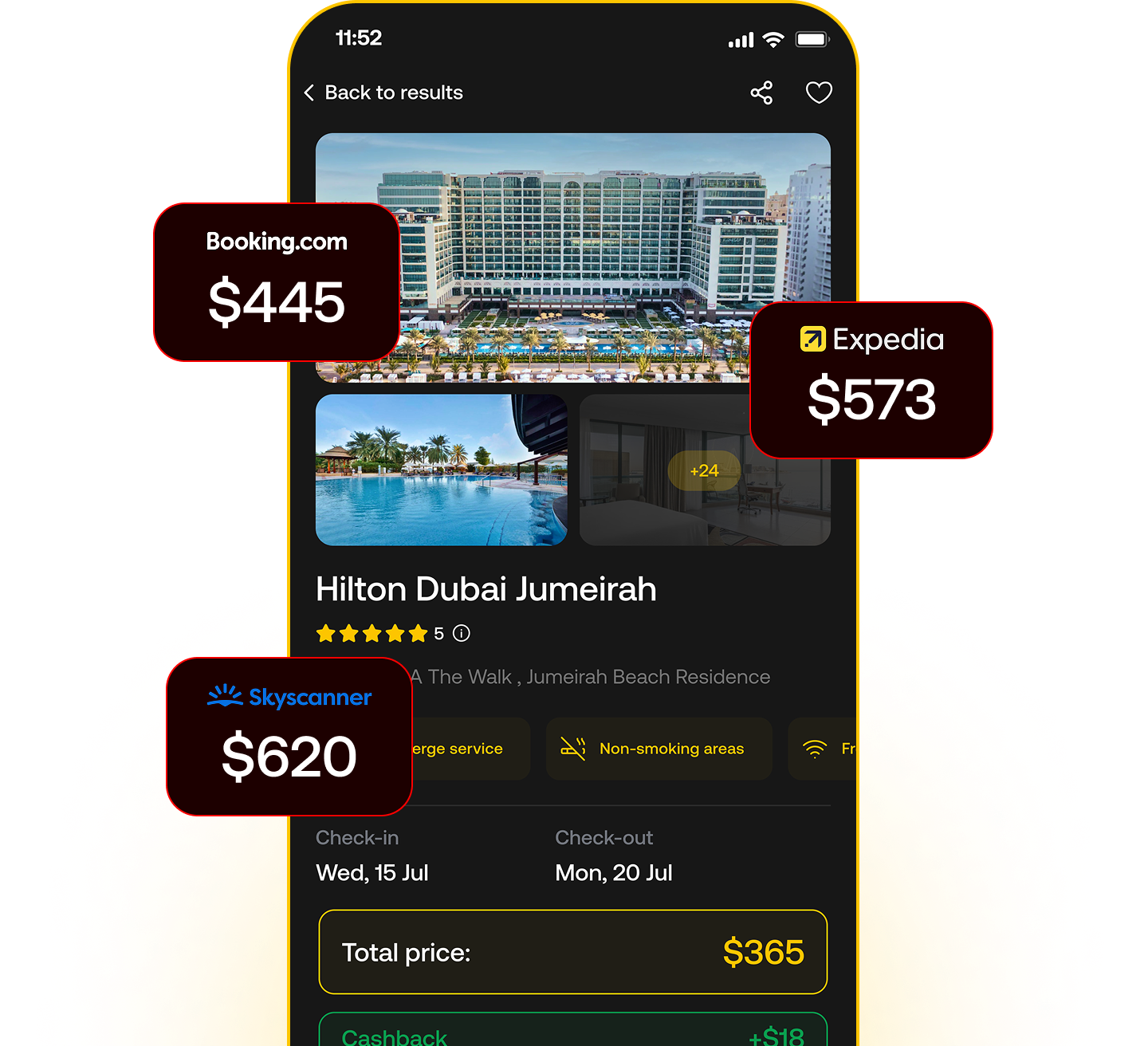
Save up to 30% off on your next hotel. Your card stays home.