.avif)
.avif)

.png)

Content
What Is Kusama Coin (KSM)? Top 5 Ways to Use It in 2026

Kusama (KSM) is a crypto coin powering an experimental blockchain where developers test new parachains and decentralized applications before launching on Polkadot or independently. Built on Substrate and described as Polkadot's "canary network," Kusama allows teams to innovate at high speed with lower barriers to entry and governance that moves 4x faster than Polkadot.
As of July 2026, KSM trades around $5.13 with a market cap of approximately $93.58 million, ranking #264 among cryptocurrencies. Beyond development use, KSM holders can stake for rewards, participate in governance, book discounted hotels and flights on CoinBooking, and trade across major exchanges.
See how much you
could save with $KSM
Answer 2 questions to get your personalized
savings estimate.
Question 1 of 2
Where do you want to go?
Question 2 of 2
How many nights?
Your result
Get similar deals when we go live.
Get $25 off your first trip.
Key Takeaways
- Kusama is built by Parity Technologies (creators of Polkadot), led by Dr. Gavin Wood, Ethereum co-founder.
- The network uses nominated proof-of-stake (NPoS) consensus and supports cross-chain messaging (XCMP) between parachains.
- Governance votes complete in 15 days combined voting and enactment, roughly 4x faster than Polkadot.
- KSM has no fixed max supply; it increases at 10% inflation per year, with new tokens distributed between validators and the Kusama Treasury based on staking rates.
- In April 2026, an unconfirmed social media claim suggested a potential merger into Polkadot at a 1:100 conversion ratio. However, no official referendum has been conducted by the Web3 Foundation or Parity Technologies.
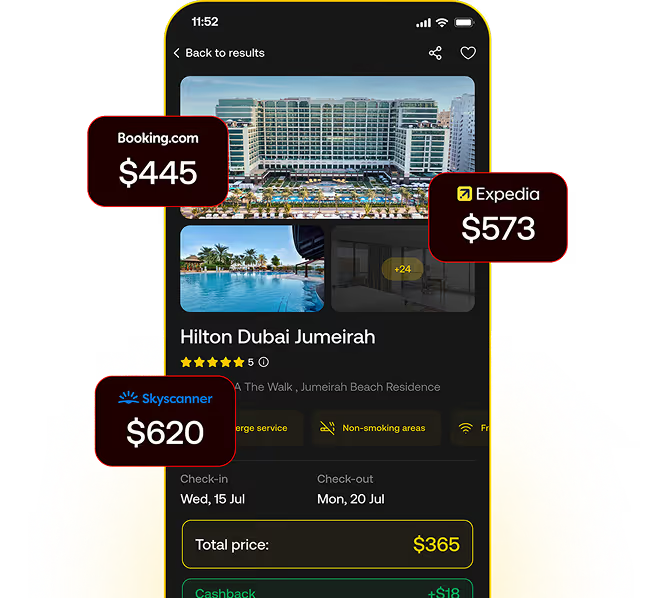
- Book hotels and flights with $KSM on CoinBooking, at up to 30% below Booking.com prices. Get $25 off your first booking.
KSM at a Glance (July 2026)
What Is Kusama?
Kusama is an experimental blockchain where developers test parachains and applications before launching on Polkadot or independently. Built on Substrate by Parity Technologies and founded by Dr. Gavin Wood (Ethereum co-founder) in 2019, Kusama operates as a canary network a real, independent blockchain with actual economic value, not a testnet.
It allows up to 100 parachains to connect and share security via the Relay Chain, enabling high-speed transaction processing through parallel sharding.Kusama's defining advantage is governance speed: voting and enactment take 15 days versus Polkadot's 60 days. This rapid cycle lets developers experiment with upgrades and parameter changes that may later move to Polkadot.
The Council (elected by KSM holders) proposes and implements changes. Since 2021, Kusama has hosted over 50 parachain auctions through its crowdloan mechanism, where supporters lock KSM in exchange for project tokens. The ecosystem now hosts over 100 active projects including Moonriver, an Ethereum-compatible smart contract parachain that serves as a testbed for Moonbeam on Polkadot.
The network uses nominated proof-of-stake consensus, where KSM stakers nominate validators for inflation rewards. Kusama prioritizes experimentation over stability official guidance states "Kusama is experimental. Expect chaos." This makes it ideal for bold innovation but riskier than Polkadot. The name honors Japanese artist Yayoi Kusama, and the community calls themselves Kusamarians.
How Does Kusama Network Work?
Kusama is built on Substrate, a modular blockchain development kit, and uses a sharded multi-chain architecture where independent blockchains called parachains connect to a central Relay Chain for shared security and scalability.
The network uses nominated proof-of-stake (NPoS) consensus, where KSM stakers nominate validator nodes to validate transactions. Nominators earn inflation rewards if their validator is selected each rotation; validators that misbehave or underperform have their stake slashed. Cross-chain communication happens through XCMP (cross-chain message passing), allowing parachains to send messages to each other via the Relay Chain.
KSM is the fuel of the network. Developers pay fees in KSM to deploy parachains. Validators stake KSM to secure the chain. Holders govern through on-chain voting on protocol upgrades, parameter changes, and feature requests. Combined voting and enactment take roughly 15 days, about 4 times faster than Polkadot.
Top 5 Ways to Use Kusama Crypto Coin (KSM)
1. Book Hotels and Flights with KSM on CoinBooking
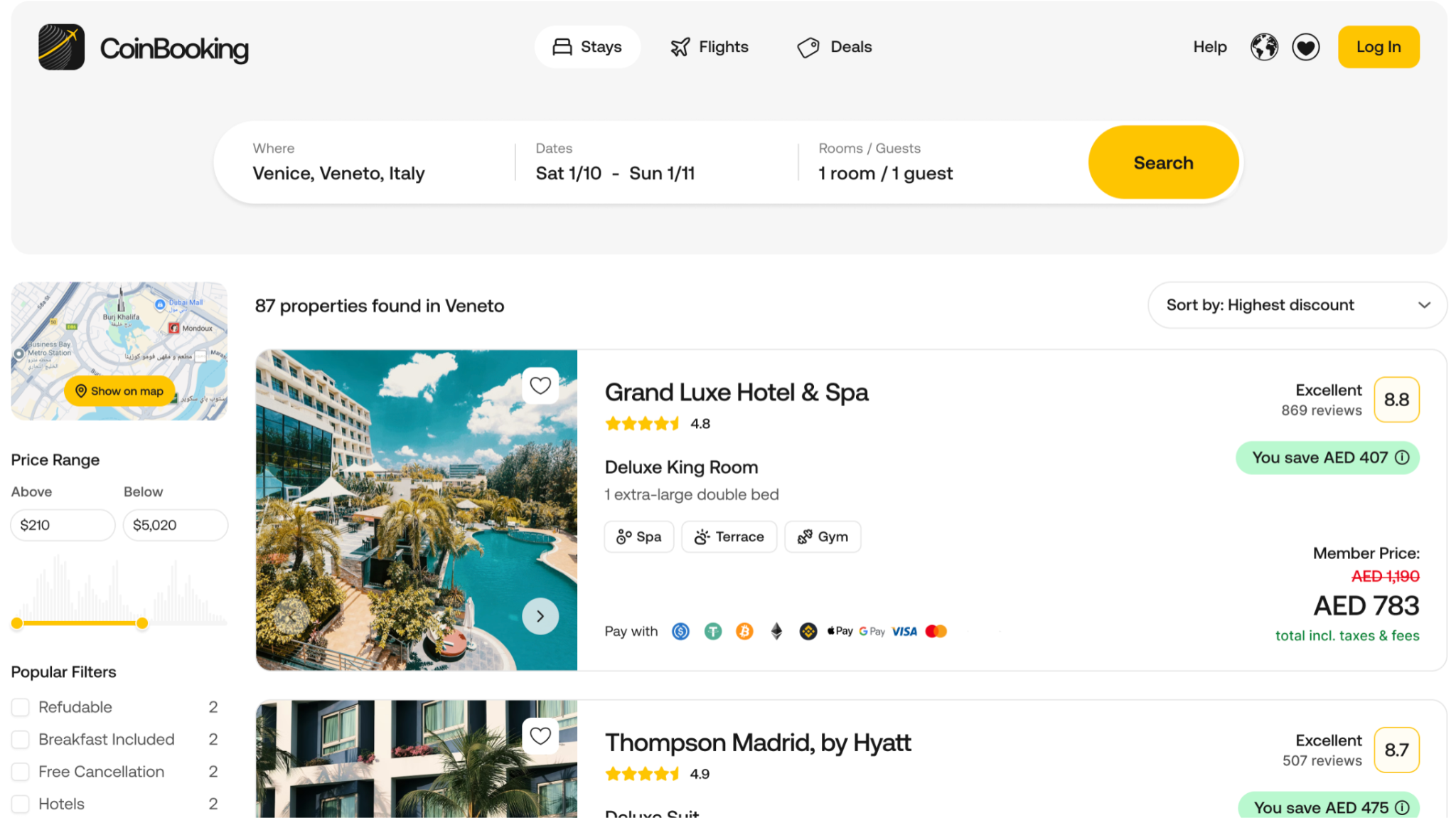
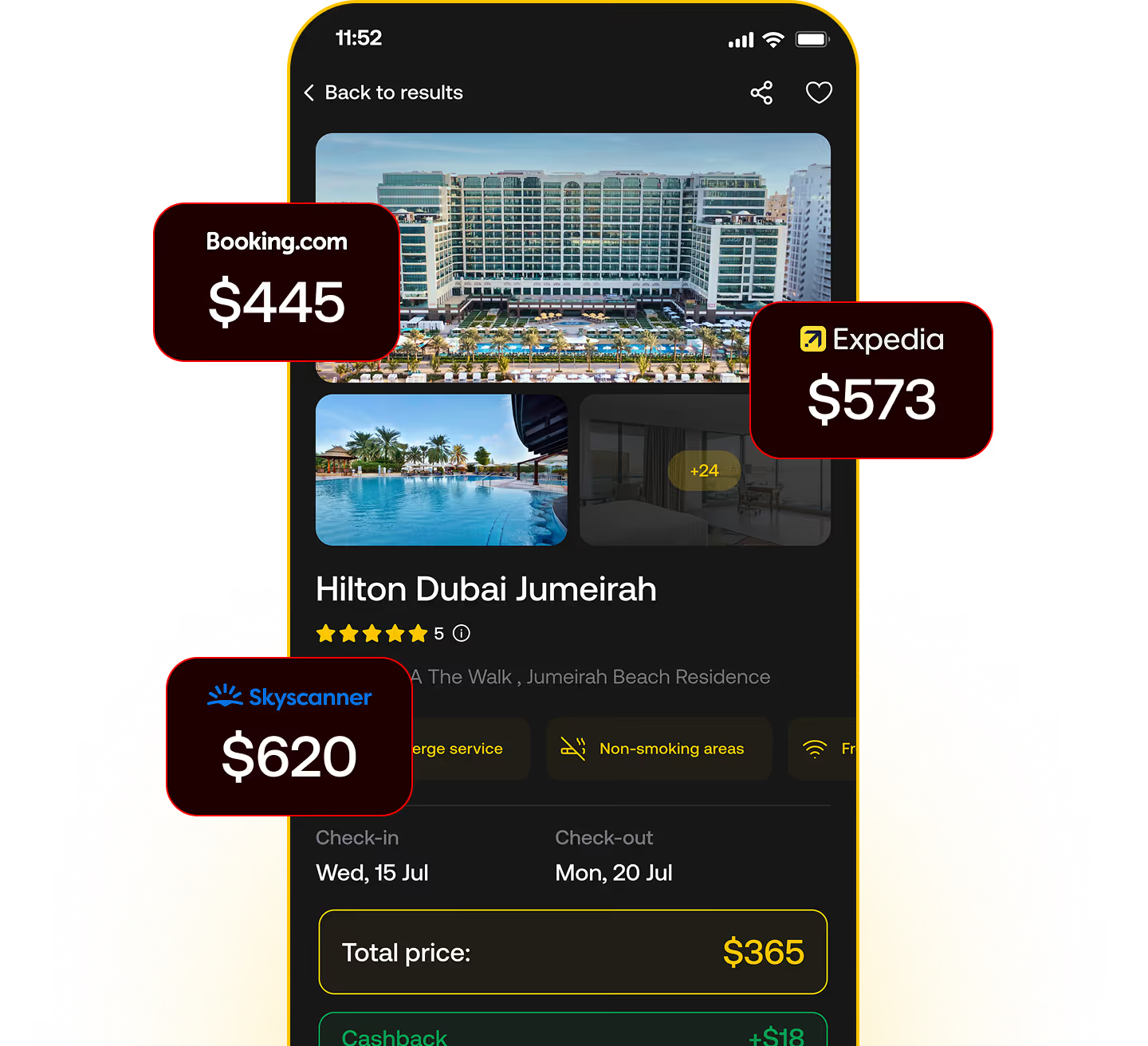
Booking travel with KSM is the most practical real-world use case for your tokens. You can skip the conversion to fiat entirely and avoid the 10 to 15% crypto premium that most crypto-native travel platforms charge. When you book your next trip, use KSM directly on CoinBooking to access hotels and flights at up to 30% below Booking.com prices.
CoinBooking is a Dubai-licensed travel broker and crypto-native platform operating across more than 190 countries. It provides access to over 2 million hotels and flights worldwide and accepts 200+ cryptocurrencies including KSM, alongside traditional payment methods: Visa, Mastercard, Apple Pay, and Google Pay.
Book your next hotel for up to 30% less
New users get $25 off their first booking, which stacks directly on top of the existing savings. For anyone who travels regularly, this single use case justifies holding KSM.
2. Deploy and Test a Parachain
The primary use of KSM is deploying parachains before a mainnet launch on Polkadot or independently. Developers bond KSM to secure a parachain slot and gain access to the Relay Chain's shared security. Testing happens under real conditions with real economic stakes, which surfaces bugs and governance edge cases that cannot be caught in testnets.
Kusama's low barriers to entry and fast governance make it the preferred proving ground for early-stage infrastructure projects. Projects often migrate to Polkadot once proven; others choose to remain on Kusama as their final product.
3. Stake KSM for Rewards
KSM holders can stake their coins to help secure the network and earn inflation rewards. Staking is done by nominating validators through Polkadot.js or Ledger, and rewards can be claimed and re-delegated to compound. Staking yield varies based on what fraction of total KSM is actively staked; there is no fixed APY.
Key mechanic: Unstaking takes 7 days on Kusama (compared to 28 days on Polkadot), and your coins are locked and earn nothing during that unbonding period. Plan accordingly if you need liquidity.
4. Vote on the Network's Future
Staked KSM doubles as a governance vote, and Kusama governance has real teeth. The network's fee structure, economic parameters, and funding programs are all decided by token holder votes, with over 500 proposals decided on-chain since launch. Governance on Kusama carries serious weight.
5. Trade KSM
KSM is listed on major exchanges including Binance, OKEx, Huobi Global, Kraken, and Crypto.com. It trades against USDT, BTC, and other pairs with daily volume typically between $6 million and $10 million. Within the Substrate ecosystem it also trades on decentralized exchanges like Karura Swap. Traders treat KSM as a Polkadot ecosystem proxy, so it tends to move with Polkadot sentiment and multi-chain infrastructure narratives.
Is Kusama a Good Investment?
Whether KSM is a good investment depends on your risk tolerance and view of parachain innovation. The bull case is rooted in Kusama's proven utility as an innovation testbed: real teams with real roadmaps deploy on Kusama, and the network has incubated projects that migrated to Polkadot or launched independently. The faster governance cycle and lower barriers to entry make it a legitimate alternative to Polkadot for early-stage builders. Recent technical upgrades (late 2025), including Elastic Scaling and Revive smart contracts, demonstrate active development and are expanding the network's capabilities.
The risks are existential. KSM trades roughly 99.2% below its 2021 all-time high of $623.75. More importantly, the unlimited supply (10% annual inflation) continuously dilutes existing holders unless staking rates remain high. Additionally, unconfirmed social media claims from April 2026 suggested a potential merger into Polkadot, though no official referendum or confirmation from the Web3 Foundation or Parity has materialized.
This is not financial advice. Crypto is volatile. Always do your own research and never invest more than you can afford to lose.
FAQs
1. Is Kusama a good investment?
Kusama has proven utility as an innovation testbed and benefits from active development. However, unconfirmed merger rumors and unlimited inflation create risks. Treat it as a high-risk asset and do your own research before buying.
2. What is Kusama?
Kusama is an experimental blockchain network built by Parity Technologies (creators of Polkadot). It serves as a canary network where developers test parachains and applications before mainnet launch on Polkadot or independently.
3. Who built Kusama?
Kusama was built by Parity Technologies, led by Dr. Gavin Wood, a world-renowned computer scientist and Ethereum co-founder. Parity employs over 100 blockchain engineers and is funded by Web3 Foundation grants.
4. Can you spend KSM on real things?
Yes. CoinBooking, a Dubai-licensed travel broker accepting 200+ cryptocurrencies, lets you book hotels and flights across 190+ countries at up to 30% below Booking.com prices. New users also get $25 off their first booking.
5. Can I earn KSM with my own computer?
Running a Kusama validator requires significant technical knowledge, hardware resources, and a large KSM bond. However, anyone can nominate existing validators and earn staking rewards without running infrastructure.
6. Where can you buy KSM?
KSM is available on major exchanges including Binance, OKEx, Huobi Global, Kraken, and Crypto.com. It also trades on decentralized exchanges like Karura Swap within the Substrate ecosystem.
7. What is the max supply of KSM?
KSM has no fixed maximum supply. It increases at 10% inflation per year, with new token distribution depending on how much KSM is actively staked.
8. How long is the unbonding period for KSM staking?
On Kusama, the unbonding (unstaking) period is 7 days. This is significantly shorter than Polkadot's 28-day unbonding period. During this time, your coins are locked and earn no staking rewards.

Saira Parveen is a Dubai-based SEO content writer with a background in digital marketing and search visibility. She covers cryptocurrency adoption, travel booking with digital assets, and the practical side of spending crypto in everyday life.
Her work at CoinBooking focuses on helping readers navigate the intersection of crypto and travel, from finding the best rates on hotels and flights to understanding how to pay for travel with digital assets.
Found a hotel you like? Book it for up to 30% less

Found a hotel you like? Book it for up to 30% less