.avif)
.avif)

.png)

Content
What Is Render (RENDER) Crypto Coin? Top 5 Ways to Use It in 2026

Render (RENDER) is a decentralized GPU rendering and AI compute crypto coin that connects artists, creators, and developers with unused GPU power. The network has grown significantly and now uses more than 60,000 GPUs across specialized subnets, including Salad, helping reduce rendering and AI computing costs by up to 90% compared to traditional cloud providers.
As of July 2026, RENDER is trading between $1.52 and $1.60, with a market capitalization of around $780 million to $830 million, placing it among the top 60 cryptocurrencies by market value. Beyond being an investment, RENDER has real-world utility, including the ability to book discounted hotels and flights through CoinBooking.
See how much you
could save with $RENDER
Answer 2 questions to get your personalized
savings estimate.
Question 1 of 2
Where do you want to go?
Question 2 of 2
How many nights?
Your result
Get similar deals when we go live.
Get $25 off your first trip.
Key Takeaways
- Render Network connects creators who need powerful GPU computing for 3D rendering and AI training with decentralized GPU providers. This can reduce rendering and AI computing costs by up to 90% compared to traditional cloud services.
- Render was originally launched on Ethereum but later migrated to Solana for faster transactions and lower fees. The network now includes multiple subnets, including the Salad subnet, which contributes more than 60,000 GPUs.
- As of July 2026, Jules Urbach's OTOY Studio supports native RENDER payments. Creators can use RENDER directly to access more than 30 leading AI image and video models, including Kling and Seedance 2.0, without leaving the app.
- You can use RENDER to book hotels and flights on CoinBooking at prices up to 30% lower than Booking.com and Expedia. Join the early access list today and get $25 off your first booking.
- Render uses a Burn-and-Mint Equilibrium (BME) model. In 2025, token burns increased 158% year over year, with more than 692,000 RENDER burned during the year, bringing the total to 1 million burned tokens. This helps support the token's value, but the network is still slightly inflationary because monthly rewards paid to node operators (around 500,000 RENDER) are still higher than the average number of tokens burned each month.
RENDER at a Glance (July 2026)
What Is Render (RENDER)?
Render (ticker: RENDER, previously called RNDR) is the native token of the Render Network, a decentralized marketplace that connects people who need GPU (graphics processing) power with people who have unused GPUs they can rent out. Instead of renting computing power from a single cloud provider like AWS or Google Cloud, creators on Render can use a global network of independent GPU owners. In return, those GPU owners are paid in RENDER tokens for the work their hardware completes.
The project was created by OTOY, the visual effects technology company behind OctaneRender, a professional GPU rendering engine used in films, animation, advertising, and video games. OTOY founder and CEO Jules Urbach first introduced the idea in 2017. The project held its token sale in October that year, went through private sale and beta testnet stages during 2018 and 2019, and officially launched its public mainnet on April 27, 2020.
A few facts help explain why Render is considered a serious crypto project rather than just another altcoin.
- Its advisory board has included well-known names such as Ari Emanuel (co-founder and co-CEO of talent agency WME), J.J. Abrams (chairman and CEO of Bad Robot Productions), Brendan Eich (creator of JavaScript, co-founder of Mozilla, and founder and CEO of Brave), digital artist Beeple, and Emad Mostaque (founder and former CEO of Stability AI).
- In 2023, the Render Network Foundation became an independent nonprofit organization based in the Cayman Islands. It was separated from OTOY to manage protocol governance and support the ecosystem through grants.
- Over its lifetime, the network has processed more than 74 million frames, averaging around 1.5 to 2 million frames every month throughout 2025 and into 2026.
How Does the Render Network Actually Work?
Render works as a two-sided marketplace that connects people who need GPU power with people who have extra GPU capacity to rent out.
- Creators, such as 3D artists, VFX studios, game developers, architects, and AI developers, submit jobs that need powerful GPUs.
- Node Operators, anyone from someone with a high-end gaming GPU to a data center filled with NVIDIA H100 or H200 GPUs, provide that computing power and earn RENDER tokens for completing the work.
Here's how a typical job works.
First, a Creator uploads a project or workload. This is often exported from software like OctaneRender, Blender, or Cinema 4D using the C4D Wizard plugin.
Next, the network calculates the price using a three-tier system:
- Tier 1 (Enterprise): Highest speed, security, and performance.
- Tier 2 (Priority): A balance between speed and cost.
- Tier 3 (Economy): The lowest-cost option for less urgent jobs.
The network then matches the job with Node Operators based on their hardware, availability, and reputation. Their GPUs complete the work and upload the finished files to cloud storage.
After that, the Creator has up to 48 hours to review the results. If everything looks good, or if no action is taken within that time, the job is automatically approved, and payment is released.
Before any funds leave escrow, the network uses a verification system called Proof-of-Render (PoR). This checks that the frames or computing tasks were completed correctly before paying the Node Operators.
Render originally focused only on 3D rendering, but today it does much more.
With its Compute Subnet and a newer initiative called Dispersed, launched in late 2025, the network now supports AI inference, AI model training, and other general-purpose GPU workloads, not just rendering. This expansion helps meet the growing demand for GPU computing during the global shortage of data center chips.
In 2025, the team also launched RenderLabs, a for-profit company created to develop commercial AI and distributed computing services built on top of the Render Network.
If you'd like to see how RenderLabs and decentralized AI agents work in practice, you can watch the RenderLabs RenderCon Presentation, which demonstrates real-world AI agent workflows running on the network.
Top 5 Ways to Use Render (RENDER) Crypto Coin
Once you're holding RENDER, whether you bought it out of curiosity or earned it as a Node Operator, there are several real ways to put the token to use.
1. Pay for Actual GPU Rendering and AI Compute
This is Render's original and most important use case, and it's something many newer crypto users often overlook. RENDER is not just a speculative asset; it is the currency that powers the Render Network itself.
Studios, VFX artists, game developers, and AI teams use RENDER to pay Node Operators for completing real rendering and computing tasks. These jobs can include everything from creating feature-film frames and producing AI-generated images and videos to running AI model training workloads.
If you have your own 3D rendering project or AI-compute needs, using RENDER to access decentralized GPU power is the most direct and practical way to use the token.
2. Book Discounted Flights and Hotels with Render at CoinBooking

Travel is one of the most practical real-world uses for crypto, and RENDER holders can use their tokens to book flights and hotels through CoinBooking, a Dubai-licensed travel booking platform that supports more than 200 cryptocurrencies, including RENDER, along with traditional payment methods like Visa, Mastercard, Apple Pay, and Google Pay.
CoinBooking can be useful if you already hold RENDER because it gives you access to more than 2 million hotels and flights from major airlines across 190+ countries. The platform uses the same large travel inventory that powers major booking websites like Booking.com and Expedia.
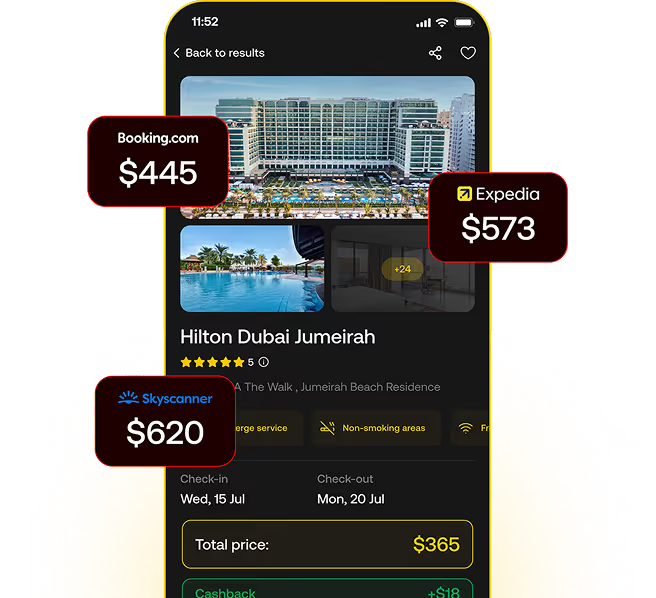
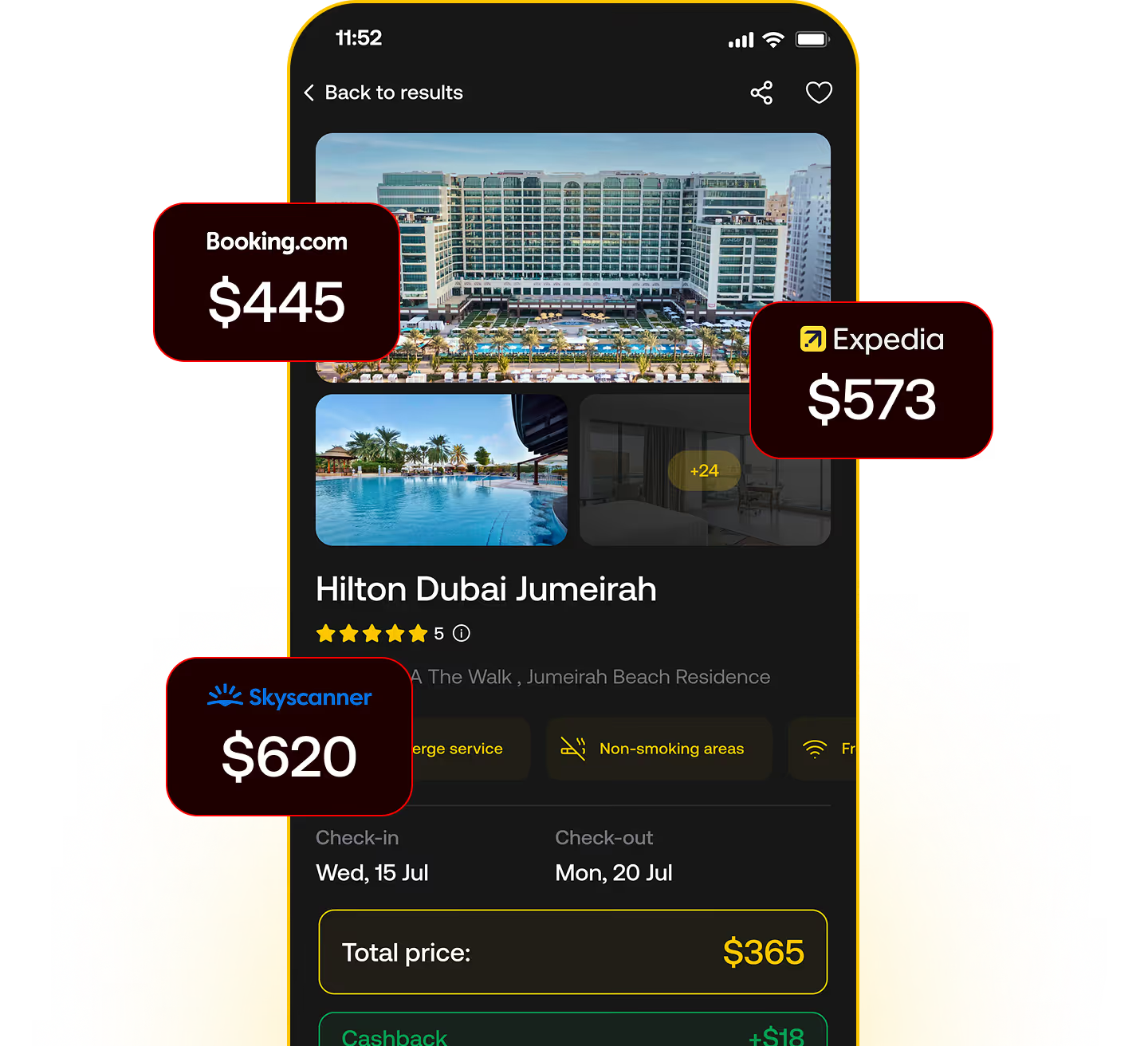
One of the biggest advantages is pricing. CoinBooking offers rates that can be up to 30% lower than Booking.com and Expedia on similar bookings because its model is designed to reduce the extra retail markups added by Booking.com and Expedia.
The booking process is also straightforward. Each reservation is confirmed directly with the hotel or airline instead of being resold through a third-party provider.
If you've used Travala before, the main difference comes down to how each service provides discounts. Travala's biggest discounts are connected to its tiered AVA staking program, meaning users usually need to hold and lock Travala's own token, to access the best rates. Holding 1000 to 5000 $AVA tokens, give you only 5% to 10% savings on bookings.
Book your next hotel for up to 30% less
CoinBooking applies its discounts directly to bookings and that too up to 30%, so you don't need to purchase or stake another platform token, you can simply pay using the RENDER or other cryptocurrencies you already own.
Be among the first to book when we launch. Sign up now and enjoy $25 off your first booking.
3. Buy Gift Cards and Top-Ups Through Bitrefill
Bitrefill is a well-known crypto gift card and mobile top-up platform that allows users to turn their crypto into everyday spending value. It works as a bridge between cryptocurrency and traditional retailers, making it possible to spend crypto even when a store does not directly accept a specific token.
Bitrefill supports RENDER through its LI.FI integration, which allows more than 6,000 tokens to be converted into Bitrefill USD or EUR credit. Once your RENDER is converted, that balance can be used to purchase gift cards from over 5,000 retailers, including Amazon, Apple, Walmart, Netflix, Airbnb, Uber, and Steam.
You can also use Bitrefill to top up mobile airtime and buy eSIMs in dozens of countries, giving RENDER holders another practical way to use their crypto for everyday purchases and travel needs.
4. Spend RENDER Through Crypto Debit Cards
A growing number of crypto debit cards allow users to spend digital assets anywhere Visa or Mastercard payments are accepted. However, direct support for specific tokens like RENDER is still limited and depends on the card provider.
For example, the self-custodial MetaMask Card currently supports spending only selected assets, including stablecoins such as USDC, USDT, and its native mUSD, along with wrapped Ethereum (WETH). Similarly, exchange-based options like the Bybit Card only support a limited list of major cryptocurrencies, such as Bitcoin, Ethereum, and Avalanche, along with stablecoins. Wallet-connected payment apps like Oobit also mainly focus on popular assets such as SOL, ETH, BNB, and stablecoins for instant tap-to-pay conversions.
Because direct RENDER support is not widely available across most crypto card providers, the most practical and cost-effective option is usually to swap your RENDER into a more commonly supported asset like USDC or USDT through a centralized or decentralized exchange before adding funds to your card balance.
5. Participate in Render Network Governance or Earn Yield
RENDER is more than just a payment token, it also gives holders a voice in the future of the Render Network. By owning RENDER, you become part of the Render DAO, where your voting power is based on the number of tokens you hold. Token holders can vote on Render Network Proposals (RNPs) that help shape the network, including changes to tokenomics and the approval of new AI computing integrations.
You can also use your RENDER to earn a yield. Although the network does not offer traditional proof-of-stake wallet staking, its Burn-and-Mint Equilibrium (BME) model rewards users who provide liquidity to active RENDER trading pools.
Another option is to use third-party decentralized finance (DeFi) platforms on Solana, such as Kamino Finance, or take part in earn programs offered by centralized crypto exchanges. Since these yield opportunities rely on external smart contracts or custodial services rather than the core Render protocol, they come with additional risks. Before committing your funds, it's important to research the platform carefully and understand the potential smart contract and counterparty risks.
Is Render a Good Investment?
This is not investment advice, and nothing here should be taken as a recommendation to buy, sell, or hold RENDER. Only you, ideally with the help of a licensed financial advisor, can decide whether it fits your financial goals and risk tolerance.
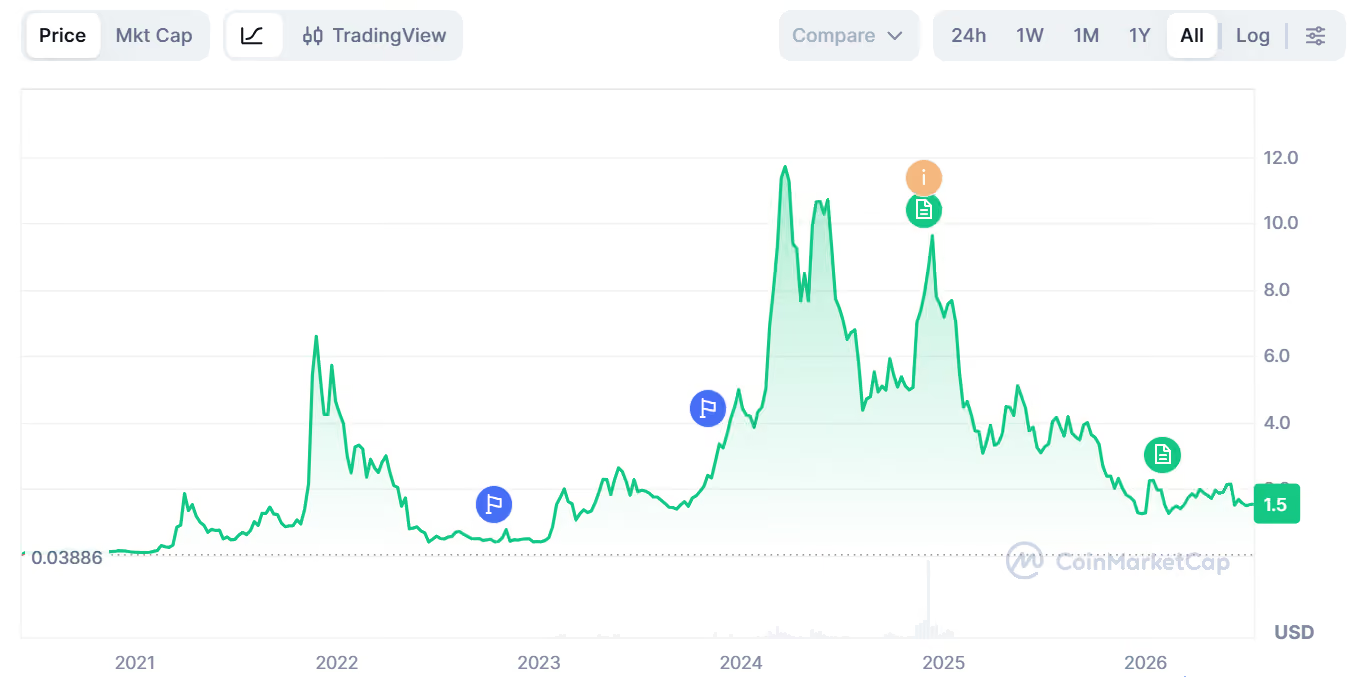
One of the biggest things to understand is that RENDER is highly volatile. As of mid-2026, it is trading about 89% below its all-time high of $13.60, reached in March 2024. At the other end of the scale, the token has traded as low as around $0.036 in its history. Large price swings, both up and down, are normal in the crypto market, and RENDER is no exception.
Competition is another important factor. Render competes with other decentralized GPU and computing networks, especially Akash Network and Bittensor. It also faces competition from major cloud providers such as AWS, Google Cloud, and Microsoft Azure, which have significantly more funding, infrastructure, and established customer bases.
Token migrations have also created challenges in the past. In July 2025, the Render team announced that it was retiring the legacy RNDR token on Polygon after unauthorized access affected a Polygon-based contract. The team advised holders on that network to migrate their tokens only through official channels. This serves as an important reminder for all crypto users to always verify token contract addresses and migration instructions directly through a project's official website or social channels, and never trust search ads or unsolicited links.
Finally, it's worth remembering that crypto regulations continue to change around the world. The legal treatment of digital assets, including governance tokens like RENDER, is still evolving across different countries and has not been fully settled in most jurisdictions.
Render (RENDER) FAQ
Is Render the same as RNDR?
Yes. RENDER is the rebranded, Solana-based version of the original RNDR token. The network migrated from Ethereum to Solana in November 2023, changing both the ticker and the blockchain. It is the same project, not a new one.
What is RENDER actually used for?
RENDER is mainly used to pay for GPU rendering and AI computing jobs on the Render Network. It also gives holders the right to vote on Render Network Proposals (RNPs) through the Render DAO. Outside the network, RENDER can also be used with a growing number of third-party services, including travel platforms like CoinBooking and gift card platforms like Bitrefill.
How do I buy Render (RENDER)?
You can buy RENDER on most major cryptocurrency exchanges, including Binance, Coinbase, Upbit, OKX, Bybit, Bitget, Gate & Kraken. You can also swap for RENDER directly through a Solana-compatible wallet.
Why did Render's price fall so much from its all-time high?
Like much of the crypto market, RENDER saw a strong rally during 2023 and early 2024 as interest in AI-related projects grew. As the broader crypto market cooled, the token gave back much of those gains. This type of price movement has been common across many small and mid-cap cryptocurrencies, not just Render.
Can I use Render to book travel?
Yes. CoinBooking accepts RENDER as one of its 200+ supported cryptocurrencies, allowing you to book hotels and flights at upto 30% discounted price as compared to Booking.com and Expedia. The platform also accepts traditional payment methods, including Apple Pay, Google Pay, Visa, and Mastercard.

Saira Parveen is a Dubai-based SEO content writer with a background in digital marketing and search visibility. She covers cryptocurrency adoption, travel booking with digital assets, and the practical side of spending crypto in everyday life.
Her work at CoinBooking focuses on helping readers navigate the intersection of crypto and travel, from finding the best rates on hotels and flights to understanding how to pay for travel with digital assets.
Found a hotel you like? Book it for up to 30% less

Found a hotel you like? Book it for up to 30% less