.avif)
.avif)

.png)

Content
What Is Velo (VELO)? Top 5 Ways to Use VELO Crypto Coin in 2026

Velo (VELO) is a crypto coin that powers a blockchain financial infrastructure for cross-border payments and digital credit issuance, where partners including banks and payment providers can settle transactions instantly without traditional intermediaries like SWIFT. Cross-border payments on Velo settle faster and at significantly lower costs than traditional banking systems.
As of July 2026, VELO trades around $0.003164 with a market cap of approximately $55.56 million, ranking #350 among cryptocurrencies. Beyond holding, Velo (VELO) has several real-world use cases including booking discounted hotels and flights through CoinBooking, securing the network through staking, participating in governance votes through VeloDAO, and enabling borderless value transfers across traditional finance and Web3.
See how much you
could save with $VELO
Answer 2 questions to get your personalized
savings estimate.
Question 1 of 2
Where do you want to go?
Question 2 of 2
How many nights?
Your result
Get similar deals when we go live.
Get $25 off your first trip.
Key Takeaways
- Velo is a federated credit exchange network focused on Asia's payment corridors, enabling faster cross-border settlements than SWIFT with transparent, blockchain-backed transactions.
- The VELO token serves as collateral backing digital credits issued on the network, creating direct economic ties between token utility and network activity.
- Velo's Stellar Consensus Protocol foundation prioritizes regulatory compliance and enterprise partnership adoption, targeting institutional use in remittances and foreign exchange.
- Partners can issue digital credits backed by VELO collateral through smart contracts, enabling frictionless value transfer across borders.
- VELO trades on major exchanges including Crypto.com, OKX, Huobi, Kucoin
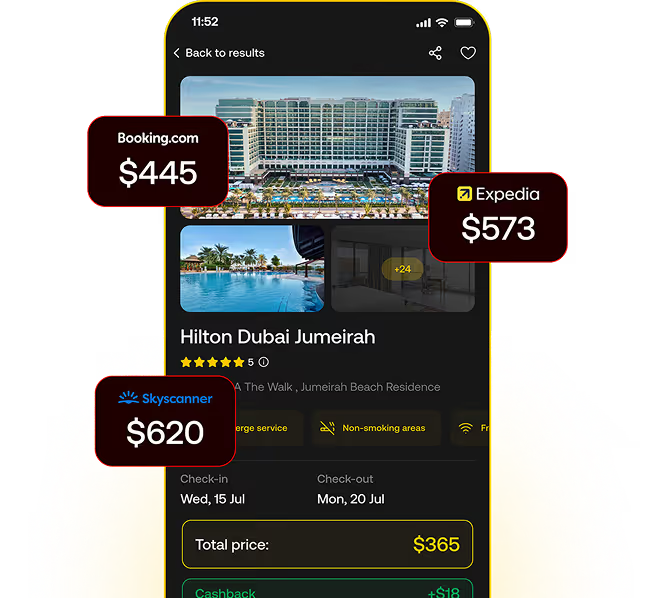
- Book hotels and flights with $VELO on CoinBooking, at up to 30% below Booking.com prices. Get $25 off your first booking.
VELO at a Glance (July 2026)
What Is Velo?
Velo is a blockchain-based financial infrastructure protocol designed to modernize cross-border value transfer by bridging traditional finance and Web3. The protocol operates a federated credit exchange network where authorized partners such as banks, remittance companies, and payment providers issue digital credits backed by VELO collateral. These credits represent any fiat currency and settle through the Stellar Consensus Protocol, which is known for its speed and regulatory alignment.
The problem it solves is inefficiency in cross-border finance. Traditional systems like SWIFT are slow, opaque, and expensive. Velo enables instant settlements with full transparency. Partners can issue digital credits without intermediaries, and businesses moving money across borders avoid the friction of traditional banking rails. This is particularly valuable in Asia, where the protocol focuses its development, targeting high-volume payment corridors for remittances and foreign exchange.
The network is operated by Velo Labs, founded in 2018 and headquartered in Road Town, British Virgin Islands. The company uses a permissioned federated model rather than a fully open blockchain, prioritizing trust and compliance for enterprise adoption. Unlike many Layer 1 blockchains, Velo's design is purpose-built for regulated financial institutions. Leadership includes CEO Mike Kennedy and Chief Operating Officer Korapat Arunanondchai, supported by a technical advisory board featuring Jed McCaleb, co-founder of the Stellar Development Foundation, and Professor David Mazières of Stanford University, Chief Scientist of the Stellar Development Foundation.
Velo Labs has raised $10 million from institutional backers including Charoen Pokphand Group (one of Asia's largest conglomerates), Du Capital, and the Stellar Development Foundation, positioning the protocol at the intersection of traditional finance and blockchain infrastructure. The protocol has secured partnerships including a Memorandum of Understanding with the Solana Foundation focusing on the Laos Gold Project, which aims to establish a digital clearinghouse for gold transactions.
How Does Velo Work?
Velo processes cross-border payments through a three-part system: digital credit issuance, collateral backing, and smart contract settlement.
First, authorized partners such as banks or payment providers deposit VELO as collateral into a smart contract. This collateral backs the issuance of digital credits, which can represent any fiat currency: USD, EUR, SGD, or others. The amount of credits issued is mechanically tied to the collateral deposited, ensuring every credit is fully backed.
Second, a sending partner initiates a transaction by converting fiat into digital credits on their side of the network. For example, a remittance company in the Philippines converts PHP to PHP-backed digital credits. These credits are then transferred across the federated network to a receiving partner.
Third, the receiving partner redeems the digital credits back into fiat currency for the end user, completing the settlement. The entire process is transparent, auditable on-chain, and settles within minutes instead of days. Smart contracts handle collateral management, redemption, and settlement rules without intermediaries.
VELO is the fuel for all of it. The token backs the digital credits issued across the network, incentivizes validators who process settlements, and grants holders voting rights in the VeloDAO to shape the protocol's evolution.
Top 5 Ways to Use Velo Crypto Coin (VELO)
1. Book hotels and flights with VELO on CoinBooking
%20(1).avif)
Spending VELO on travel is the most practical real-world use case for your tokens. You can skip the conversion to fiat entirely and avoid the crypto premium that most crypto-native travel platforms charge. When you book your next trip, use VELO directly on CoinBooking to access hotels and flights at up to 30% below Booking.com prices.
CoinBooking is a Dubai-licensed travel broker and crypto-native platform operating across more than 190 countries. It provides access to over 2 million hotels and flights worldwide and accepts 200+ cryptocurrencies including VELO, alongside traditional payment methods: Visa, Mastercard, Apple Pay, and Google Pay.
Book your next hotel for up to 30% less
New users get $25 off their first booking, which stacks directly on top of the existing savings. For anyone who travels regularly, this single use case justifies holding VELO.
2. Send and receive cross-border payments with digital credits
The primary use case for VELO is enabling borderless value transfer. Businesses and individuals use the Velo network to send money across countries without traditional wire delays. A remittance company can issue PHP-backed digital credits in the Philippines, send them instantly across the Velo network, and a partner in Singapore redeems them as SGD in real time. This is particularly valuable for high-volume payment corridors in Asia where millions of dollars move daily through expensive intermediaries. The protocol cuts settlement time from days to minutes.
3. Stake VELO for network security rewards
VELO holders can stake their tokens to help secure the network and earn rewards. Validators on the Stellar Consensus Protocol stake VELO to participate in transaction validation and consensus. Rewards vary based on network activity and governance decisions, and staked tokens help secure the settlement layer itself. Unlike proof-of-work chains, this staking consumes minimal energy while aligning token holder interests with network security.
4. Vote on network governance through VeloDAO
Staked VELO grants holders voting rights in VeloDAO, where major protocol decisions are made on-chain. Governance votes determine collateral requirements, fee structures, partner onboarding, and strategic initiatives like the Laos Gold Project. This structure ties the token directly to network evolution rather than speculative trading, and token holders with governance stakes benefit when institutional adoption increases.
5. Trade VELO
VELO is listed on major exchanges including Crypto.com, OKX, Huobi, and Kucoin. The token trades against USD, USDT, and other pairs with daily volume typically around $2.51 million. VELO has also integrated with the Stellar decentralized exchange for trading within the Stellar ecosystem, allowing traders to position for growth in Asia's PayFi adoption narrative.
Is Velo a Good Investment?
Whether VELO is a good investment depends on your risk tolerance and conviction in blockchain-based cross-border finance. The bull case centers on real institutional demand. Velo has live remittance partners using the network for actual settlements, the Solana Foundation partnership, and growing focus on regulated PayFi infrastructure. Asia's payment volumes are massive, and if Velo captures even a fraction, collateral demand and token value increase proportionally.
The risks are concrete. VELO trades 99.85% below its 2021 all-time high of $2.07, and adoption remains nascent. Competitors like Ripple's RippleNet and traditional blockchain payment networks are chasing the same corridor. Regulatory uncertainty around stablecoins and issued digital credits remains, and institutional adoption may take years to materialize. The protocol's permissioned federated model also means it depends on partner adoption rather than organic decentralized growth.
This is not financial advice. Crypto is volatile. Always do your own research and never invest more than you can afford to lose.
FAQs
1. What is Velo (VELO)?
Velo is a blockchain financial protocol enabling cross-border payments and digital credit issuance through a federated network built on the Stellar Consensus Protocol. Partners issue collateral-backed digital credits corresponding to any fiat currency, settling transactions transparently and instantly across borders.
2. What does VELO token do?
VELO serves three functions: it backs digital credits issued on the network through smart contract collateral, it incentivizes network validators through staking rewards, and it grants holders governance voting rights in VeloDAO to shape protocol evolution.
3. How does Velo process cross-border payments?
Partners deposit VELO as collateral, issue digital credits corresponding to fiat currencies, transfer credits across the federated network, and redeem them for fiat on the receiving end. The Stellar Consensus Protocol handles settlement, and smart contracts manage collateral and redemption rules.
4. Where can you buy VELO?
VELO is available on major exchanges including Crypto.com, OKX, Huobi, and Kucoin. It also trades on the Stellar decentralized exchange for users within the Stellar ecosystem.
5. What is the max supply of VELO?
VELO has a maximum supply of 24 billion tokens, with 17.56 billion circulating as of July 2026. The token does not have a built-in burn mechanism; supply is managed through governance and collateral requirements.
6. Can you earn rewards by staking VELO?
Yes. VELO holders can stake tokens through validators on the Stellar Consensus Protocol to help secure the network and earn variable rewards based on network activity. Governance rewards are distributed to stakers who participate in VeloDAO voting.
7. What is VeloDAO?
VeloDAO is the governance framework where VELO holders vote on protocol changes, collateral requirements, fee structures, and partnership onboarding. Governance decisions are executed on-chain and directly shape how the protocol evolves.
8. Who is behind Velo?
Velo Labs developed the Velo Protocol. The network is governed by VELO holders through VeloDAO rather than by any single entity, reflecting its enterprise-focused design.

Saira Parveen is a Dubai-based SEO content writer with a background in digital marketing and search visibility. She covers cryptocurrency adoption, travel booking with digital assets, and the practical side of spending crypto in everyday life.
Her work at CoinBooking focuses on helping readers navigate the intersection of crypto and travel, from finding the best rates on hotels and flights to understanding how to pay for travel with digital assets.
Found a hotel you like? Book it for up to 30% less

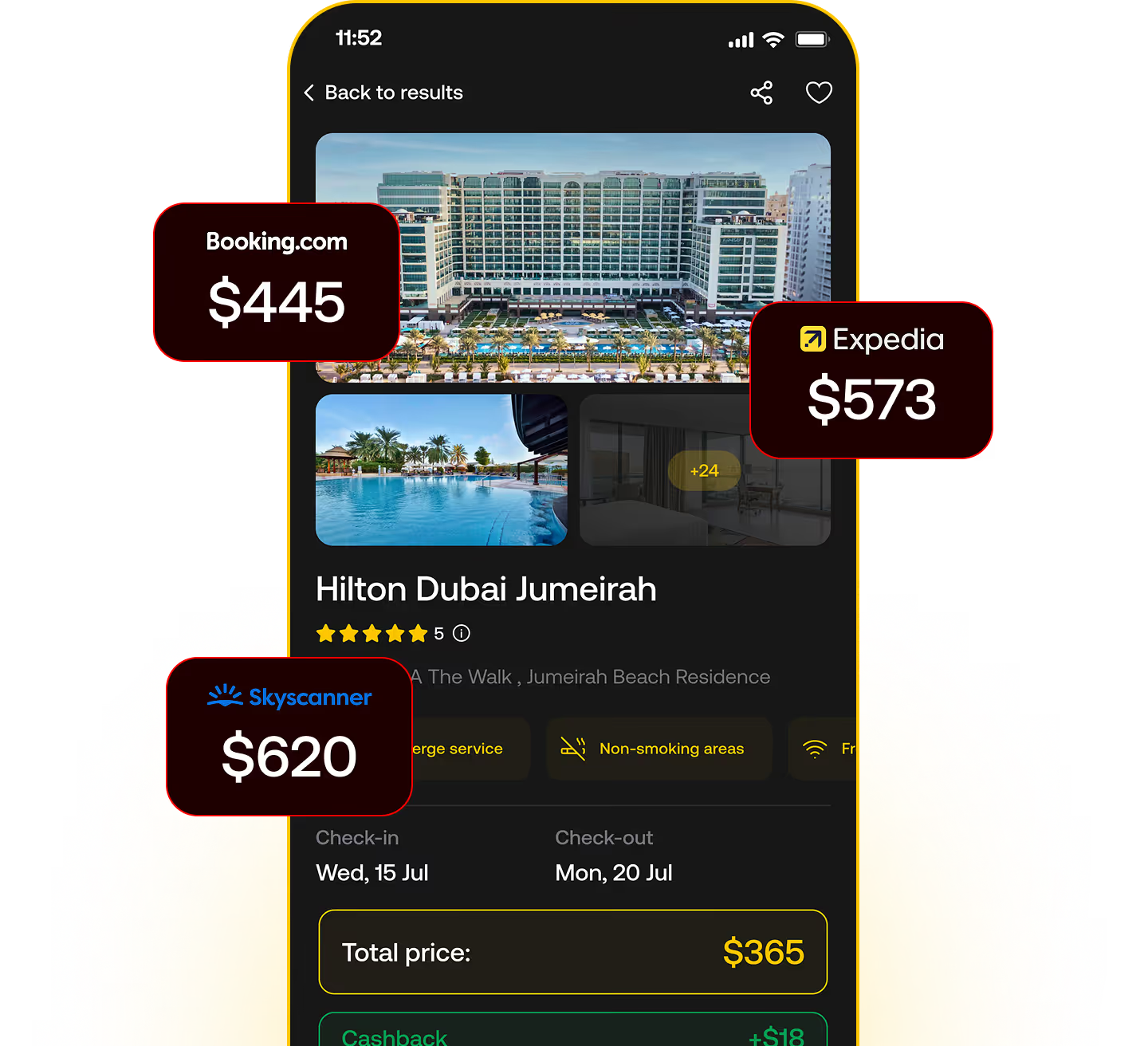
Found a hotel you like? Book it for up to 30% less