.avif)
.avif)

.png)

Content
Top 10 Ways to Book a Hotel Without a Credit Card in India

India is one of the most popular travel destinations in the world. Domestic travel is growing rapidly, with 2.94819 billion visits in 2024, a 17.5% increase over 2023. Yes, that is billions, not millions. People in India travel constantly between states and regions for religious visits, holidays, family events, and business. On top of that, nearly 9.95 million international tourists visited India in 2024, bringing tourism close to pre-pandemic levels. As a result, hotels across the country, from small guesthouses in the Himalayas to beach resorts in Goa, are busier than ever.
Many travelers assume that hotels always require a credit card because this is common in Western countries, where hotels often take a card imprint at check-in. In India, however, most hotels do not work this way. Credit card usage is still relatively low, with only around 4.6% of India's population owning one. Since most Indians travel without a credit card, the hotel industry has adapted to this reality.

Instead, India relies heavily on UPI (Unified Payments Interface), the country’s most popular digital payment system. More than 500 million people actively use UPI, and transaction volume reached 228.3 billion in 2025. Today, UPI handles more than 80% of all digital payments in India. It is used through apps such as PhonePe, Google Pay, and Paytm. Most hotel reception desks, whether at a business hotel in Pune or a guesthouse in Varanasi, display a QR code that guests can scan to pay instantly.
For international travelers who cannot use UPI, there are still plenty of payment options. Many hotels accept debit cards, prepaid travel cards such as Wise or Revolut, direct bank transfers, and cash. Cash remains especially common at budget hotels and in smaller towns and rural areas.
This guide explains 10 practical ways to book and pay for a hotel in India without a credit card, starting with an option that appeals to a growing number of travelers who prefer not to use the traditional banking system at all.
Do Hotels in India Require a Credit Card?
In most cases, no. However, whether you need a credit card usually depends on the type of hotel you are booking. Large international hotel brands such as Marriott, Hilton, ITC, and Taj often ask for a credit card when you make a reservation or check in. Luxury hotels may also place a temporary hold on your card or require advance payment to guarantee the booking. This is common at five-star hotels and follows the same system used by luxury hotels around the world.
However, these hotels make up only a small part of India's accommodation market. Most hotels in India are mid-range or budget properties, and many of them do not require a credit card. Cash and UPI payments are widely accepted. OYO, one of India's biggest budget hotel chains, allows guests to book many properties without prepayment or a credit card.
This is also true for guesthouses, heritage havelis in Rajasthan, backpacker hostels in Kerala, and family-run hotels in popular hill stations. Many of these places have always relied on cash payments rather than card systems.
UPI has made payments even easier for local travelers. Most hotels now have a QR code at the reception desk, allowing guests to pay instantly using their phones. International visitors who do not have access to UPI can usually pay with cash, debit cards, or prepaid travel cards.
So, unless you are staying at a luxury hotel, a credit card is usually not required when booking or paying for a hotel in India.
Top 10 Ways to Book a Hotel in India Without a Credit Card
1. Book Hotels with CoinBooking
Most people looking to book a hotel in India without a credit card think about using UPI or a debit card. Those options work well, especially for local travelers. But if you own cryptocurrency, CoinBooking offers another simple way to book your stay.
This option is more useful than many people realize. India has around 119 million crypto owners, making it one of the largest crypto markets in the world. That means a lot of travelers already hold digital assets like Bitcoin, USDT, or Ethereum. For international visitors, crypto can be especially helpful because it allows them to book hotels and flights without a credit card before arriving in India.
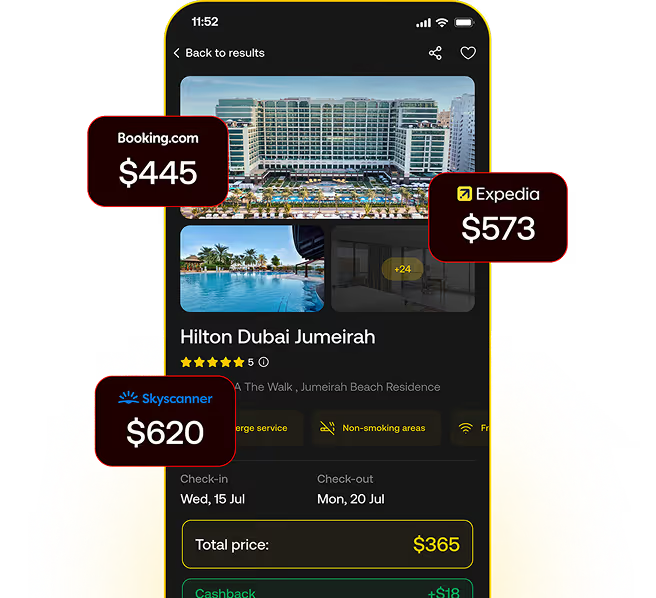
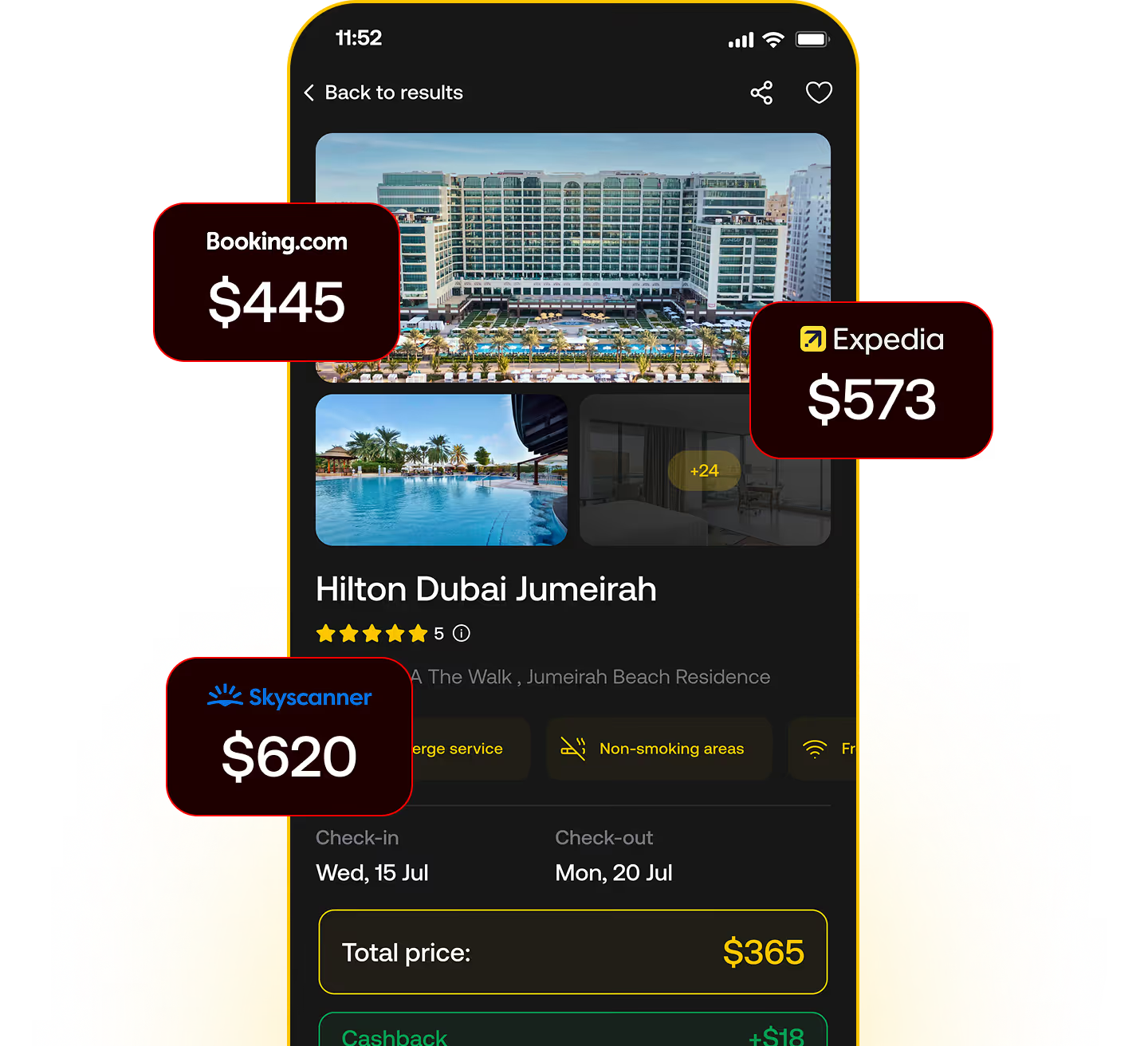
CoinBooking is a Dubai-licensed travel booking platform that lets you book hotels and flights using more than 200 cryptocurrencies. It also accepts Visa, Mastercard, Apple Pay, and Google Pay. The platform connects to major travel providers, giving users access to a wide range of hotels across India and around the world. Prices are up to 30% lower than those found on platforms like Booking.com or Expedia.
The booking process is simple. Search for your hotel, choose your travel dates, and select your preferred cryptocurrency at checkout. Once the payment is completed, you receive a booking confirmation by email, just like with any other online travel platform.
For international travelers, this can make things much easier. Credit card payments sometimes fail because of bank restrictions, international transaction rules, or verification issues. Paying with cryptocurrency avoids many of these problems. There are no unexpected currency conversion charges, and the payment goes directly from your wallet to the booking platform.
CoinBooking is regulated by Dubai's Virtual Assets Regulatory Authority (VARA), which adds an extra level of trust and accountability. The platform is also connected to major travel infrastructure providers such as Expedia, TBO, RateHawk, and DNATA, helping ensure that hotel availability and bookings are accurate and up to date.
2. Pay with UPI (PhonePe, Google Pay, or Paytm)
If you are traveling in India and you have a smartphone linked to an Indian bank account, UPI is the easiest way to pay for a hotel room. You don’t need a credit card or cash. You just scan a QR code, enter your PIN, and the payment is done in a few seconds.
The most commonly used apps for this are PhonePe, Google Pay, and Paytm. These three apps handle almost all UPI payments in India. In December 2025, PhonePe had the biggest share with 9.81 billion transactions and 45.35% of the market. Google Pay followed with 34.64%, and Paytm had 7.65%. Together, these apps handle most UPI payments in the country.
Paying at a hotel is very simple. The front desk usually has a QR code printed or displayed. You open your UPI app, scan the code, enter the amount, and confirm with your PIN. The payment goes through instantly, and the hotel gets confirmation right away. There are no card machines, no “payment failed” issues, and no waiting time.
UPI is also available when booking hotels online. Websites like MakeMyTrip, Goibibo, Yatra, and OYO allow you to pay using UPI at checkout. This means you can book a hotel directly from your phone without using a credit card at any point.
One important thing to know is that UPI only works if you have an Indian bank account and an Indian mobile number. For people living in India, this is not a problem. But for international travelers, it can be difficult because they usually don’t have access to this system. India has started limited access for some G20 travelers, but it is still not widely available. If you are visiting from abroad, other options like CoinBooking, debit cards, or prepaid travel cards work better.
3. Choose “Pay at Hotel” on Booking Platforms
If you want to book a hotel without paying anything in advance, no credit card, no UPI, no upfront payment at all, then “Pay at Hotel” is made exactly for that.
Many travel websites, such as Goibibo, MakeMyTrip, Yatra.com, EaseMyTrip, OYO, and Ixigo, offer this option. It lets you confirm your hotel booking online, but you only pay when you reach the hotel. At that time, you can pay using cash, UPI, or a debit card, whatever you prefer.
Goibibo clearly mentions that no credit card details are needed at all for Pay at Hotel bookings. MakeMyTrip also offers a similar option called “Book with No Payment,” where you can reserve a room with either zero payment or a small ₹1 verification charge. The remaining amount is usually paid up to 72 hours before check-in, depending on the hotel’s policy.
The main benefit is flexibility. You can book a room today from your phone, compare options, and decide how you want to pay later when you actually arrive. This is also helpful if you prefer paying cash at the hotel or if you want to check the property first before spending money. Another advantage is that you may be able to cancel more easily compared to prepaid bookings, especially if the booking is refundable.
However, there are a few things to keep in mind. Not every hotel offers Pay at Hotel, so the number of available rooms can be lower compared to prepaid options. During busy seasons or in popular destinations, your choices may be limited. Also, if you book and don’t show up without canceling, platforms like Goibibo may restrict your ability to use Pay at Hotel in the future, so it’s important to cancel properly if your plans change.
4. Use a Debit Card Instead of a Credit Card
Many people think hotels specifically need a credit card. But that’s not true. Most hotels just need a card, and a debit card works in almost all cases, especially on major booking websites in India.
In 2025, only around 4.6% of people in India actually use a credit card. At the same time, there are approximately 960 million to 980 million active, outstanding debit cards in India. That means for most people booking hotels online in India, a debit card is the normal way to pay. Websites like MakeMyTrip, Goibibo, Yatra, Booking.com, Agoda, and OYO all accept Visa and Mastercard debit cards. Booking.com has also worked to support Indian payment methods, including local debit cards.
Using a debit card is very similar to using a credit card. You enter your 16-digit card number, expiry date, and CVV. Then you confirm the payment with an OTP sent to your registered mobile number. Once this is done, your hotel booking is confirmed instantly.
For people living in India, RuPay debit cards also work very smoothly on Indian booking platforms. RuPay is widely used in the country and has lower transaction fees for domestic payments. It is accepted across both online and offline systems in India. If you are traveling from outside India or booking on international websites, Visa or Mastercard debit cards are usually better because they are accepted almost everywhere around the world.
There are a few cases where debit cards may not be enough. Some luxury international hotel chains like Marriott or Hilton may still ask for a card hold at check-in for extra charges or damages. However, most mid-range hotels in India handle this differently. Instead of a card hold, they usually ask for a small cash security deposit, typically between INR 500 and 2,000. So in most cases, this is not a problem unless you are staying at a high-end luxury property.
5. Book Through MakeMyTrip or Goibibo
If you want to book a hotel in India without a credit card, MakeMyTrip and Goibibo are the two platforms you’ll most likely use. Not because they are the only options, but because they are the biggest players in the market and cover almost everything you need.
MakeMyTrip alone controls around 55-60% of India’s online travel booking market and recorded $9.8 billion in bookings in 2025. Goibibo is part of the same company group; it was acquired in 2017 and works as a more budget-friendly option. Between the two platforms, MakeMyTrip has listed over 77,900 hotels across more than 4,350 cities in 192 countries in the past year. For travel within India, their hotel coverage is very wide and hard to match.
The good news is that neither platform requires a credit card. Both MakeMyTrip and Goibibo accept UPI, debit cards, net banking, and digital wallets at checkout. Goibibo also has its own wallet system. If you use apps like PhonePe or Google Pay, paying through UPI is usually the quickest and easiest way to confirm your booking.
Even though they belong to the same company, the two platforms feel a bit different. MakeMyTrip is more focused on mid-range and premium hotels and also has a stronger international hotel selection with a cleaner, more polished design. Goibibo is more focused on budget travelers, offering frequent discounts, flash sales, and app-only deals. It is especially popular in smaller cities, with about 48% of its new users coming from tier-2 and smaller towns. This also reflects its strong focus on more affordable hotel options.
Both platforms also offer the “Pay at Hotel” option mentioned earlier. This means you can browse hotels normally, filter for places that do not require advance payment, and then pay later at the hotel using cash, UPI, or a debit card. This makes them very flexible for travelers who do not want to pay up front.
6. Book Directly Through the Hotel Website
Another option that often gets overlooked is booking directly with the hotel itself. It may not feel as easy as using an app where you can compare prices quickly, but for certain types of stays, it can actually be better, and sometimes cheaper too. This works especially well for boutique guesthouses in Rajasthan, heritage havelis in Jaipur and Jodhpur, and homestays along the Kerala backwaters.
Here’s why this often works in your favor. When you book through platforms like MakeMyTrip or Goibibo, hotels usually pay a commission of around 15-25% to the platform on every booking. For example, a heritage hotel in Udaipur paying a 20% commission would often prefer you to book directly so they can keep the full amount. Because of this, many hotels offer better deals on their own website or when you contact them directly. These can include 5-10% lower prices than OTA platforms, free breakfast, or more flexible cancellation rules.
When it comes to payment, direct booking gives you more options. Most independent hotels in India accept bank transfers like NEFT or IMPS for domestic guests, and Wise for international travelers. Many also accept UPI payments sent to the owner’s number or QR code. In some cases, you can even pay through WhatsApp; you simply send a screenshot of the payment confirmation after transferring the money.
A good way to book is to first check the hotel on MakeMyTrip or Booking.com to read reviews and check availability. Then, find the hotel’s official website or contact number and reach out directly. Many boutique hotels and heritage stays in Rajasthan and Kerala have simple websites with a contact form or WhatsApp number for bookings. Some smaller properties may not even have a website and only take bookings through phone calls or messaging, which is common and not a warning sign in this context.
One important thing to remember is that hotels often ask for an advance deposit during busy seasons. Paying a small deposit to secure your room is normal, but paying the full amount in advance can be risky, especially for unverified properties. Always make sure you get a written confirmation through email or WhatsApp before sending any money.
7. Use a Prepaid Travel Card (Wise, Revolut)
If you are traveling to India from another country, a prepaid travel card is one of the most practical options. It works like a normal Visa or Mastercard, so you can use it at hotel payment machines, online booking websites, and even at international chain hotels where a card may be needed for security deposits. The difference is that it is not linked to a credit account.
Two popular options are Wise and Revolut. Both are UK-based fintech companies. They have recently expanded into India and are designed to help travelers avoid the high hidden fees that traditional forex cards and bank travel cards often charge.
Wise launched its multi-currency travel card in India in December 2025. It uses the Visa network, supports spending in more than 40 currencies, and works in over 160 countries. It also allows free ATM withdrawals up to $200 per month. One of the biggest advantages is the exchange rate. Most bank cards add a 2-4% foreign exchange markup, but Wise uses the mid-market exchange rate and charges about 0.5% per transaction on average. Over a two-week trip with hotel payments and daily spending, this can save a noticeable amount of money.
Revolut works in a similar way. In April 2025, the Reserve Bank of India (RBI) gave Revolut full approval to issue prepaid payment cards and digital wallets in India, including integration with UPI. Revolut is rolling out Visa-based prepaid cards and already had more than 350,000 people on its waiting list before launching at the Global Fintech Fest 2025. Like Wise, it offers multicurrency spending with lower fees and transparent pricing.
For hotel bookings in India, both cards work smoothly wherever Visa is accepted. You can use them on platforms like Booking.com, Agoda, or MakeMyTrip just like a normal debit card by entering your card number, expiry date, CVV, and confirming with an OTP. At international hotel chains that require a card at check-in for incidentals, these prepaid cards are also accepted, even though they are not credit cards.
8. Arrange a Bank Transfer with the Hotel
This is one option that doesn’t show up often in travel guides, but in real life, it is quite common, especially with independent hotels and heritage properties. Many of these places prefer direct bookings because they don’t want to pay commissions to booking platforms, and they are used to dealing directly with guests.
The process is simple. You contact the hotel directly, agree on the room price, and then send a deposit or sometimes the full payment to their bank account before you arrive. Once the payment is received, the hotel confirms your booking. When you reach the hotel, you just show your payment receipt or confirmation message. There is no credit card, no booking website, and no middleman involved.
For people living in India, this is very easy. IMPS transfers are instant, so the money reaches the hotel’s account within seconds, which is useful if you need quick confirmation. NEFT transfers take a bit longer, usually between 30 minutes and 2 hours, but they still work well for advance payments. Both IMPS and NEFT operate 24/7, including weekends and holidays, so you can send money anytime without worrying about banking hours.
For international travelers, it takes a little more time but is still very workable. SWIFT transfers usually take around 1 to 5 working days to reach the hotel, so you need to plan ahead when booking. A faster and often easier option is using Wise to send money directly to the hotel’s Indian bank account. It usually offers better exchange rates, lower fees, and faster transfers that can arrive within a few hours instead of days. For this method, you’ll need the hotel’s bank account number and IFSC code for local transfers, or a SWIFT code for international payments.
One important thing to remember is to always get written confirmation before sending any money. Ask the hotel to confirm your booking by email or WhatsApp and share their bank details clearly.
However, unlike credit card bookings, there is no chargeback protection with bank transfers. Once the money is sent, you depend fully on the hotel to deliver the service. That is why it is usually safer to send only a partial deposit, typically 25-50%, especially if it is your first time staying there. You can then pay the remaining balance when you arrive.
This option works best for direct bookings with boutique hotels, heritage havelis, homestays, and small guesthouses that are already communicating with you directly.
9. Use a Local Travel Agency
In some cases, using a local travel agency in India is not just a backup option; it is actually the better way to book. This is especially true for heritage trips in Rajasthan, houseboat stays in the Kerala backwaters, and beach stays in Goa during the busy Christmas and New Year season. In these places, a good local agent can help you find rooms, arrange everything, and handle payments in a way that online booking sites often cannot.
This becomes even more important during peak travel season, which runs from October to March. During these months, most of India has pleasant weather with little rain, so it is the busiest time for tourism. Popular places like Jaipur, Udaipur, Jodhpur, Alleppey, and North Goa get fully booked very quickly. In fact, Rajasthan and Kerala have seen around 35% year-on-year growth in bookings, and many heritage hotels and boutique stays now receive three times more inquiries than before. Because of this, local travel agents who already have strong connections with these hotels can sometimes get rooms that are not even available on platforms like MakeMyTrip or are listed at much higher prices.
Most local agencies in these areas work as full travel helpers. They don’t just book hotels; they also arrange transport, guides, and even changes to your travel plan if needed. Communication is usually simple and quick, often done through WhatsApp. Payments are also flexible and can be made through cash, UPI, or local bank transfers, depending on what works best for you. For international travelers who are not familiar with India’s payment systems, having one person handle everything can make the process much easier and clearer.
10. Pay Cash at the Hotel
Cash is the simplest option and works almost everywhere in India. No apps, no cards, and no internet needed; you just arrive at the hotel, pay in Indian Rupees (INR), and get your room. In fact, for many budget and mid-range hotels, this is still the normal way to pay.
In India’s budget hotel market, cash is very common. A basic private room usually costs around ₹800-1,800 per night, and at this price range, many hotels expect cash payments. Outside big cities, in small towns, pilgrimage places, rural homestays, and remote areas, cash is often the main payment method. Card machines are rare in these places. On average, budget hotels in India cost about ₹3,581 per night (FY 2024-25), and most of them rely mainly on cash or UPI instead of card systems.
Book your next hotel for up to 30% less
For Indian travelers, carrying cash is simple. For international visitors, it is better to withdraw money in larger cities like Mumbai, Delhi, Bengaluru, or Jaipur before going to smaller towns, where ATMs may be limited. Foreign currencies like USD or EUR are usually not accepted at hotels outside major tourist areas, so having Indian Rupees is important.
One more thing to know: even if you book your hotel online or directly, many hotels still ask for a cash security deposit at check-in. This is usually around ₹500-2,000 and is standard practice in most mid-range hotels.
What to Expect at Hotel Check-In Without a Credit Card in India
Checking into a hotel in India without a credit card is usually very simple. Most budget and mid-range hotels regularly accept cash, UPI, and debit cards, so not having a credit card is rarely a problem.
The most important thing you need is a valid ID. Indian travelers can use an Aadhaar card, driving licence, voter ID card, or passport. Many hotels do not accept a PAN card as valid ID, and some may refuse photocopies or digital copies, so it is best to carry the original document.
If you are visiting from another country, you must have a valid passport and your Indian visa. Hotels are required to record these details during check-in.
Many mid-range hotels also ask for a refundable security deposit, usually between ₹500 and ₹2,000. This is often paid in cash and is returned when you check out. Budget hotels may not ask for a deposit at all. Some international hotel chains, such as Marriott, Hilton, and ITC, may ask for a card for security purposes. If you do not have a credit card, a prepaid Visa travel card from Wise or Revolut can usually work.
Foreign travelers should also know that hotels in India must complete a C-Form for every international guest. This is a routine legal requirement handled by the hotel and is the reason your passport details are recorded at check-in.
As long as you have the right ID and some cash for a possible deposit, checking into a hotel in India without a credit card is usually smooth and hassle-free.
Tips for a Smoother Hotel Booking in India
A few simple steps can make your trip much easier, especially if you're booking hotels for the first time in India.
If you plan to pay with UPI, contact the hotel before you arrive and confirm that they accept it. Most hotels do, but some smaller guesthouses and family-run properties may still prefer cash or have issues with their UPI setup.
If you're visiting India from abroad and plan to travel to smaller towns or rural areas, withdraw enough cash in major cities like Delhi, Mumbai, or Bengaluru before you leave. ATMs can be harder to find outside big cities, and you may not always find a working one when you need it.
If you're traveling to popular destinations such as Rajasthan, Kerala, or Goa between October and March, book your accommodation early. This is peak tourist season, and popular places like heritage havelis, houseboats, and beach guesthouses can sell out quickly. Waiting until the last minute often means higher prices and fewer choices.
If you're booking through OYO or another budget hotel chain, take a few minutes to check recent Google reviews for the specific property and call the hotel directly to confirm your reservation. Hotel quality can vary, and it's always better to make sure the booking is showing correctly in the hotel's system before you travel.
A little planning ahead can help you avoid payment problems, sold-out hotels, and last-minute surprises.
Frequently Asked Questions
Do I need a credit card to book a hotel in India?
No. Most hotels in India don’t require a credit card. People usually pay using UPI, debit cards, or cash through platforms like MakeMyTrip, Goibibo, and OYO. Credit cards are mainly needed only at luxury hotels like Marriott, Hilton, Oberoi, or Taj, and even there it’s usually just for a security deposit. A prepaid Visa card or cash deposit is often enough. For international travelers, debit cards, prepaid travel cards, Pay at Hotel options, or cash work fine. Crypto users can also use CoinBooking.
Can You Pay Cash at Hotels in India?
Yes. Cash is widely accepted, especially at budget guesthouses and smaller independent hotels. In many places, it’s the normal way to pay.
Mid-range hotels in cities also accept cash, along with UPI and debit cards. However, international chain hotels like Marriott, Hilton, Oberoi, and ITC may still ask for a card for a security deposit, even if you pay for the room in cash. A prepaid Visa travel card usually works if you don’t have a credit card.
If you’re traveling to smaller towns or remote areas, carry enough Indian Rupees (INR), since ATMs may be limited. It’s best to withdraw cash in major cities like Delhi, Mumbai, or Bengaluru before heading out.
Do Indian hotels accept UPI?
Yes, most hotels in India accept UPI, especially in cities and popular travel areas. Budget and mid-range hotels usually have a QR code at the front desk. You just scan it using PhonePe, Google Pay, or Paytm, enter your PIN, and the payment is done instantly. Some small guesthouses or remote properties may not accept UPI, so it’s better to confirm in advance if you’re relying on it. For international travelers, UPI usually doesn’t work unless you have an Indian bank account and mobile number.
Which booking sites work without a credit card in India?
Most major platforms don’t need a credit card. MakeMyTrip, Goibibo, Yatra, EaseMyTrip, OYO, and Ixigo all let you book using UPI, debit cards, net banking, or wallets. Many also have “Pay at Hotel,” so you don’t pay anything at the time of booking.
For international travelers, Booking.com and Agoda also work with debit cards and sometimes allow Pay at Hotel options. If you don’t want cards or bank payments at all, CoinBooking is a strong option. It lets you book hotels using crypto like Bitcoin, USDT, and Ethereum, and you get access to the same global hotel inventory in India without needing any credit card. The best part is that you will get the cheapest rates, up to 30%.
Which hotel booking app is best in India?
For most travelers, CoinBooking is a strong choice because it often shows the same hotels as Booking.com and Expedia but at up to 30% lower prices. It also supports crypto (Bitcoin, USDT, Ethereum) and regular payments like Visa, Mastercard, Apple Pay, and Google Pay.
For travelers in India, MakeMyTrip and Goibibo are still popular; they accept UPI and debit cards and offer Pay at Hotel options. Booking.com and Agoda work well for international visitors using debit cards. OYO is fine for budget stays, but always check the specific hotel reviews before booking. If price and flexibility matter most, CoinBooking usually comes out ahead.
Which is the cheapest site to book hotels in India?
CoinBooking is usually the cheapest because it connects directly to the same hotel supply used by sites like Booking.com and Expedia, but without their extra markups. This can mean up to 30% lower prices for the same hotel. It also supports multiple payment options, including crypto, Visa, Mastercard, Google Pay, and Apple Pay. Other platforms like MakeMyTrip, Goibibo, and Agoda can also offer good deals through discounts and cashback, but for the lowest base price, CoinBooking is often the first place to check. Not only that, if you sign up now, you will get $25 off on your first travel booking on CoinBooking.

Saira Parveen is a Dubai-based SEO content writer with a background in digital marketing and search visibility. She covers cryptocurrency adoption, travel booking with digital assets, and the practical side of spending crypto in everyday life.
Her work at CoinBooking focuses on helping readers navigate the intersection of crypto and travel, from finding the best rates on hotels and flights to understanding how to pay for travel with digital assets.
Found a hotel you like? Book it for up to 30% less

Found a hotel you like? Book it for up to 30% less