.avif)
.avif)

.png)

Content
Top 10 Ways to Book a Hotel Without a Credit Card in the United States

The US hotel market generated $263.21 billion in revenue in 2024 and welcomed 77.7 million international arrivals, a 17% increase year on year. With thousands of properties across every price point, the market is built for volume and competition. Credit cards are the assumed default at most hotel desks, but they are not a requirement. A significant portion of Americans travel without one, and international visitors often arrive with cards that US systems do not recognize.

The key friction point is not the booking itself but the security hold at check-in. Use a debit card and the hotel will typically freeze $50 to $200 per night directly from your bank balance, which can take three to seven business days to release after checkout. On a longer trip, that adds up fast. For travelers who want to skip that entirely, CoinBooking is one option on this list that does not require a card at any stage.
Every country handles hotel payments differently. Find the card-free booking guide for your next destination.
Do Hotels in the United States Require a Credit Card?
There is no universal legal requirement, but a credit card is the default assumption at most US hotels. Major chains including Marriott, Hilton, Hyatt, and IHG prefer a credit card at check-in because holds placed on credit accounts do not reduce the cardholder's available bank balance. For the hotel, it also simplifies the process of recovering charges for incidentals if needed.
Debit cards are accepted at the vast majority of US hotels, but the mechanics are different. The security hold comes directly out of your bank account balance, not a credit line, and it stays frozen for the duration of your stay plus up to seven business days after checkout. At a mid-range hotel charging a $100 hold per night, a five-night stay means $500 tied up in your account for potentially two weeks.
Budget hotels, motels, and independent properties are generally more flexible. Many will accept a cash deposit at check-in in place of a card hold, though the upfront amount is typically higher. Extended stay hotels and apartment-style properties tend to have the most accommodating policies. Confirm the specific policy directly with the property before arrival if you are not using a credit card.
Top 10 Ways to Book a Hotel in the United States Without a Credit Card
1. Book Hotels with CoinBooking
The main friction for debit-only travelers in the US is not the booking itself but what happens at check-in. Put a debit card down and the hotel freezes $50 to $200 per night directly from your bank balance for the duration of the stay. On a week-long trip that can mean $1,000 or more sitting unavailable in your account.
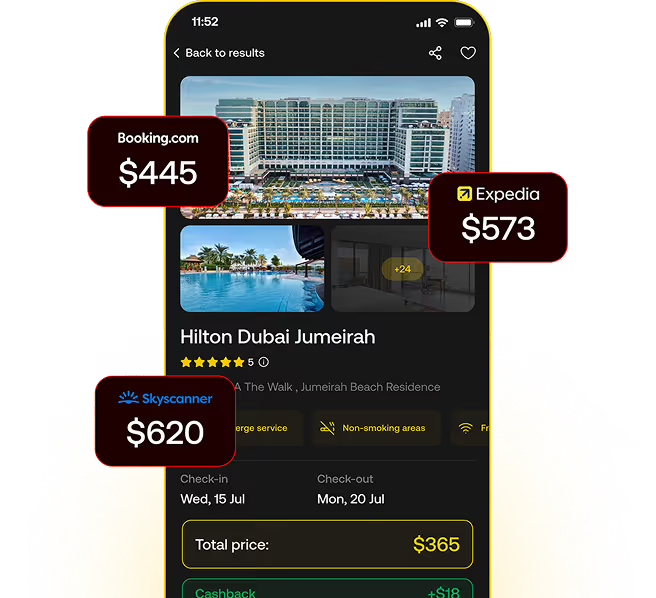
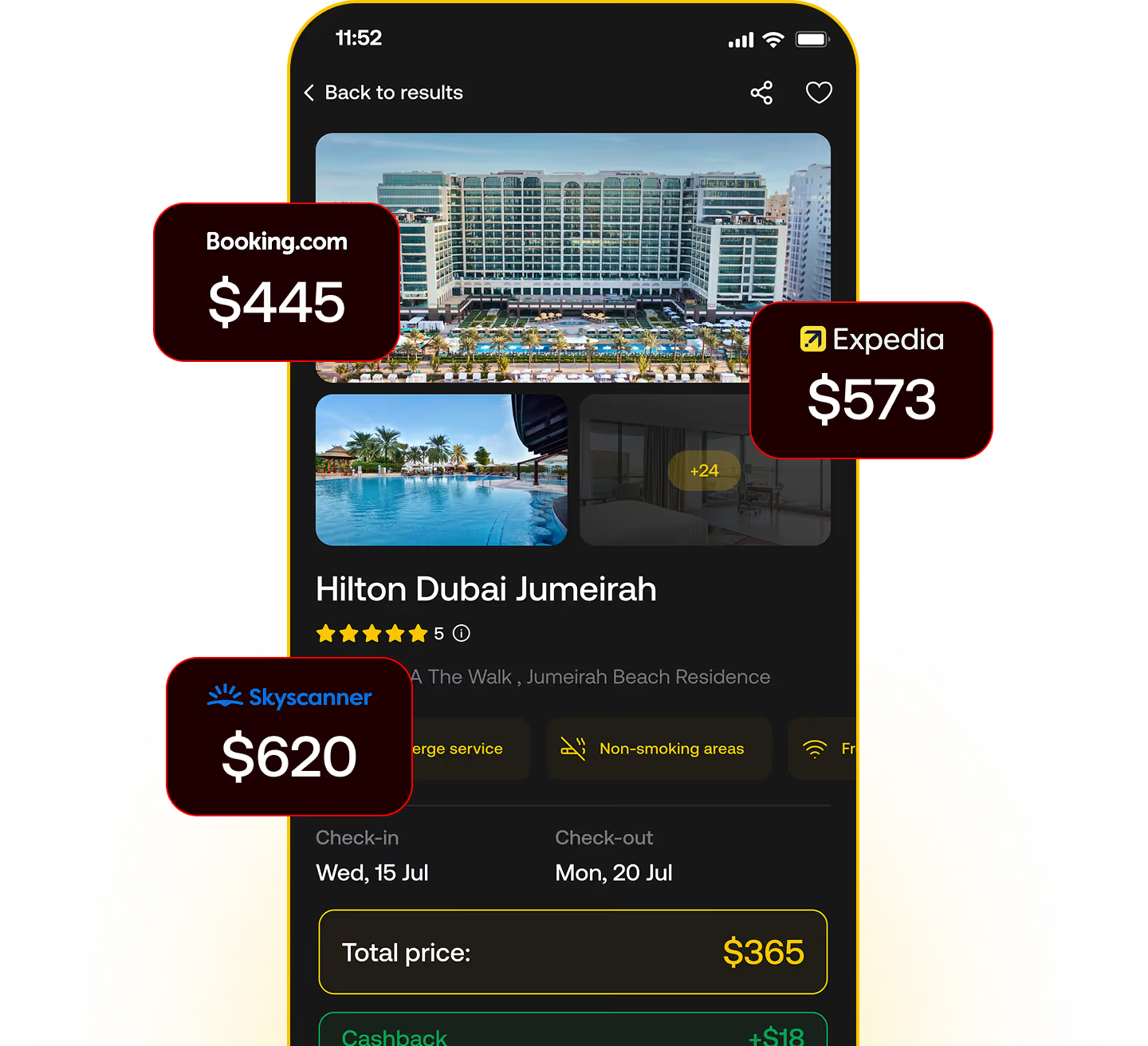
CoinBooking takes that out of that equation. It's a Dubai-licensed travel platform that lists the same hotels at up to 30% less than Booking.com or Expedia, accepting Apple Pay, Google Pay, and 100+ other payment options. The room is paid in full at booking, so the only thing the hotel can put on hold at check-in is a small incidental deposit if they ask for one. Not $1,000+ for the whole stay.
Coverage spans 190+ countries and over a million properties, and early users receive $25 off their first booking.
Mexico is next on the list for many US travelers. See how card-free hotel booking works there.
2. Use a Debit Card (Visa or Mastercard)
A Visa or Mastercard debit card is the most widely used alternative to a credit card at US hotels and works at the overwhelming majority of properties across the country. Hotels.com accept debit cards at checkout for online bookings. At check-in, major chains including Marriott, Hilton, and Hyatt accept Visa and Mastercard debit cards alongside credit cards.
The key difference from a credit card is where the security hold comes from. With a debit card, it pulls directly from your bank balance rather than a credit line, and stays there for up to seven business days after checkout. Confirm the hold amount with the property before arrival, particularly for longer stays.
3. Pay with PayPal via Booking Platforms
PayPal is accepted as a payment method on several major booking platforms, including CoinBooking and Hotels.com. Paying through PayPal lets you use your PayPal balance, a linked bank account, or PayPal Credit without providing card details directly to the booking platform. For travelers who have funds in a PayPal account or prefer to keep their bank details off OTA platforms, this is a practical route for the booking stage.
PayPal covers the online booking but does not change what happens at check-in. The hotel will still ask for a card or cash deposit for the security hold on arrival. If you are using PayPal to prepay a non-refundable rate, check whether the property still requires a card at check-in for incidentals before you confirm. Some prepaid bookings still require a card on file even if no charge is made.
4. Use a Prepaid Visa or Mastercard Card
Reloadable prepaid Visa and Mastercard cards work at most US hotel booking platforms and at chain hotel terminals at check-in. Cards such as those issued by Netspend, Green Dot, and Chime function like debit cards with either logo and are accepted at the booking stage on OTAs and in person at major chains.
The same hold mechanics apply as with debit cards: the hotel will freeze funds for incidentals from the card balance, not a credit line. Reloadable prepaid cards handle this more reliably than single-use gift cards, which are frequently declined for security holds because they cannot support a pending authorization on top of a zero balance. If you plan to use a prepaid card for a hotel stay, ensure the card has enough load to cover both the room rate and the estimated hold before you check in.
5. Buy Now, Pay Later (Klarna, Affirm)
Klarna and Affirm are available as payment options on Expedia and Hotels.com, allowing travelers to spread the cost of a hotel stay across several installments. For a $600 hotel booking, a six-week split means smaller upfront payments without needing a credit card at checkout. Both platforms integrate directly into the OTA checkout and approve most users through a soft credit check that does not affect your credit score.
Read the repayment terms carefully before using either service. Missing a scheduled payment with Klarna or Affirm can result in late fees and in some cases a negative impact on your credit score. BNPL covers the booking cost but does not affect the security hold at check-in, which the hotel will still apply to whatever card or payment method you present on arrival. Use BNPL to manage the booking payment, and plan separately for the check-in deposit.
6. Pay with Apple Pay or Google Pay
Apple Pay and Google Pay are accepted at an increasing number of hotel booking platforms and at NFC-enabled terminals at major chain front desks across the US. Both link to a debit or bank account and can be used without presenting a physical card. On platforms like Expedia and some direct hotel booking sites, Apple Pay and Google Pay appear as checkout options on mobile devices.
At check-in, contactless payment via Apple Pay or Google Pay is available at properties with NFC terminals, which are now standard at most major chains in larger US cities. The underlying payment method, whether debit or bank account, still determines the hold mechanics. If your Apple Pay or Google Pay is linked to a debit account rather than a credit card, the same security hold applies. For travelers whose mobile wallets are linked to a bank account, this is a more convenient way to pay without carrying a physical card.
7. Pay Cash at the Hotel
Cash is accepted at budget hotels, motels, and many independent properties across the US, particularly outside major city centers. Properties that accept cash typically require a larger upfront deposit than a card hold, usually $50 to $100 per night in addition to the room rate, to cover potential incidentals. The deposit is returned at checkout minus any charges.
Not all hotels accept cash, particularly mid-range and upscale chain properties in major cities. Before booking, call the property directly and confirm whether cash is accepted at check-in and what the deposit amount will be. Do not assume that a property listed on an OTA accepts cash on arrival. This varies significantly by brand, franchise, and location, and it is always worth verifying before you travel.
8. Book Directly Through the Hotel Website
Booking directly through a hotel’s own website removes OTA commissions from the equation and frequently produces a better room rate or a more flexible cancellation policy than the same property listed on Booking.com or Expedia. Direct booking sites for major chains including Marriott, Hilton, and Hyatt accept Visa and Mastercard debit cards, prepaid cards, and in some cases PayPal at checkout.
For independent hotels and boutique properties, calling the reservations team directly is worth the two minutes. Independent properties have more flexibility on payment terms than chain franchises and are more likely to accommodate alternative arrangements including larger cash deposits or alternative payment methods. Ask the team to confirm the check-in deposit policy and what payment methods they accept before you travel.
9. Use an Online or Local Travel Agent
Online travel agents and full-service booking agencies can handle the hotel reservation on your behalf and may accept payment methods that individual OTA platforms do not, including wire transfers, cash, or alternative digital payments. For complex trips involving multiple cities, Expedia and Priceline both offer agent-assisted booking services. Local travel agencies accept a broader range of payment methods and can book hotels, flights, and transfers as a package.
Using an agent is particularly practical for international visitors unfamiliar with the US booking landscape or for travelers who prefer to consolidate an entire itinerary through a single point of contact. The agency handles the reservation and confirmation, and you pay them directly through whatever method they accept. Confirm in advance what the hotel will require from you at check-in regardless of how the booking was made.
10. Choose Extended Stay or Apartment Hotels
Extended stay properties such as Residence Inn by Marriott, Homewood Suites by Hilton, and WoodSpring Suites are designed for longer stays and typically apply more flexible payment policies than standard hotel brands. Security holds are often lower or structured differently for weekly and monthly bookings. Apartment-style properties and serviced apartments frequently accept debit cards and bank transfers without the same hold structure as traditional hotels.
Book your next hotel for up to 30% less
Platforms like Airbnb offer an alternative to hotel stays across the US and accept debit cards, PayPal, and Apple Pay at checkout without any security hold at check-in. For travelers who want flexibility on both payment method and hold policy, apartment-style accommodation and home rental platforms cover the full range of US destinations and typically offer more space per dollar than comparable hotel rooms.
From the US to Argentina, the payment rules change completely. Here is how hotel booking without a card works there.
What to Expect at Hotel Check-In Without a Credit Card In the United States
If you are using a debit card, expect the hotel to place a security hold on your account at check-in. The hold amount varies by property, typically $50 to $200 per night at mid-range and upscale hotels, and stays on your account for the full stay plus three to seven business days after checkout. Confirm the hold amount with the property before arrival, particularly for longer stays, to ensure you have sufficient funds available.

Some budget hotels, motels, and independent properties accept cash at check-in. These properties typically require a larger upfront cash deposit, often $50 to $100 per night, to cover incidentals. The deposit is returned at checkout minus any charges. Call ahead to confirm cash acceptance and the deposit amount before you travel, as policies vary significantly by property.
Government-issued photo ID is required at check-in at all US hotels without exception. US residents typically present a driver’s license or state ID. International visitors should present their passport. Some properties also note that international visitors may face a slightly longer check-in process while the property records passport details as required by local regulations.
Tips for a Smoother Hotel Booking in the US
- If you are paying with a debit card, call the hotel before you book and confirm the security hold amount and release timeline. A week-long stay at a property charging $150 per night in holds means $1,050 tied up in your account for potentially two weeks post-checkout. Knowing this in advance lets you plan your available balance accordingly and avoids an unpleasant surprise at the desk.
- Book well in advance for major US events and peak travel periods. Cities hosting large sports tournaments, music festivals, or industry conferences see hotel availability narrow sharply and prices rise weeks ahead of the event. The payment method you plan to use makes no difference if there are no rooms left to book.
- If you are using a BNPL service like Klarna or Affirm for the booking, read the repayment schedule carefully before confirming. Missing a payment can trigger late fees and in some cases a credit score impact. Set a calendar reminder for each payment date so the installments do not catch you off guard after the trip.
- Prepaid Visa and Mastercard gift cards work well for online pre-paid bookings but are frequently declined at hotel desks for security holds because they cannot support a pending authorization on an empty balance. If you plan to use a prepaid card at check-in, use a reloadable card with a sufficient balance to cover the hold, not a one-time gift card.
Frequently Asked Questions
1. Can you pay cash at a hotel in the US?
Yes, at some properties, but not all. Budget hotels, motels, and many independent properties accept cash at check-in and will require a cash deposit of $50 to $100 per night to cover incidentals. Mid-range and upscale chain hotels in major cities frequently do not accept cash and require a card for the security hold. Always call the property directly before arrival to confirm whether cash is accepted and what the deposit amount will be.
2. Do US hotels accept debit cards?
Yes. The vast majority of US hotels accept Visa and Mastercard debit cards at both the booking stage and at check-in. The key point to understand is the security hold: a debit card hold comes directly out of your bank balance rather than a credit line, and it stays frozen for up to seven business days after checkout. Confirm the hold amount with the property before your stay, particularly for longer trips, to ensure you have enough available in your account.
3. Which booking sites accept PayPal for US hotels?
Expedia and Hotels.com both accept PayPal at checkout for US hotel bookings. PayPal can be funded from a PayPal balance, a linked bank account, or PayPal Credit. Note that PayPal covers the booking payment but does not affect the security hold at check-in, which the hotel applies separately to whatever card or payment method you present on arrival.
4. How large is the security hold at check-in without a credit card?
Security holds at US hotels typically range from $50 to $200 per night, depending on the property tier and location. Upscale hotels in major cities may hold more. The hold is placed on the card at check-in and released three to seven business days after checkout. With a credit card, the hold is against your credit line. With a debit card, the funds come directly from your bank balance. Budget properties and extended stay hotels often apply lower holds or structure them differently for longer bookings.
5. Can I book a US hotel with Bitcoin or USDT?
Yes. CoinBooking lists the same US hotels at up to 30% less than Booking.com or Expedia and accepts Bitcoin, USDT, Apple Pay, Google Pay, and over 100 other payment options with no credit card required at any stage. There is no security hold, no card required at check-in, and no bank account needed. Early users receive $25 off their first booking.
6. Can international visitors book US hotels without a credit card?
Yes. International visitors can book US hotels using a Visa or Mastercard debit card, PayPal, a prepaid Visa or Mastercard card, Apple Pay, or Google Pay. CoinBooking accepts Apple Pay, Google Pay, and over 100 payment options including crypto, with no card and no security hold required. At check-in, a valid passport is required for all international visitors.

Yaryna Dobrianska is a Dubai-based business and technology writer with a background in fintech and digital services. She covers cryptocurrency adoption, cross-border payments, and the practical realities of spending digital assets across emerging markets. Her work at CoinBooking focuses on helping readers navigate crypto travel, compare rates, and make smarter booking decisions — whether they're paying in BTC, USDT, or Apple Pay.
Found a hotel you like? Book it for up to 30% less

Found a hotel you like? Book it for up to 30% less