.avif)
.avif)

.png)

Content
Top 10 Ways to Book a Hotel Without a Credit Card in Vietnam

Few countries in Southeast Asia have had a tourism comeback quite like Vietnam. From 12.6 million visitors in 2023 to 17.6 million in 2024 to a record 21.2 million in 2025, the trajectory has been almost vertical. Hanoi, Ha Long Bay, Hoi An, and Phu Quoc are now firmly on every serious traveler's list, and the hotels have kept pace.

What those travelers find on arrival is that Vietnam runs on cash and QR codes far more than on card terminals. Over 89% of Vietnamese consumers use at least one e-wallet, and cash still accounts for 55% of total transactions, particularly outside the major cities. Card terminals at smaller guesthouses and mountain homestays are the exception rather than the rule.
For international visitors, debit cards cover the cities and USD gets you far in tourist areas. Vietnam is a long multi-stop trip for most travelers, and having every booking confirmed before you land is a different experience from sorting payment property by property on arrival. CoinBooking makes that possible without a card.
Vietnam is just the beginning. Every destination has its own card-free hotel booking story.
Do Hotels in Vietnam Require a Credit Card?
International chains in Hanoi, Ho Chi Minh City, and Da Nang, including Marriott, InterContinental, and Hilton, may request a card at check-in for the security deposit. Most will accept a cash deposit as an alternative when asked directly, and the hold at independent properties is rarely the issue it can be in Western hotel markets.
Mid-range and budget hotels across the country generally do not require a credit card at all. Most accept cash in VND or USD, MoMo, or VNPay QR as standard. The geographic spread matters here. A hotel in Hanoi's Hoan Kiem district operates very differently from a homestay in Sapa, a guesthouse in Hue, or a resort on a smaller Phu Quoc beach. Payment expectations shift considerably across that range.
Smaller guesthouses in Hoi An, Hue, and the northern highlands are often cash-only. Card terminals outside the main tourist strips in major cities are not guaranteed, and for island and mountain destinations in particular, drawing enough VND before you leave the mainland is practical planning rather than a backup option.
Top 10 Ways to Book a Hotel in Vietnam Without a Credit Card
1. Book Hotels with CoinBooking
Vietnam is a long trip for most international visitors, and most tackle five destinations in one go. Not every stop has a functioning card terminal, and the local digital wallets Vietnamese travelers use, MoMo and VNPay, both require a Vietnamese phone number and bank account to set up.


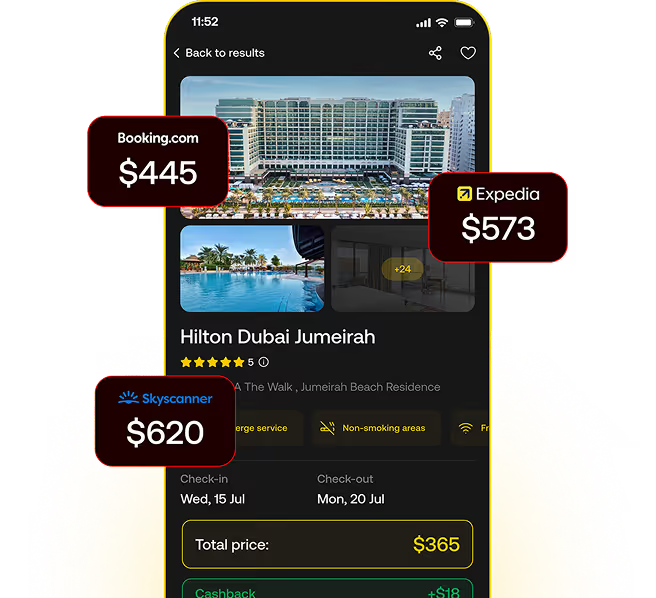
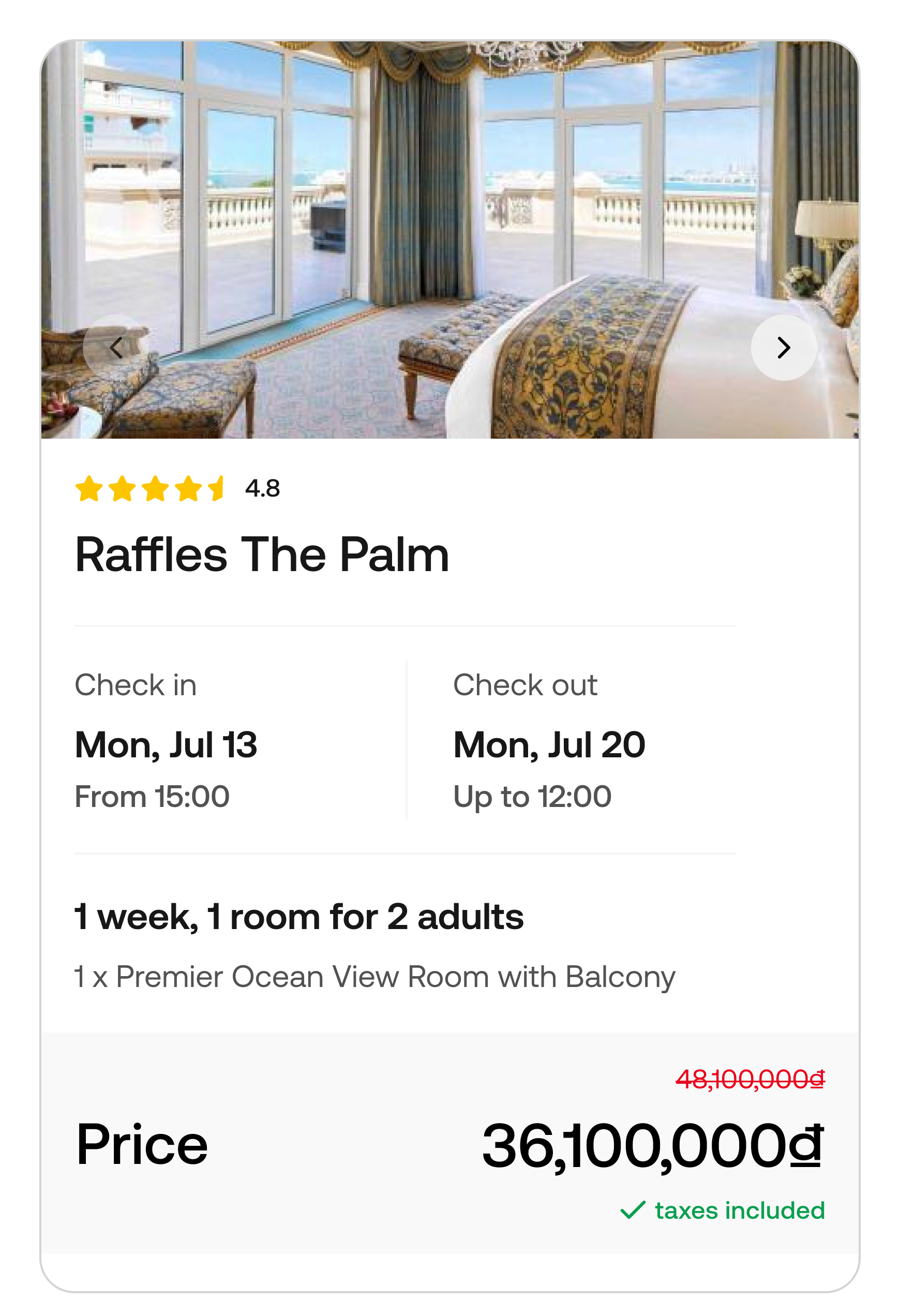
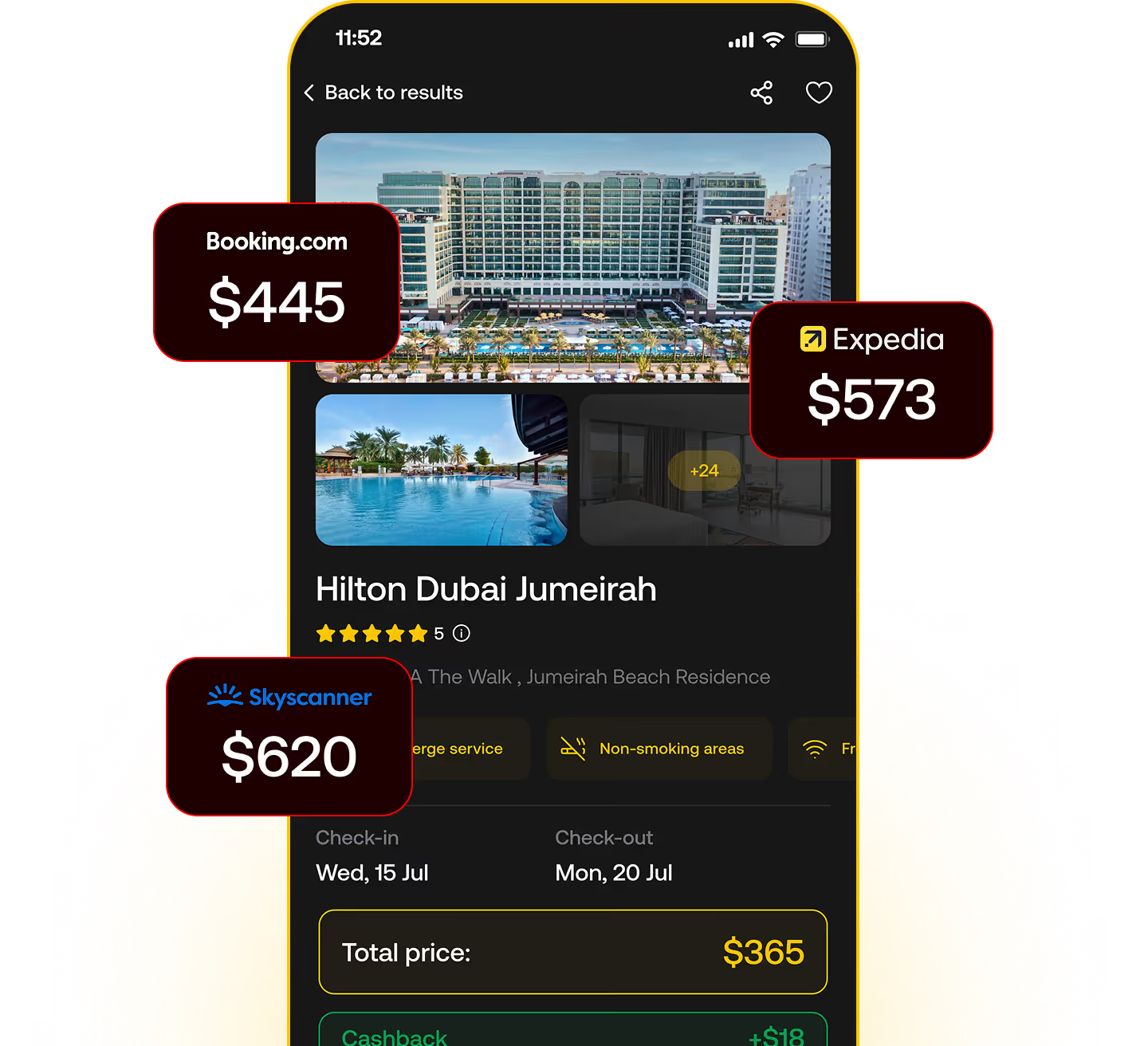
CoinBooking is a Dubai-licensed travel platform that lists the same properties as Booking.com and Expedia at up to 30% less. It accepts Apple Pay, Google Pay, and over 100 other payment options with no card required, covering hotels across Hanoi, Ho Chi Minh City, Hoi An, Da Nang, Phu Quoc, and 190+ countries.
Early users receive $25 off their first booking.
Just 12 Million ₫ Cheaper.


%201.png)
your first booking.
Island hopping does not stop in Vietnam. See how card-free hotel booking works in the Philippines.
2. Pay via MoMo
MoMo is Vietnam's dominant e-wallet with 31 million active users and a 56% market share. It is accepted at most mid-range and budget hotels in Hanoi, Ho Chi Minh City, Da Nang, and Hoi An, working via QR code at the hotel front desk. From bill payments to peer-to-peer transfers and hotel bookings, MoMo has evolved from an e-wallet into a full financial super app.
MoMo requires a Vietnamese mobile number and bank account to set up, which makes it the go-to payment method for domestic travelers and Vietnamese residents but inaccessible to international visitors without local accounts. For Vietnamese travelers, it is among the fastest and most widely accepted hotel payment routes in the country.
3. Use VNPay QR
VNPay QR is Vietnam's national QR payment standard, operated under the State Bank of Vietnam's interoperability framework. A single QR code at a hotel front desk can be scanned by any Vietnamese bank's mobile app, making it bank-agnostic and more broadly accepted than MoMo alone at properties that have multiple banking customers. It is particularly strong at mid-range and upscale properties in major cities.
Like MoMo, VNPay QR requires a Vietnamese bank account to use and is not accessible to international visitors without local residency. For domestic travelers, it covers every major city and a growing number of provincial properties, with instant settlement and zero fees on most transactions.
4. Pay Cash (VND or USD)
Cash is the most reliable payment method across Vietnam, particularly outside Hanoi, Ho Chi Minh City, and Da Nang. Guesthouses in Hue, homestays in Sapa and the northern highlands, small beach properties on Con Dao, and most accommodation in rural areas operate primarily or entirely on cash. VND is the standard currency at all properties, and carrying enough before leaving a major city is essential for any itinerary that goes beyond the main tourist corridors.
USD is also widely accepted at tourist-facing hotels in Hanoi, Hoi An, Da Nang, and Phu Quoc. Carry smaller bills. Hotels that accept foreign cash rarely have change for large notes, and splitting a large note at a licensed exchange office before arrival avoids friction at the desk. For any island or mountain trip, draw more VND than you think you need before departing.
5. Use a Debit Card
Visa and Mastercard debit cards work reliably at international chain hotels and mid-range properties in Hanoi, Ho Chi Minh City, and Da Nang. Coverage drops significantly at smaller guesthouses, boutique properties in Hoi An's old town, and any accommodation outside the main tourist districts of major cities. Card terminals are rare in Sapa, Ha Giang, Ninh Binh's rural areas, and most island accommodations beyond Phu Quoc's main resort strip.
For international visitors, a debit card covers the booking stage on most OTA platforms and check-in at well-equipped properties. Pairing it with VND cash covers the full range of accommodation types across a multi-city Vietnam itinerary.
6. Choose Pay-at-Hotel Options on Booking Platforms
Booking.com and Agoda both carry Vietnamese hotel inventory with pay-at-property options that confirm a reservation without upfront payment or card details. Payment is settled at check-in in VND cash, USD cash, or by MoMo or VNPay QR depending on what the property accepts.
Filter specifically for listings marked as “no card needed to book” rather than “pay at property”, as some still ask for a card number to guarantee the booking. For peak season travel to Hoi An during the lantern festival and Phu Quoc between December and April, availability on pay-at-property listings shrinks fast. Book early and confirm payment terms directly with the property.
7. Book Through Agoda or Booking.com
Agoda has particularly strong inventory across Vietnam and is widely trusted by both domestic and international travelers. It accepts international debit cards and prepaid travel cards at checkout and covers everything from Hanoi city hotels to Ha Long Bay cruises and Phu Quoc resorts. Booking.com has solid coverage across all major destinations and similarly accepts debit cards.
For international visitors who want a confirmed booking before arrival with payment handled online, both platforms cover the full Vietnam itinerary without requiring a credit card. On popular Vietnamese properties, CoinBooking consistently undercuts both platforms by a meaningful margin.
8. Book Directly Through the Hotel
Smaller guesthouses in Hoi An, boutique properties in Hanoi's Old Quarter, homestays in Sapa, and beach bungalows in less-developed areas accept direct bookings by email or WhatsApp with payment in VND or USD cash on arrival. Booking directly removes the OTA commission and often produces a better rate, particularly at independent properties where the owner sets the terms.
Contact the property directly, confirm dates and availability, and ask specifically how they prefer to receive payment. Most Vietnamese hotel and guesthouse owners respond quickly by WhatsApp or Zalo and are very used to handling payment arrangements for international guests. For Ha Long Bay cruise operators, direct booking by email is also common and may include more flexible payment terms than OTA listings.
India is a different world for hotel payments. Find out how to navigate it without a card.
9. Use a Prepaid Travel Card (Wise, Revolut)
Wise and Revolut prepaid Visa and Mastercard cards convert at mid-market rates with low fees and work at hotel terminals and booking platforms in Hanoi, Ho Chi Minh City, Da Nang, and larger resort properties across Vietnam. Both avoid the foreign transaction fees of 1.5% to 3.5% that standard international bank cards typically charge and can be loaded before departure in home currency.
Outside the major cities, card acceptance becomes unreliable. A Wise or Revolut card covers city hotels and well-equipped resorts, but VND cash is still essential for smaller guesthouses, mountain homestays, and any destination where ATM availability is unpredictable. Carrying both covers the full range of accommodation across a typical Vietnam itinerary.
10. Use a Local Travel Agent
Local travel agencies are particularly relevant for Vietnam given the popularity of packaged multi-day experiences. Ha Long Bay overnight cruises, Sapa trekking packages with homestay accommodation, Mekong Delta tours, and northern highlands motorbike loops all involve accommodation bundled with transport and guides. Most local agencies accept cash or bank transfer and handle the entire booking end-to-end.
Agencies in Hanoi's Old Quarter and Ho Chi Minh City's Pham Ngu Lao backpacker district are accustomed to international guests and respond quickly to advance email or WhatsApp inquiries. Payment goes directly to the agency in VND or USD cash, and they manage all accommodation arrangements. For travelers who want multiple destinations booked and confirmed without sorting each property individually, a local agent removes every card and payment question at once.
What to Expect at Check-In Without a Credit Card
A passport is required for all foreign visitors at check-in in Vietnam. Vietnamese nationals present their CCCD citizen ID card. Vietnamese hotels are legally required to register foreign guests with local authorities, which is standard practice handled entirely by the hotel and requires nothing from the guest beyond presenting their passport.
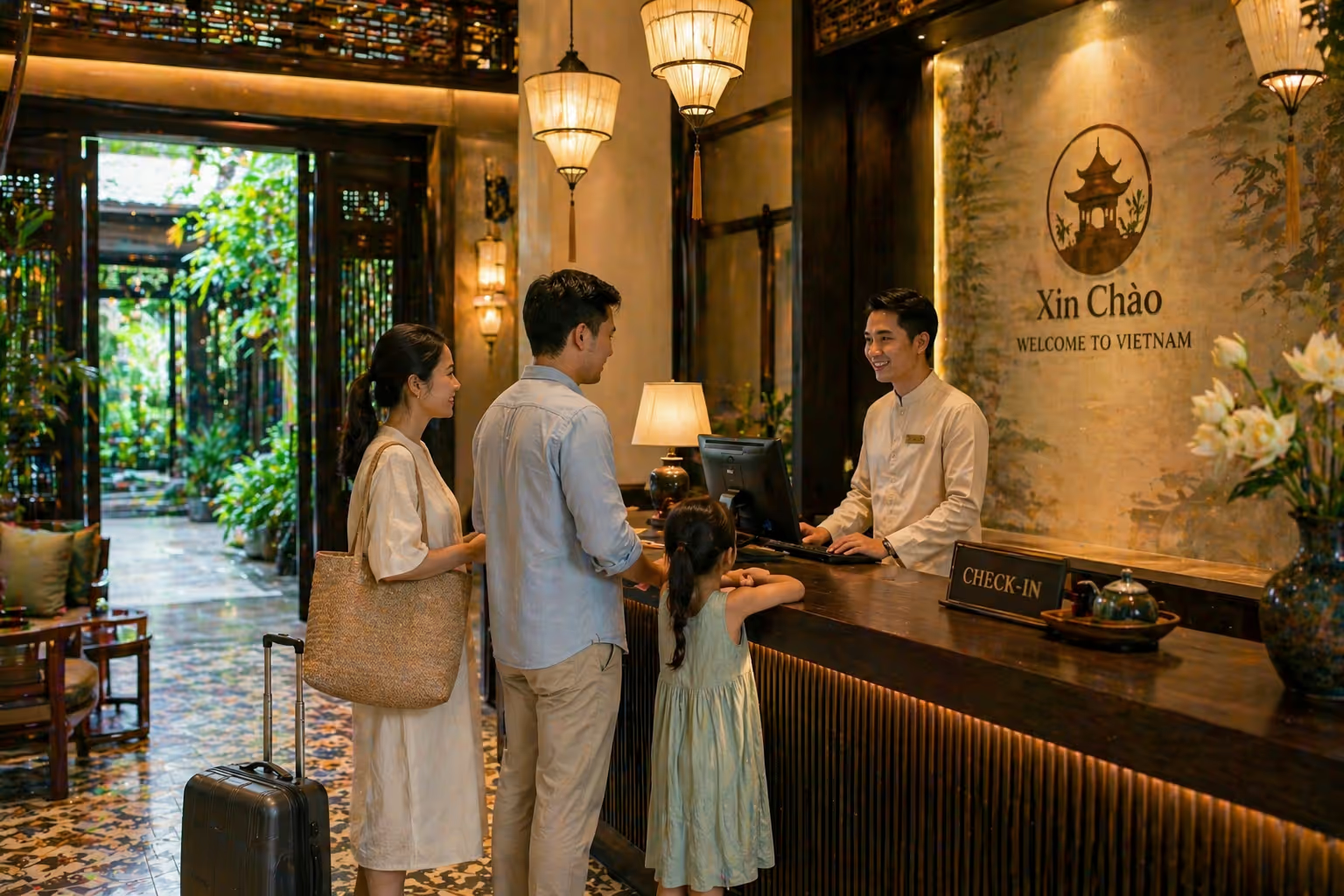
Security deposits are uncommon outside larger international chain hotels. Smaller guesthouses typically do not ask for one. International chains in Hanoi and Ho Chi Minh City may request a cash deposit if no card is provided, usually equivalent to one night's rate. Confirm the deposit policy directly with the property before arrival for any stay where you are not using a card.
Tips for a Smoother Booking
- Carry VND cash for any travel outside Hanoi, Ho Chi Minh City, and Da Nang. ATMs exist in most towns but machines in rural areas and mountain regions can run out of cash or go offline without warning. Draw a larger buffer than you think you need before heading to Sapa, Ha Giang, the Central Highlands, or any island beyond Phu Quoc's main strip.
- USD is accepted at many tourist-facing hotels, but carry smaller denominations. Hotels that accept foreign currency rarely have change for large bills, and getting change at a licensed exchange office before arrival is simpler than negotiating at the desk.
- MoMo and ZaloPay require a Vietnamese phone number and bank account. International visitors cannot set them up for a short trip and should not plan around them. Debit cards, CoinBooking, or cash are the practical routes for anyone arriving from outside Vietnam.
- Ha Long Bay cruises and Phu Quoc resorts typically require advance payment, often in full, before the trip. Confirm the payment method they accept at the time of booking rather than on arrival, particularly for multi-day packages where the logistics of changing payment on-site are genuinely complicated.
Frequently Asked Questions
1. Do Vietnamese hotels accept cash?
Yes. Cash is the most widely accepted payment method across Vietnam's hotel sector, particularly at budget and mid-range properties and outside major cities. Guesthouses in Hoi An, Hue, and Sapa, beach bungalows on smaller islands, and most homestays in northern Vietnam handle VND cash as their primary or only payment method. International chain hotels in Hanoi and Ho Chi Minh City accept cash but may require a cash deposit in place of a card held at check-in. USD is also accepted at tourist-facing properties in the main destinations.
2. Can I book a hotel in Vietnam without a credit card?
Yes. Most Vietnamese hotels do not require a credit card. Domestic travelers book via MoMo, VNPay QR, or bank transfer as standard practice. International visitors can use a debit card at larger properties, choose pay-at-property listings on Agoda or Booking.com, book directly by WhatsApp and pay cash on arrival, or use CoinBooking with crypto or Apple Pay for confirmed bookings before they land.
3. What is MoMo and how does it work at hotels?
MoMo is Vietnam's dominant e-wallet and the most widely accepted digital wallet at hotel front desks across the country. At check-in, it works via QR code scan: the guest opens MoMo, scans the hotel's QR code, enters the amount, and payment is confirmed instantly. It is accepted at most mid-range and budget hotels in Hanoi, Ho Chi Minh City, Da Nang, and Hoi An. MoMo requires a Vietnamese mobile number and bank account, making it inaccessible to international visitors without local residency.
4. Do I need to carry cash in Vietnam?
Yes, particularly outside the major cities. Sapa, Ha Giang, Ninh Binh's rural areas, Con Dao, and most accommodation beyond Phu Quoc's main resort strip operate primarily on cash. Even in Hanoi and Ho Chi Minh City, smaller guesthouses and independently run properties may not have card terminals. ATMs are available in most towns but can be unreliable in mountain regions. Draw enough VND before leaving any major city to cover accommodation and incidentals for the next leg of the trip.
5. Which booking platforms work in Vietnam without a credit card?
Agoda has strong Vietnam inventory and accepts international debit cards and prepaid travel cards. Booking.com covers the country well with pay-at-property filters available. For a fully card-free booking, CoinBooking covers the same properties with no card required at any stage and lists them at up to 30% less. Early users receive $25 off their first booking.
6. Can I book a Ha Long Bay cruise without a credit card?
Yes. Most Ha Long Bay cruise operators accept cash in VND or USD for direct bookings made by email or WhatsApp. Local travel agencies in Hanoi's Old Quarter book cruises for cash or bank transfer as standard. For international visitors who want everything confirmed before they land, CoinBooking covers Ha Long Bay packages and hotels with no card required.

Yaryna Dobrianska is a Dubai-based business and technology writer with a background in fintech and digital services. She covers cryptocurrency adoption, cross-border payments, and the practical realities of spending digital assets across emerging markets. Her work at CoinBooking focuses on helping readers navigate crypto travel, compare rates, and make smarter booking decisions — whether they're paying in BTC, USDT, or Apple Pay.
Save up to 30% on your next hotel. You card stays home.

Save up to 30% on your next hotel. You card stays home.