.avif)
.avif)

.png)

Content
Things to Do in Nicaragua: 14 Best Experiences (2026)

Nicaragua is one of Central America's best-kept secrets. Around 1 million travelers visited in 2025, drawn by uncrowded adventures that cost about half as much as many nearby destinations.
As Central America's largest country, Nicaragua is home to 19 active volcanoes, two stunning coastlines, and Lake Nicaragua, the world's only freshwater lake with ocean-dwelling bull sharks. You can race down Cerro Negro on a volcano board at up to 80 km/h or explore Granada, one of the oldest colonial cities in the Americas, founded in 1524. It's a relaxed, authentic destination unlike anywhere else.
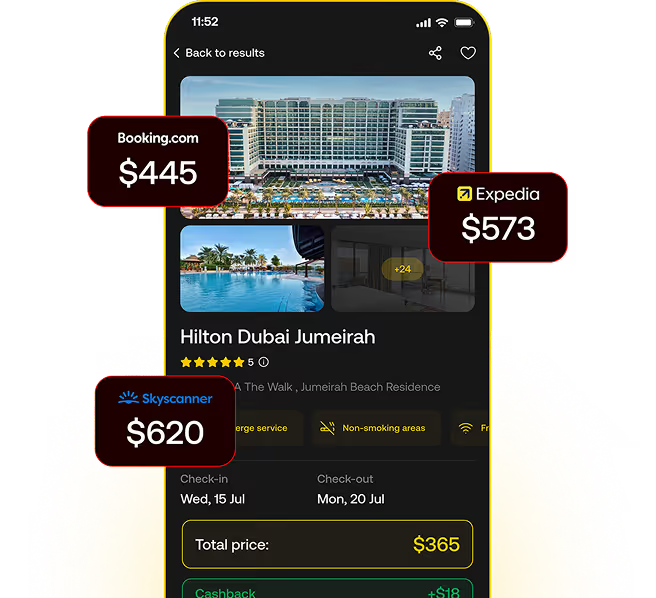
Getting there and finding great places to stay is easy with CoinBooking. Book hotels in Granada, León, San Juan del Sur, and the Corn Islands for up to 30% less than Booking.com. Pay with Visa, Mastercard, Apple Pay, Google Pay, or 200+ cryptocurrencies. If you want a stress-free trip, our concierge team can plan your entire itinerary. Sign up with your email and get $25 off your first booking.
Watch the short video below to get highlights, or continue reading to uncover 14 must-do experiences, a suggested week-long itinerary, actual 2026 costs, and practical logistics for visitors. So, let’s dive in.
What Makes Nicaragua Worth Visiting in 2026?
Nicaragua has always offered outsized adventure per dollar spent. A 2025 analysis by Numbeo ranked Nicaragua's cost of living roughly 40–60% lower than Costa Rica's. Hostel beds run $8–15 per night in Granada and León. A two-hour surf lesson costs around $30. The Masaya Volcano night tour, one of the most dramatic experiences in all of Central America, is under $20 from Granada.
Tourism to Nicaragua dipped significantly after civil unrest in 2018 but has been recovering slowly. That recovery gap is, for now, the traveller's advantage: the infrastructure is there (roads between major tourist hubs are in excellent condition), prices haven't inflated to match demand, and the country's main attractions are rarely crowded. Across Central America, visitor numbers to smaller markets like Nicaragua, Belize, and Honduras tend to rebound before accommodation prices catch up. That window is still open.
The 14 Best Things to Do in Nicaragua
1. Volcano boarding at Cerro Negro
.jpg)
If Nicaragua has one signature experience, this is it. Cerro Negro, located 30 km from León, is the youngest active volcano in Central America, formed in 1850 and still erupting periodically. The activity is exactly what it sounds like: hike up 45–60 minutes through black ash to the 728-metre summit, then slide down on a wooden board at speeds that can reach 80 km/h.
Operators in León (Bigfoot Hostel and Volcano Day are the two most established) run the tour daily. Expect to pay $25–35 including transport, gear, and a post-run drink. It's accessible to most fitness levels. The hike up is warm work; the descent takes under two minutes.
Note: Book in León the day before. Morning departures avoid the worst midday heat.
2. Exploring Granada's Colonial Streets
.jpg)
Granada was founded by Spanish settlers in 1524, making it one of the oldest continuously inhabited cities in the Americas. Its compact old town is the most photogenic urban space in Nicaragua: pastel colonial mansions, cathedral domes, horse-drawn carriages on cobblestone streets, and the Mombacho volcano framing the skyline to the south.
Wander the Calle La Calzada for restaurants and nightlife, climb the bell tower at Iglesia de La Merced for the best rooftop view in the city, and spend an afternoon kayaking or taking a boat tour among the Isletas de Granada, 365 small islands formed by a prehistoric volcanic eruption of Mombacho, now home to fishing families, private homes, and a few small restaurants accessible only by water.
Don't miss: The Friday evening food market at Parque Central, where locals eat vigorón a street dish of chicharrón, yuca, and curtido that costs about $2.
3. Hiking and wildlife on Ometepe Island
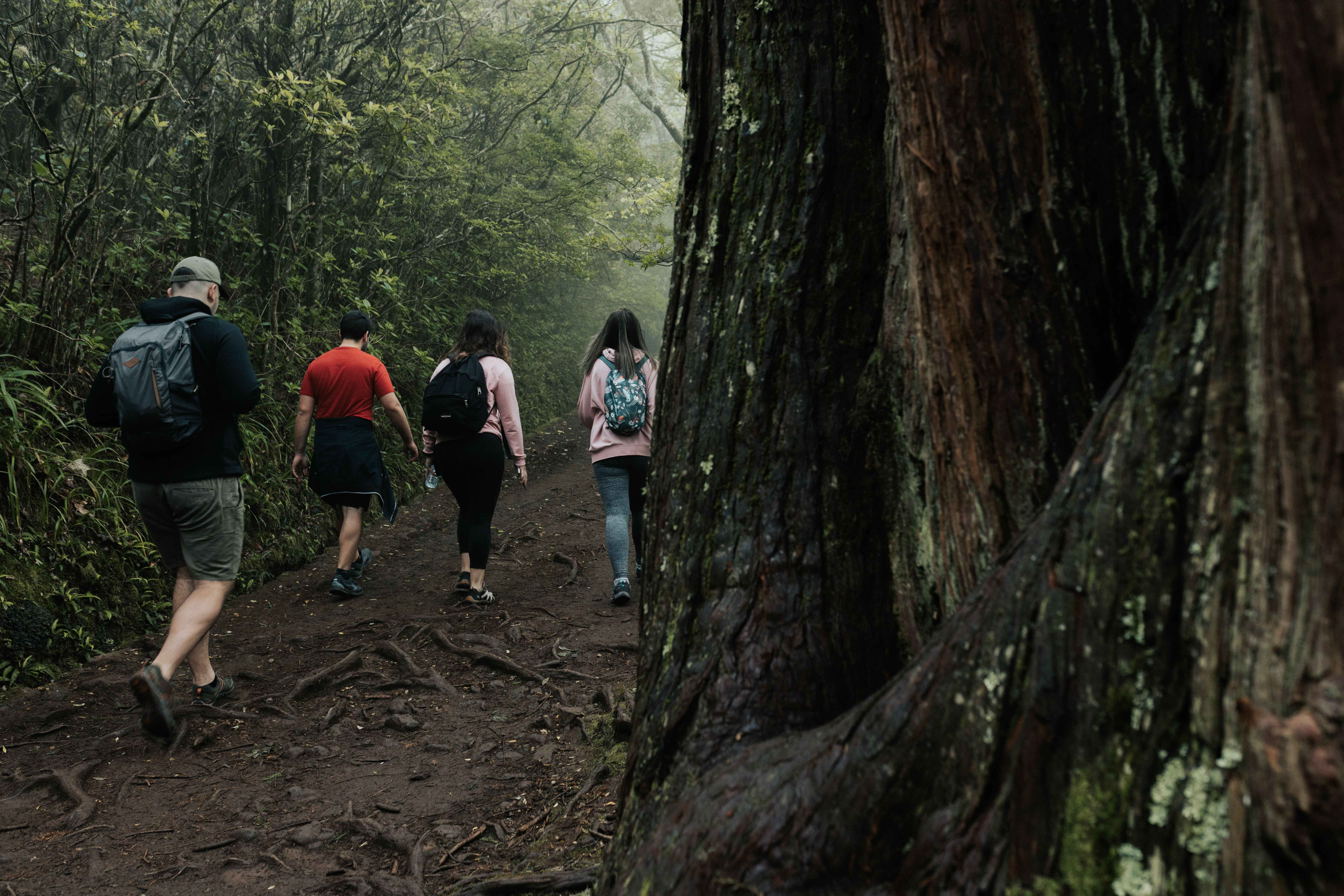
Ometepe is a dual-volcano island rising from the middle of Lake Nicaragua, the largest lake in Central America. Two volcanoes, Concepción (1,610 m, active) and Maderas (1,394 m, dormant), are connected by a narrow isthmus, giving the island its distinctive hourglass shape visible from the ferry.
The options here range from leisurely to demanding. Ojo de Agua, a natural spring-fed pool on the island, is one of the most relaxing hours you'll spend in Nicaragua ($5 entry). The San Ramón Waterfall on the Maderas side is a rewarding day hike through the jungle. Guides are legally required for both volcano summits; $50–70 per person is the standard rate, and they are worth every dollar given the terrain. Wildlife on Ometepe includes howler monkeys, white-faced capuchins, Jesus Christ lizards, and over 150 bird species.
Getting there: Ferry from San Jorge (near Rivas), approximately 1 hour, runs multiple times daily. Cost: around $2–4 per person.
4. Surfing and beaches: San Juan del Sur and Popoyo
.jpg)
Nicaragua's Pacific coast has been on the surfing radar for over two decades, but hasn't been overwhelmed by it the way Costa Rica's Guanacaste coast has. San Juan del Sur is the main hub, a crescent bay with a cheerful town, good surf schools, cheap bars, and the second-largest Jesus statue in the world (60 metres, visible from the bay). Playa Maderas, 30 minutes north, is the best break for intermediate surfers.
For those wanting something quieter and more consistent, Popoyo (an hour further north) is preferred by experienced surfers. There's less nightlife, more reef break, and an atmosphere that feels closer to what San Juan del Sur was 15 years ago.
Group surf lessons in either location: $25–35. Board rentals: $10–15 per day.
5. León: Cathedral, History, and Volcano Day Trips
.jpg)
León is Nicaragua's second city and its intellectual capital, home to the country's oldest university, a visible Sandinista political culture expressed in vivid street murals, and the largest cathedral in Central America. The Basílica Catedral de la Asunción is a UNESCO World Heritage Site; climb to the white rooftop for a panoramic view of the city and the chain of volcanoes stretching north. The tomb of poet Rubén Darío, Nicaragua's most revered national figure, is inside.
The Museo de la Revolución is a genuinely moving experience guided by former Sandinista combatants who walk you through the 1979 revolution using photographs, artefacts, and first-person accounts (tours in Spanish; English translations available).
León is also the base for Cerro Negro (see above), plus day trips to Volcán Telica (where you can camp at the crater rim) and the UNESCO ruins of León Viejo.
6. Swimming in Laguna de Apoyo

Laguna de Apoyo is a volcanic crater lake 30 minutes south of Granada and 15 km from Masaya. The water is a clear, warm 28°C year-round, geothermally heated and fed by underground springs rather than rivers, which keeps it clean and remarkably still. The crater walls rise sharply around it, covered in forest that supports howler monkeys and dozens of bird species.
You can visit on a day trip from Granada (hostels run shuttles for around $10–15 round trip) or stay at one of the lakeside guesthouses. Kayaking, paddleboarding, and swimming are the main activities. It's the kind of afternoon that makes you rebook your flight home.
7. The Corn Islands: Nicaragua's Caribbean Escape

Big Corn Island and Little Corn Island sit 70 km off Nicaragua's Caribbean coast and feel entirely different from the Pacific side of the country. White sand, palm trees, reggae, Caribbean seafood, and some of the best budget scuba diving in Central America ($50–75 for an open-water certification course).
Little Corn is the more beloved of the two, with no motorised vehicles on the island, paths instead of roads, and accommodation that ranges from $15 hammock huts to small beachfront hotels. Getting there involves a 45-minute flight from Managua or a long boat connection through Bluefields, both of which are part of the adventure. The Caribbean reef around the Corn Islands is in excellent condition compared to many parts of the Western Caribbean, partly because of lower tourist pressure. Snorkelling directly off Little Corn's beaches is accessible without renting equipment. Scuba diving operators on both islands offer intro dives ($35–50), fun dives ($30–40), and full PADI certifications ($200–280 for the open-water course). Visibility regularly reaches 30 metres.
Nicaragua is one of the few countries in Central America where doing nothing in particular is an active travel choice rather than a failure of planning. A hammock in a lakeside guesthouse, a cold Toña beer in a Granada courtyard, an afternoon watching fishing boats return to port in San Juan del Sur, the country's pace is genuinely unhurried, and travellers who try to match it rather than fight it consistently report it as a highlight. If Caribbean beach destinations are high on your list, our guide to the top 10 budget beach vacations in 2026 covers comparable islands across the region worth adding to your itinerary.
Peak snorkelling: April–June, when visibility is at its clearest.
8. Masaya Volcano National Park Night Tour
.jpg)
Masaya is the most accessible active volcano in Nicaragua; a paved road leads directly to the Santiago Crater rim, where you can stand at the edge and look down into a bubbling lava lake. The park is located between Managua and Granada, making it a natural stop on the route between the two cities.
Night tours, which are available several evenings a week, offer the most dramatic views: the lava glows orange in the dark, and the sulfur plume lit from below is genuinely otherworldly. The park also has cave bat tours (hundreds of thousands of bats at dusk) and a museum in the former hacienda at the park entrance.
Night tour from Granada: $18–25, including transport and guide.
9. Kayaking the Isletas de Granada
.jpg)
The 365 islands formed by Mombacho's ancient eruption range from tiny rocky outcrops to inhabited islands with restaurants, homes, and even a small zoo. Kayaking among them from Granada's lakefront is one of the most peaceful two hours in Central America you paddle at your own pace, stop at a waterfront restaurant for grilled fish, and return at sunset.
Kayak rentals and guided tours operate from the port at the end of La Calzada. Guided boat tours (not self-paddled) are also available for those who want the narrative without the effort, typically $10–15 per person for a 45-minute circuit.
10. Canyoning at Somoto Canyon
.jpg)
Somoto Canyon, in the far north near the Honduran border, is one of the most spectacular and least visited natural attractions in Nicaragua. A canyon carved by the Río Coco through volcanic rock, with walls rising 100+ metres and sections narrow enough to wade through, swim across, and jump from.
Book your next hotel for up to 30% less
The canyon takes 3–5 hours to traverse with a guide and includes sections of walking, swimming in cold, clear water, and optional cliff jumps. There are no crowds. There is no Wi-Fi. It's one of the most satisfying half-days in the country.
Getting there: Easiest from Estelí (90-minute drive). Day tours operate from León for around $35–50 including transport.
11. Coffee and Cloud Forest in Matagalpa
.jpg)
Nicaragua is a significant coffee producer; the Matagalpa and Jinotega highlands produce some of the best medium-altitude arabica in Central America. The region is also covered in forest: cooler temperatures, dense green hills, and a pace entirely different from the colonial cities on the Pacific plain.
Farm tours let you follow the full coffee process from tree to cup, typically including a cupping session. Several farms offer multi-day stays. For birdwatchers, the cloud forest around Matagalpa and the Peñas Blancas massif is among the best in Nicaragua for rare species, including the quetzal.
12. Catarina and the Masaya Craft Market
.jpg)
Catarina is a small town in the Pueblos Blancos region south of Masaya with flower nurseries and a mirador (lookout) over Laguna de Apoyo. It's a pleasant stop on a loop from Granada. Masaya's Mercado de Artesanías is Nicaragua's most concentrated craft market hammocks, pottery, leather goods, wooden carvings, and embroidered clothing. Arrive at the municipal market rather than the tourist market for fairer prices.
Pro tip: Nicaraguan hammocks are among the country's best-known exports. Quality woven hammocks start at around $20.
13. Watching Sea Turtles at La Flor Wildlife Refuge
.jpg)
La Flor Wildlife Refuge, near San Juan del Sur, is one of the Pacific's Olive Ridley sea turtle nesting sites. Between July and January, thousands of turtles arrive in mass nesting events called arribadas to lay eggs on the beach. Night tours are available and carefully regulated to avoid disturbing the turtles. It's one of the most remarkable natural events on the Central American Pacific coast.
14. Horseback Riding on Ometepe Island
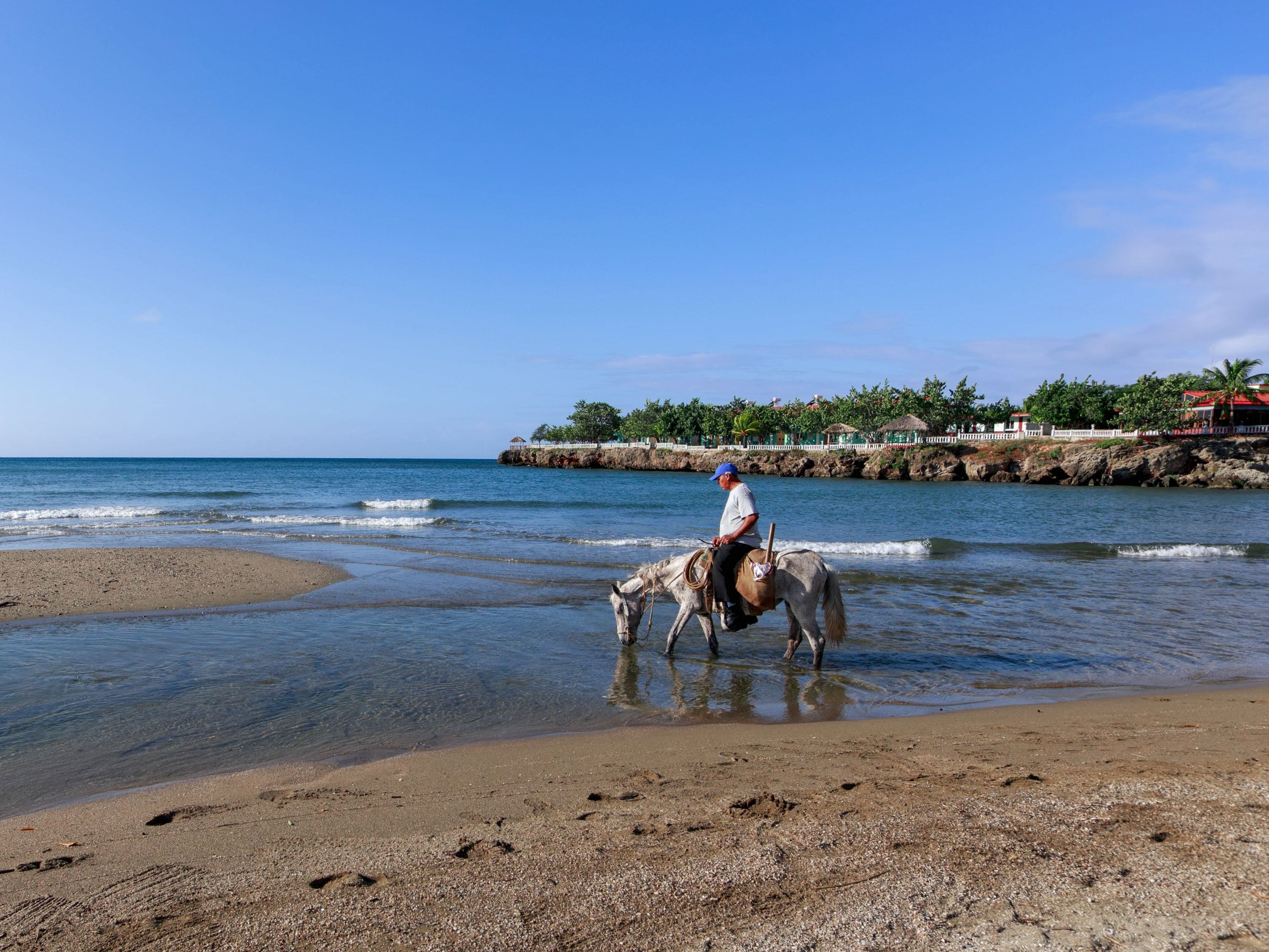
The dirt paths and rural landscape of Ometepe, with volcanic peaks in every direction and local farm life unfolding alongside you, make it an ideal setting for horseback riding. Several operators on the island offer rides through the isthmus, along the lakeshore, and into the jungle around Maderas. Half-day rides cost $15–25. No prior experience required for most routes.
Nicaragua is one of the few countries in Central America where doing nothing in particular is an active travel choice rather than a failure of planning. A hammock in a lakeside guesthouse, a cold Toña beer in a Granada courtyard, an afternoon watching fishing boats return to port in San Juan del Sur, the country's pace is genuinely unhurried, and travellers who try to match it rather than fight it consistently report it as a highlight.
Suggested 7-Day Nicaragua Itinerary
Extensions: Add 3–4 days for the Corn Islands (flight from Managua recommended). Add 2 days for Matagalpa coffee country. Add 2 days for Somoto Canyon if travelling via León toward Honduras.
What Does Nicaragua Cost in 2026?
Nicaragua remains the most affordable country on the Central American backpacker circuit, consistently 40–60% cheaper than Costa Rica for equivalent accommodation and activities, per 2025 Numbeo cost-of-living data.
Is Nicaragua Safe to Visit in 2026?
This is a question every traveller should take seriously rather than skip over. The U.S. Department of State currently holds Nicaragua at a Level 3 (Reconsider Travel) advisory. The risks cited are specific: arbitrary enforcement of local laws, risk of wrongful detention (particularly for those perceived as government critics or with dual nationality), limited healthcare availability outside Managua, and crime in specific urban areas.
What this means practically for most tourists:
The vast majority of travellers who visit Nicaragua's tourist destinations — Granada, León, San Juan del Sur, Ometepe, and the Corn Islands do so without incident. The Level 3 advisory is a country-wide assessment that reflects political-security conditions across the country rather than the experience of tourists at established sites. Travellers in 2026 report that tourist infrastructure, guides, and hospitality in the main destinations continue to operate normally.
What you should genuinely do before travelling:
- Register with the Smart Traveller Enrolment Program (STEP) at step.state.gov so the U.S. Embassy can contact you in an emergency.
- Delete any social media content that could be interpreted as politically sensitive before crossing the border. Devices can be searched.
- Carry adequate travel insurance, including emergency medical evacuation. Private healthcare in Managua is serviceable, but rural healthcare is limited.
- Pre-book your accommodation. Having a confirmed reservation and a clear itinerary simplifies any encounter with border or local authorities.
- Avoid demonstrations entirely.
- Check the current travel advisory at travel.state.gov the week you depart, not just at the time of booking. Conditions can change.
How to Book Your Nicaragua Hotels
Pre-booking your accommodation removes one of the biggest sources of uncertainty from Nicaragua travel and it locks in the best available rates before high season (December–April) pushes prices up.
CoinBooking covers hotels, guesthouses, and boutique properties across Granada, León, San Juan del Sur, Managua, and Ometepe Island, with rates up to 30% less than Booking.com. You can pay by Visa, Mastercard, Apple Pay, Google Pay, or 200+ cryptocurrencies. Sign up with your email and claim $25 off your first booking.
And if you'd rather have someone handle the details, CoinBooking's concierge service can arrange accommodation across your full Nicaragua itinerary and recommend the best properties by location and budget.
When Is the Best Time to Visit Nicaragua?
Nicaragua's dry season runs from late November through April, the most popular and straightforward time to visit. Temperatures are warm (28–33°C at low elevation), rainfall is minimal, and the Pacific beaches are at their best.
The wet season (May–November) brings afternoon showers rather than all-day rain, and the landscape turns a vivid green. Prices drop noticeably, crowds thin, and the Corn Islands' snorkelling visibility peaks in April–June before the main rains. Experienced travellers often prefer May–June for the combination of lower prices and still-manageable weather.
Avoid the heaviest months of September and October, when rains are most persistent, roads in rural areas can get flooded, and some operators temporarily reduce hours.
Nicaragua vs. Costa Rica
If you're weighing Nicaragua against its more famous neighbour, here's an honest comparison:
The two countries are also easily combined: San Juan del Sur is 45 minutes from the Costa Rica border, making a two-country itinerary straightforward. If you're spending time in Central America and want to see more than one country, we have a full guide to the top 10 beach destinations in the region worth bookmarking for the Costa Rica and Panama legs of your trip.
Planning Your Wider Central America Trip
Nicaragua sits naturally in the middle of the Central American route. Overland travel from Costa Rica in the south or Honduras in the north is well-established, with reliable shuttle services connecting the main hubs. Timing matters if you're mapping out a multi-country trip. Read our guide to the best places to visit in September can help you decide which legs to slot into which months, useful when one country's rainy season is another's peak window.
Frequently Asked Questions
1. What is Nicaragua best known for?
Nicaragua is best known as the "Land of Lakes and Volcanoes". The country has 19 volcanoes and two of the largest lakes in Central America. Its most distinctive travel experiences are volcano boarding at Cerro Negro, the colonial cities of Granada and León, the twin-volcano island of Ometepe, and Caribbean beaches on the Corn Islands. It's also recognised as the cheapest country in Central America for comparable travel experiences.
2. Is Nicaragua safe to visit in 2026?
The U.S. Department of State currently holds a Level 3 (Reconsider Travel) advisory for Nicaragua, citing arbitrary enforcement of local laws, risk of wrongful detention, limited healthcare in rural areas, and crime in specific neighbourhoods. Most tourists visiting established destinations, Granada, León, San Juan del Sur, Ometepe, and the Corn Islands report travelling without incident. The advisory reflects country-wide political-security conditions rather than the specific tourist experience, but travellers should read it carefully, register with STEP, and carry appropriate travel insurance. Check the current advisory at travel.state.gov before departing.
3. What is the best time of year to visit Nicaragua?
The dry season from late November to April is the most popular time, with minimal rain and optimal beach conditions. May and June offer lower prices, fewer crowds, and a landscape at its greenest, with afternoon rains rather than full-day downpours. September and October bring the heaviest rainfall and are best avoided for activity-heavy itineraries.
4. How much does a trip to Nicaragua cost per day?
Budget travellers can manage $35–50 per day, covering a dorm bed, local meals, and one activity. A mid-range traveller spending on private rooms, better restaurants, and guided tours typically spends $60–100 per day. Nicaragua is consistently 40–60% cheaper than Costa Rica for equivalent accommodation and activities, per 2025 Numbeo data.
5. Do I need to speak Spanish to travel in Nicaragua?
Basic Spanish is useful and respectful, but not essential for navigating the main tourist route between Granada, León, San Juan del Sur, and Ometepe. Hotel and tour operator staff at established properties typically speak functional English. Outside tourist areas and in rural regions, Spanish is genuinely necessary. A handful of phrases goes a long way. Nicaraguans are famously warm toward visitors who make the effort.

Hadrian is a Web3 marketer with close to five years of experience across social media, content, and SEO for crypto-native brands. He currently leads social media for CoinBooking, shaping content strategy across B2C, B2B, and affiliate channels.
Over the years, Hadrian has worked across the Web3 space, including companies like Animoca Brands and Hailstone Labs, building content and marketing for crypto projects spanning DeFi, gaming, and beyond. From building go-to-market strategy from scratch to digging into competitor data to figure out what actually drives growth, he's learned what actually makes crypto audiences pay attention, and that's exactly what he's applying to CoinBooking.
Found a hotel you like? Book it for up to 30% less

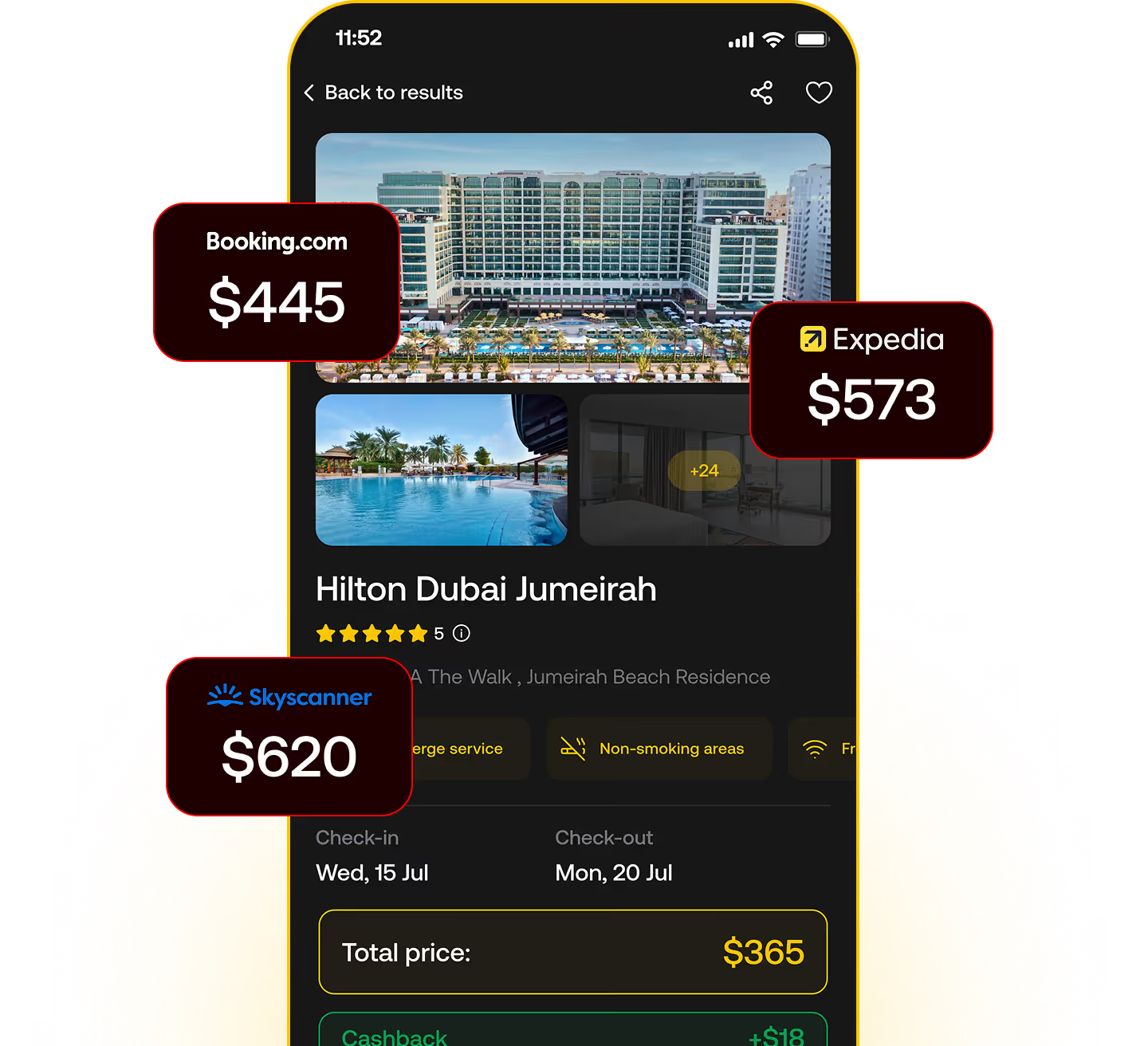
Found a hotel you like? Book it for up to 30% less